Choosing between curtains and blinds can completely change the mood, light, and proportions of your living room.
The right window treatment can make a small space feel larger, add warmth to a minimalist room, or create a polished designer finish.
These modern living room curtains vs blinds ideas will help you compare styles, control light, and create a room worth pinning.
1. Curtains vs. Blinds for Modern Minimalist Living Rooms
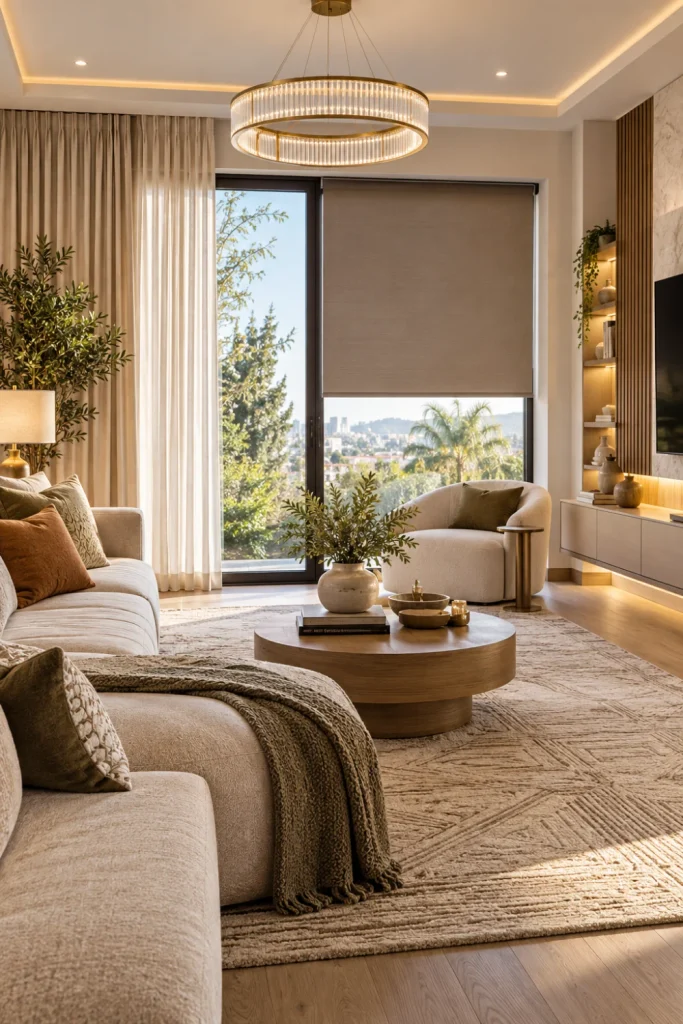
Minimalist living rooms look best when window treatments feel intentional rather than busy.
Curtains bring softness and movement, while blinds create a sharper, streamlined appearance.
Both can work beautifully with modern furniture, clean walls, and uncluttered layouts.
Simple steps:
- Choose blinds for a crisp architectural look.
- Choose curtains when the room needs softness.
- Match the window treatment to the room’s dominant textures.
- Keep patterns subtle in minimalist spaces.
One tip: Extend curtain rods slightly beyond the window frame to make the window appear wider.
Design boost: Pair warm-white walls with beige curtains or soft-gray blinds for an understated contemporary palette.
2. Floor-to-Ceiling Curtains for a Soft, Luxurious Look
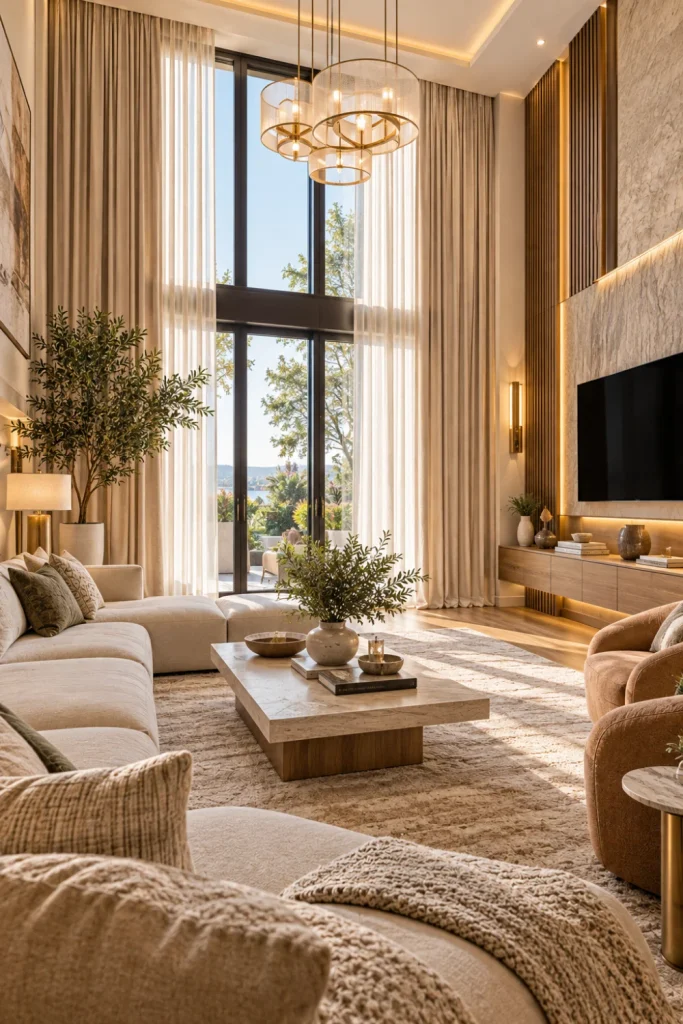
Floor-to-ceiling curtains instantly give a living room more height and drama.
They work especially well with high ceilings, large windows, and modern sectional sofas.
The result feels upscale without requiring an expensive renovation.
Simple steps:
- Mount the curtain rod close to the ceiling.
- Let panels reach the floor.
- Choose linen, cotton, or velvet depending on the desired mood.
- Use wider panels for fuller folds.
One tip: Avoid stopping curtains at the bottom of the window. Full-length panels usually create a more sophisticated silhouette.
Makeover idea: Combine creamy curtains with warm wood, stone accents, and black metal lighting for a modern luxury living room.
3. Sleek Roller Blinds for Clean Contemporary Windows
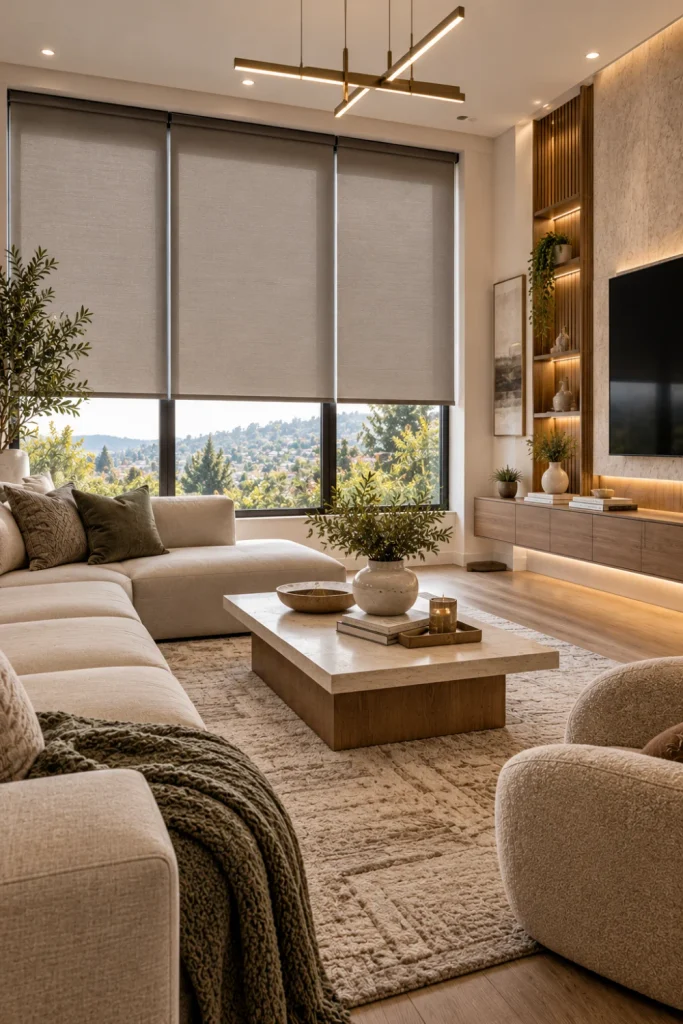
Roller blinds are an excellent choice when simplicity matters.
Their flat profile keeps windows visually clean and works beautifully with modern interiors featuring streamlined furniture, floating shelves, and minimal décor.
Simple steps:
- Measure the window accurately.
- Select inside-mount or outside-mount blinds.
- Pick a neutral fabric for maximum versatility.
- Choose light-filtering or blackout material based on the room’s needs.
One tip: Select roller blinds in a color close to the wall for a nearly seamless appearance.
Design boost: White, taupe, charcoal, or warm gray roller blinds can complement contemporary living rooms without competing with statement furniture.
4. Sheer Curtains for Bright, Airy Modern Living Rooms
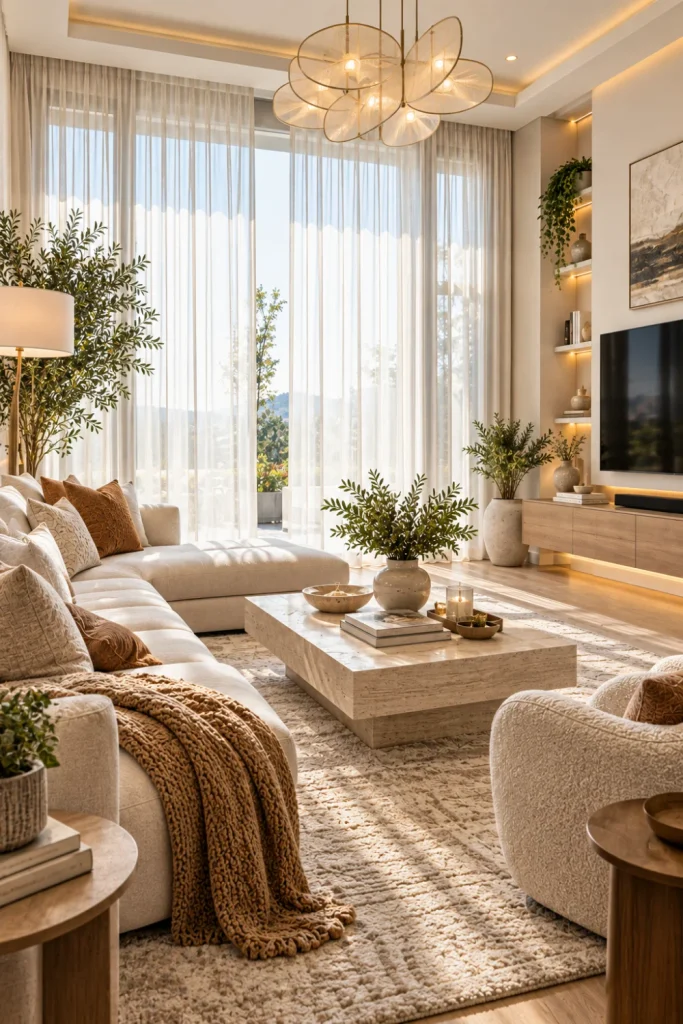
Sheer curtains are ideal for homeowners who want privacy without sacrificing natural light.
They soften strong sunlight while keeping the room bright, open, and welcoming—especially during the daytime.
Simple steps:
- Choose lightweight sheer fabric.
- Hang panels slightly wider than the window.
- Keep the color light and neutral.
- Add heavier curtains when nighttime privacy is important.
One tip: Hang sheers from ceiling height to create a taller, airier visual effect.
Styling idea: Pair white sheers with pale oak furniture, soft rugs, curved seating, and indoor plants for a fresh modern living room.
5. Layered Curtains and Blinds for Flexible Light Control
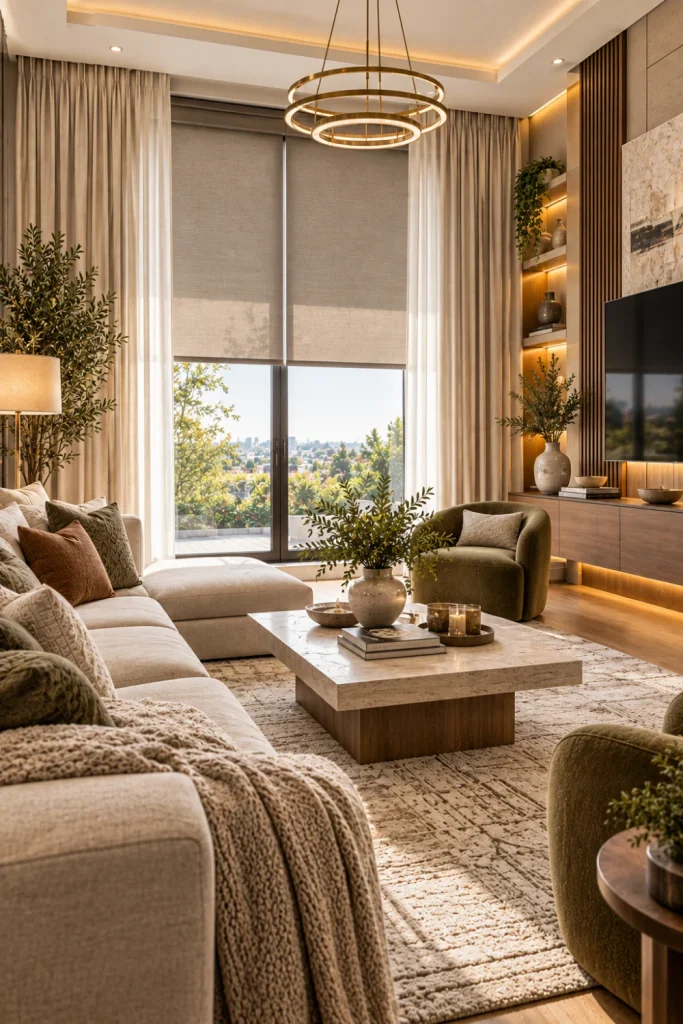
Why choose one when you can have both?
Layering curtains and blinds gives you greater control over sunlight, privacy, and atmosphere. It is also one of the most practical modern living room window treatment ideas.
Simple steps:
- Install blinds closest to the window.
- Add curtains over the blinds.
- Use blinds for daytime glare control.
- Close the curtains for extra privacy or evening coziness.
One tip: Keep both layers within the same color family so the windows look intentional rather than overloaded.
Designer move: Try beige roller blinds with ivory curtains for a layered, soft-contemporary finish.
6. Roman Blinds for Elegant, Tailored Living Room Windows
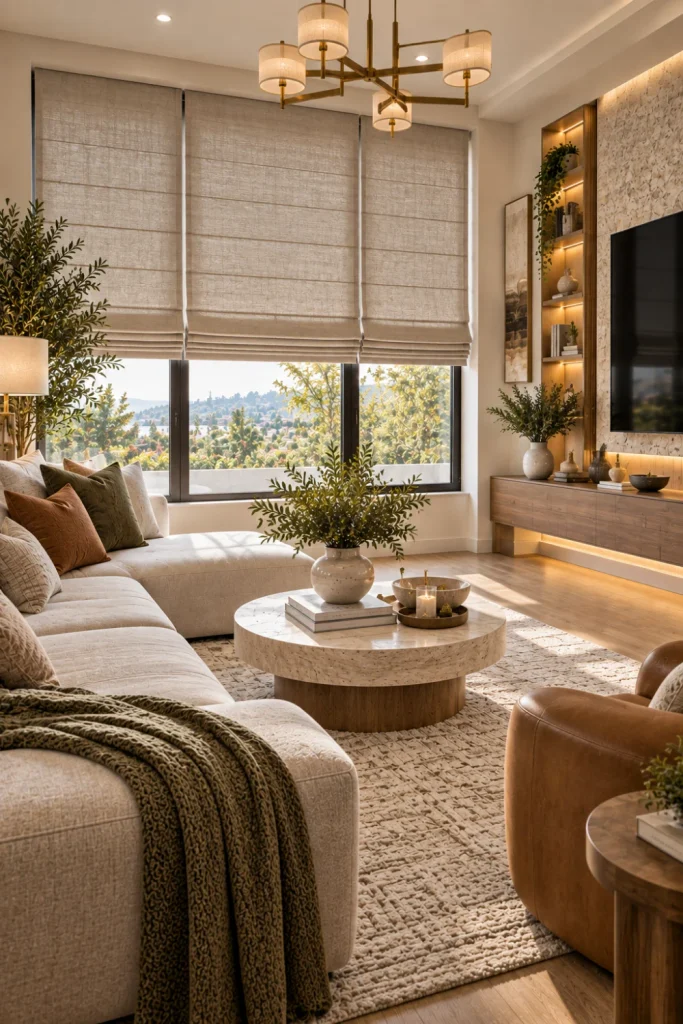
Roman blinds bring the structure of blinds together with the softness of fabric.
Their tailored folds make windows look polished and sophisticated, making them especially attractive in transitional and contemporary living rooms.
Simple steps:
- Measure each window individually.
- Decide between flat-fold and relaxed-fold styles.
- Select a durable upholstery-style fabric.
- Coordinate the blind with nearby textiles.
One tip: Use Roman blinds when you want a refined look without the visual volume of full curtain panels.
Styling idea: A warm oatmeal Roman blind can connect a neutral sofa, wood coffee table, and textured rug into one cohesive palette.
7. Woven Blinds for Natural Texture and Warmth
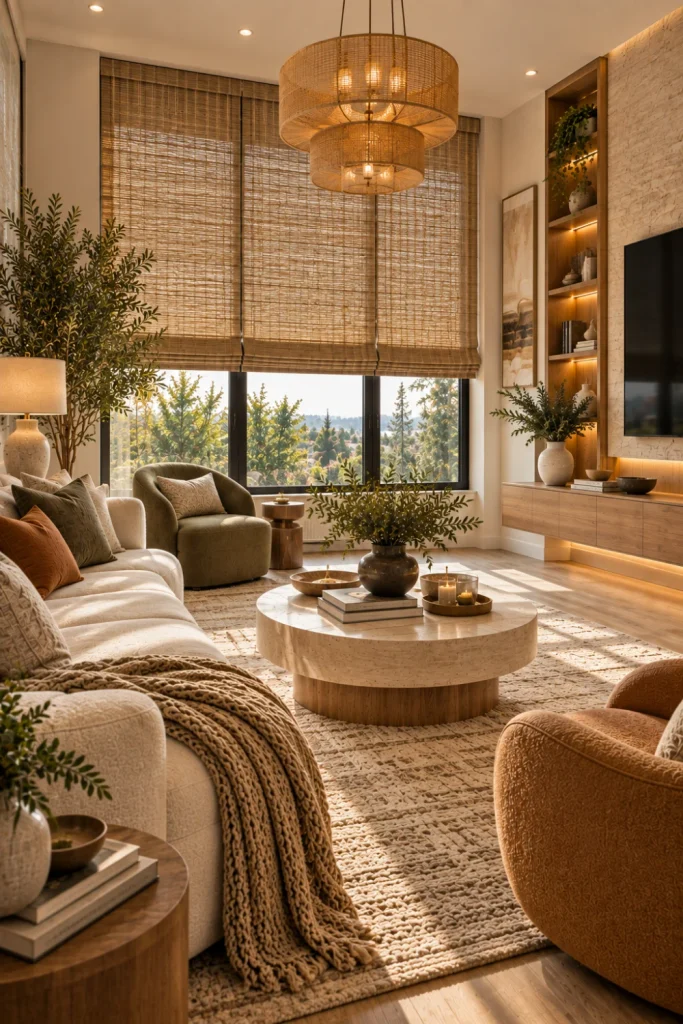
Modern interiors do not have to feel cold.
Woven blinds made from natural-looking materials can introduce texture, warmth, and organic character while keeping the overall design contemporary.
Simple steps:
- Select woven or bamboo-inspired textures.
- Keep the surrounding furniture relatively simple.
- Coordinate with wood or rattan accents.
- Add a softer curtain layer when necessary.
One tip: Repeat the blind’s natural tones elsewhere in the room for a more connected design.
Makeover idea: Combine woven blinds with cream upholstery, light wood furniture, neutral artwork, and greenery for a modern organic living room.
8. Neutral Curtains for Timeless Modern Living Room Style
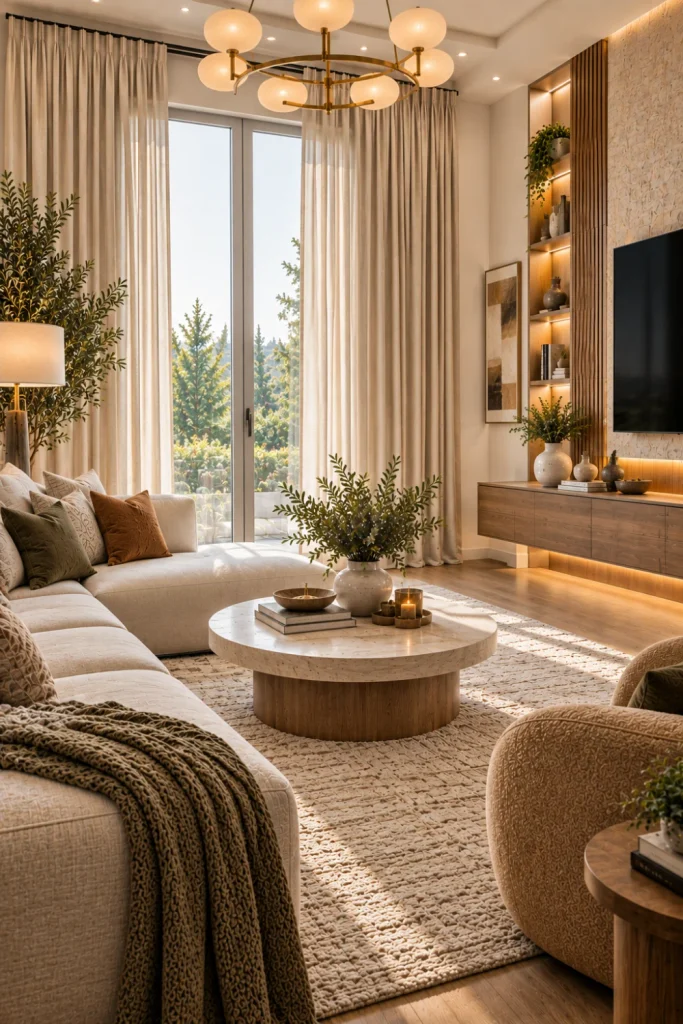
Neutral curtains remain one of the safest and most versatile choices for modern homes.
Shades such as cream, sand, greige, taupe, and soft gray can adapt as furniture and décor change over time.
Simple steps:
- Choose a neutral that complements the wall color.
- Consider texture instead of bold patterns.
- Repeat the shade in pillows or rugs.
- Keep hardware simple and streamlined.
One tip: Choose a curtain color one or two shades different from the wall to create subtle depth.
Designer move: Mix several neutral textures—linen curtains, a boucle chair, a wool rug, and smooth wood—for a sophisticated layered effect.
9. Blackout Blinds for Privacy and Glare Control
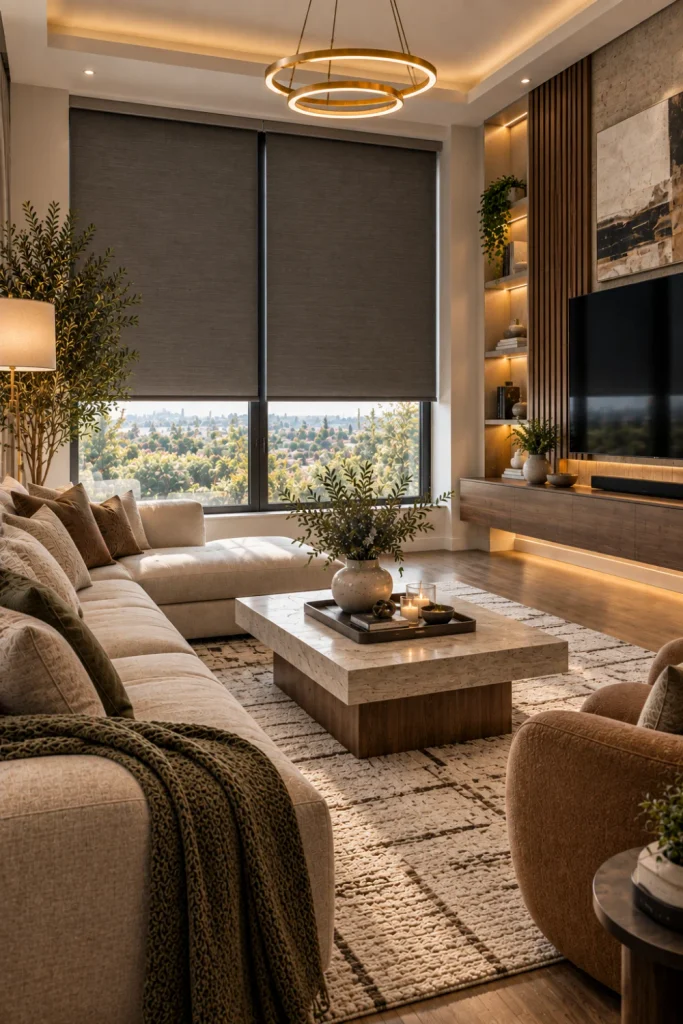
Blackout blinds are particularly useful for living rooms with strong afternoon sun, televisions, or streetside windows.
They reduce unwanted brightness while creating a darker, more comfortable environment when needed.
Simple steps:
- Identify windows exposed to direct sunlight.
- Choose a blackout fabric or lining.
- Install the blind close to the window frame.
- Check side gaps to improve light blocking.
One tip: Blackout does not have to mean visually heavy. Look for sleek fabrics in soft neutrals or muted contemporary colors.
Practical upgrade: Use blackout blinds in media-focused living rooms where screen glare is a recurring problem.
10. Two-Tone Curtains and Blinds for a Designer Finish
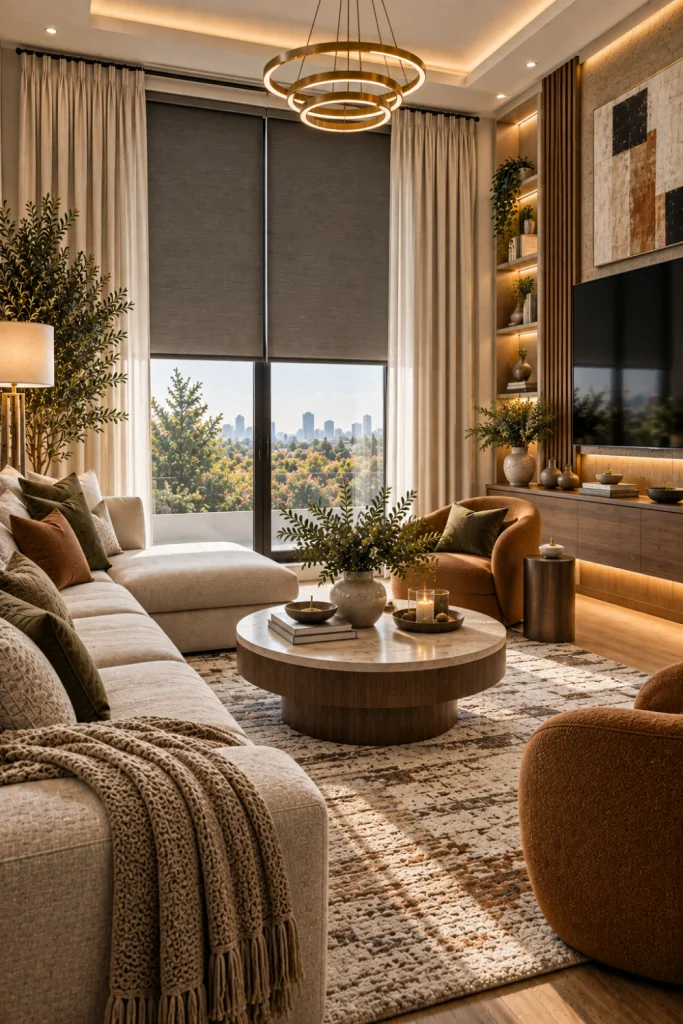
Two-tone window treatments create visual depth and can make a modern living room feel more custom-designed.
Pairing contrasting but coordinated colors gives ordinary windows a stronger focal point.
Simple steps:
- Select one primary neutral.
- Add a second shade for contrast.
- Repeat the accent color elsewhere in the room.
- Keep patterns limited to avoid visual clutter.
One tip: Use darker blinds with lighter curtains, or reverse the combination for a softer effect.
Designer move: Try charcoal roller blinds with warm-white curtains for a dramatic contemporary window treatment that still feels balanced.
Final Thoughts
The best choice in the curtains vs. blinds debate depends on more than appearance.
Consider how much natural light enters the living room, how much privacy you need, the size of your windows, and whether your furniture leans minimalist, cozy, luxurious, or organic.
Quick decision guide
- Choose curtains when you want softness, height, warmth, or a luxurious appearance.
- Choose blinds when you prefer clean lines, precise light control, and a minimal profile.
- Choose both when flexibility and layered styling matter most.
- Choose woven blinds when your space needs natural texture.
- Choose blackout blinds when glare and privacy are major concerns.
- Choose neutral fabrics when you want a timeless style that can evolve.
Important living room makeover tips
- Measure twice before ordering: Incorrect measurements can ruin an otherwise beautiful installation.
- Think about hardware: Curtain rods, tracks, and blind brackets should complement the room’s finishes.
- Consider sunlight direction: South- or west-facing windows may need stronger glare control depending on your location.
- Coordinate textures: Modern interiors look richer when smooth, soft, woven, and natural materials are balanced.
- Do not ignore maintenance: Choose washable or easy-care materials for busy households.
- Think beyond trends: A fashionable color may date faster than a timeless neutral with beautiful texture.
- Use consistency: Matching window treatments across connected living spaces can make the entire home feel more intentional.
A simple styling formula
For an easy modern makeover, start with a neutral foundation, add one textured window treatment, introduce warm wood or natural materials, and finish with carefully chosen lighting.
This keeps the room contemporary without making it feel overly staged.
Most importantly, curtains and blinds should support the way the living room is actually used.
A beautiful window treatment that blocks too much light, creates glare, or feels difficult to operate will quickly become frustrating.
The strongest modern living room designs balance style, comfort, privacy, and everyday function.
Whether you prefer soft floor-to-ceiling curtains, sleek roller blinds, elegant Roman shades, or layered combinations, the right window treatment can be the detail that pulls the entire living room together.