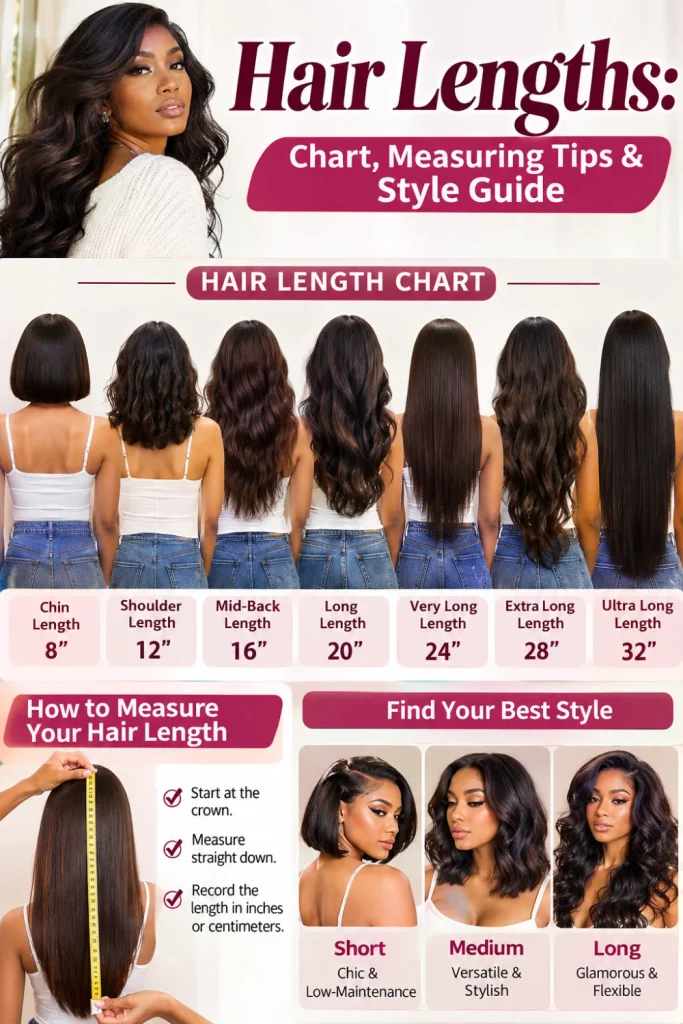
Not sure whether your hair is shoulder-length, mid-back, or officially waist-length?
Finding the right measurement can make choosing a haircut, hairstyle, or hair extensions so much easier.
This 2026 hair length guide breaks down 10 popular hair lengths, explains how to measure hair in inches, and shares flattering haircut ideas, growth tips, and styling inspiration for every texture.
1. How to Measure Hair Length in Inches at Home
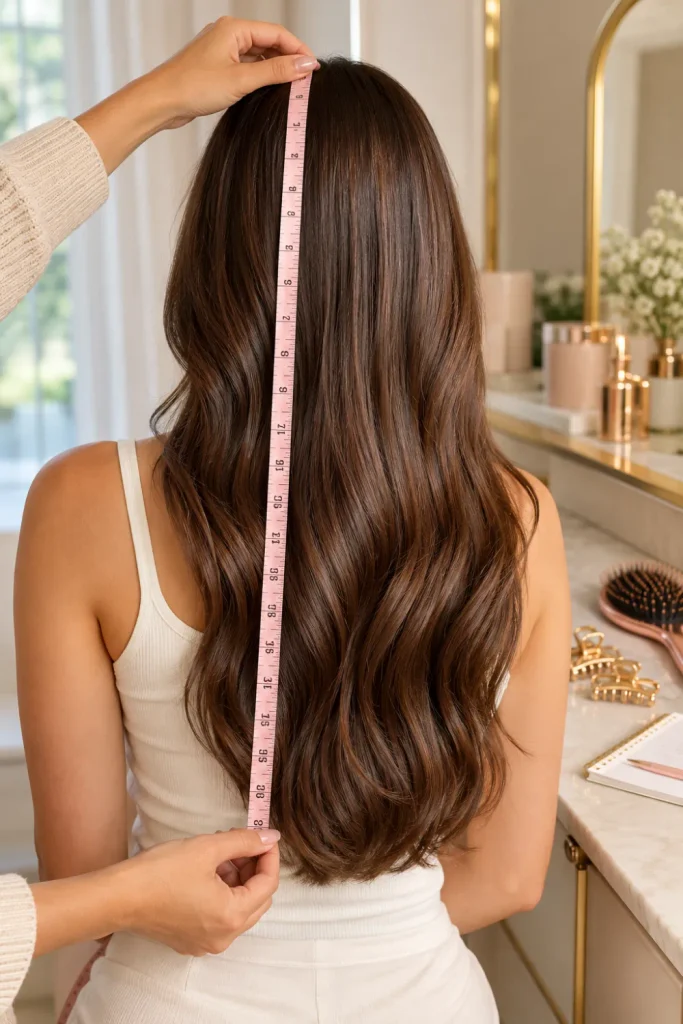
Knowing your actual hair length helps you communicate clearly with your hairstylist, choose extensions, and track your hair growth.
Thankfully, measuring it at home is simple.
Follow these steps:
- Start with clean, dry, detangled hair.
- Find the highest point of your head where you want to begin measuring.
- Place a flexible measuring tape at the scalp.
- Follow the natural direction of your hair down to the longest ends.
- Record the measurement in inches.
- Repeat the process every few months to monitor growth.
Helpful measuring tips:
- Measure curly hair in its natural state and again when gently stretched.
- Avoid pulling the tape tightly against your scalp.
- Measure the longest section rather than a shorter layered piece.
- Keep your measuring position consistent each time.
One tip: Take a photograph alongside your measurement. It makes comparing your hair growth much easier.
2. Hair Length Chart in Inches vs. Body Landmarks
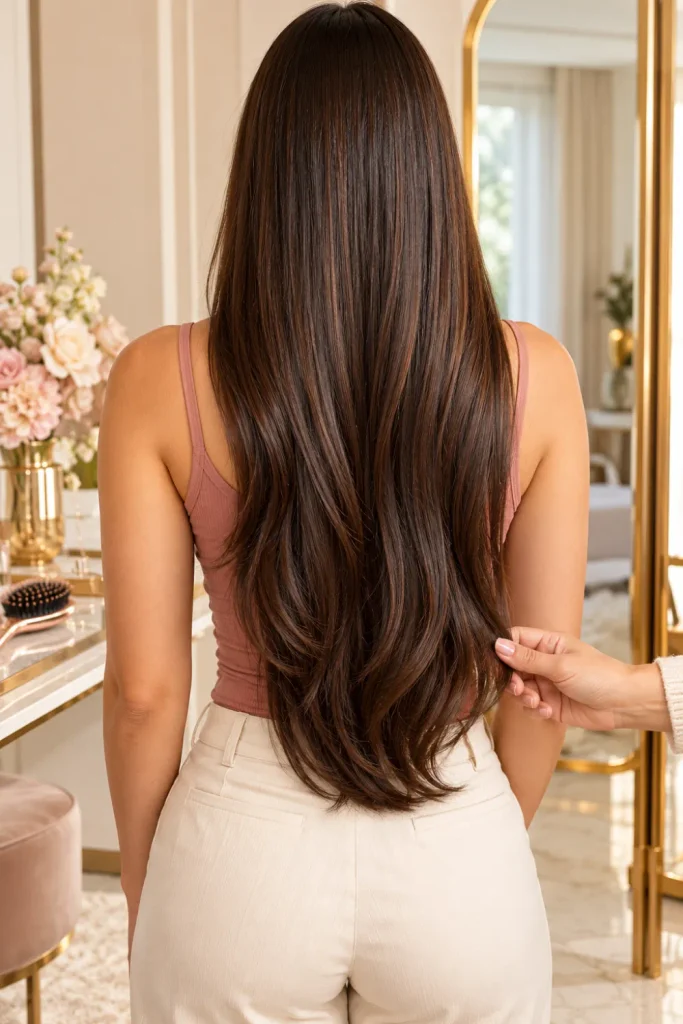
A hair length chart makes it easier to visualize how different measurements look on the body.
However, your height, torso length, and haircut shape can change where your hair falls.
Here is a helpful approximate hair length chart:
| Hair Length | Approximate Inches | Body Landmark |
|---|---|---|
| Ear-length | 4–6 inches | Around the ears |
| Chin-length | 6–8 inches | Chin |
| Neck-length | 8–10 inches | Neck |
| Shoulder-length | 10–12 inches | Shoulders |
| Collarbone-length | 12–14 inches | Collarbone |
| Armpit-length | 14–16 inches | Armpit |
| Bra-strap-length | 18–20 inches | Bra strap |
| Mid-back-length | 20–24 inches | Middle back |
| Waist-length | 24–30 inches | Waist |
| Hip-length | 30–36 inches | Hips |
How to use this chart:
- Compare the inch measurement with your natural body landmarks.
- Consider your height and torso proportions.
- Remember that layers can make your overall hair length look shorter.
- Use the chart as a visual guide, not a strict measurement standard.
One tip: When ordering extensions, always check the manufacturer’s length chart because extension measurements may be taken differently.
3. Straight vs. Curly Hair Length: Why They Look Different
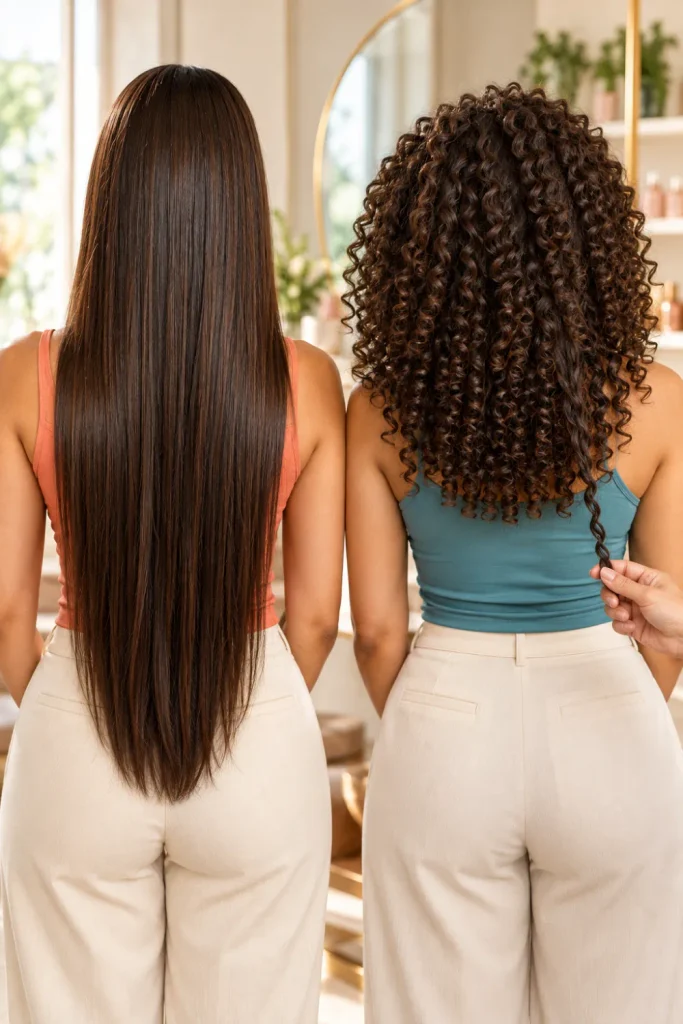
Have you ever noticed that two people can have the same measured hair length but completely different-looking hairstyles?
Texture is usually the reason.
Straight hair tends to hang closer to its full length, while curly and coily hair naturally contracts into curls and coils. This is known as shrinkage.
Understanding the difference:
- Straight hair: Shows more of its actual length because the strands fall downward.
- Wavy hair: Appears slightly shorter because of its natural bends.
- Curly hair: Can look considerably shorter depending on curl tightness.
- Coily hair: May experience significant shrinkage, even when the stretched length is quite long.
How to measure both lengths:
- Measure your hair in its natural texture.
- Select a small section.
- Gently stretch it without causing tension.
- Measure from the root to the ends.
- Record both measurements.
One tip: Never compare curly hair with straight hair using appearance alone. Stretched measurements provide a fairer comparison.
4. Best Hair Length for Your Face Shape

The right hair length can beautifully complement your facial features, but there is no single perfect length for everyone.
The goal is to find proportions that make you feel comfortable and confident.
Hair length inspiration by face shape:
- Round face: Long layers, collarbone-length lobs, and face-framing pieces can create attractive vertical movement.
- Oval face: Pixies, bobs, shoulder-length cuts, and long hairstyles offer plenty of flexibility.
- Square face: Soft waves, layered bobs, and curtain bangs can add movement around the jawline.
- Heart-shaped face: Chin-length bobs and collarbone cuts can create visual balance.
- Long face: Chin-to-shoulder-length styles, waves, and fuller layers can add width.
How to choose:
- Identify the features you want to highlight.
- Consider your natural texture.
- Look for reference photographs with similar proportions.
- Discuss the haircut with your stylist before committing.
One tip: Face shape is only a starting point. Personal style, hair density, and maintenance preferences matter just as much.
5. Short vs. Medium vs. Long Hair: Which Is Easier to Maintain?

Not every beautiful hairstyle requires hours of daily styling.
Your ideal hair length should fit your routine, not make it harder.
Short hair (pixies and short bobs):
- Often requires less detangling.
- Can dry relatively quickly.
- Needs regular shaping to maintain its silhouette.
- May require frequent styling to keep its shape.
Medium hair (lobs and shoulder-length cuts):
- Offers a balance between styling flexibility and maintenance.
- Works well with ponytails, buns, and loose waves.
- Usually easier to manage than very long hair.
- Benefits from regular trims.
Long hair (bra-strap to hip-length):
- Offers more braiding, updo, and ponytail options.
- Requires more detangling and conditioning.
- Can take longer to wash and dry.
- Needs careful handling to reduce breakage.
One tip: Choose a length based on how much time you realistically want to spend washing, detangling, and styling.
6. How Long Does It Take to Grow Hair From Shoulder to Waist Length?
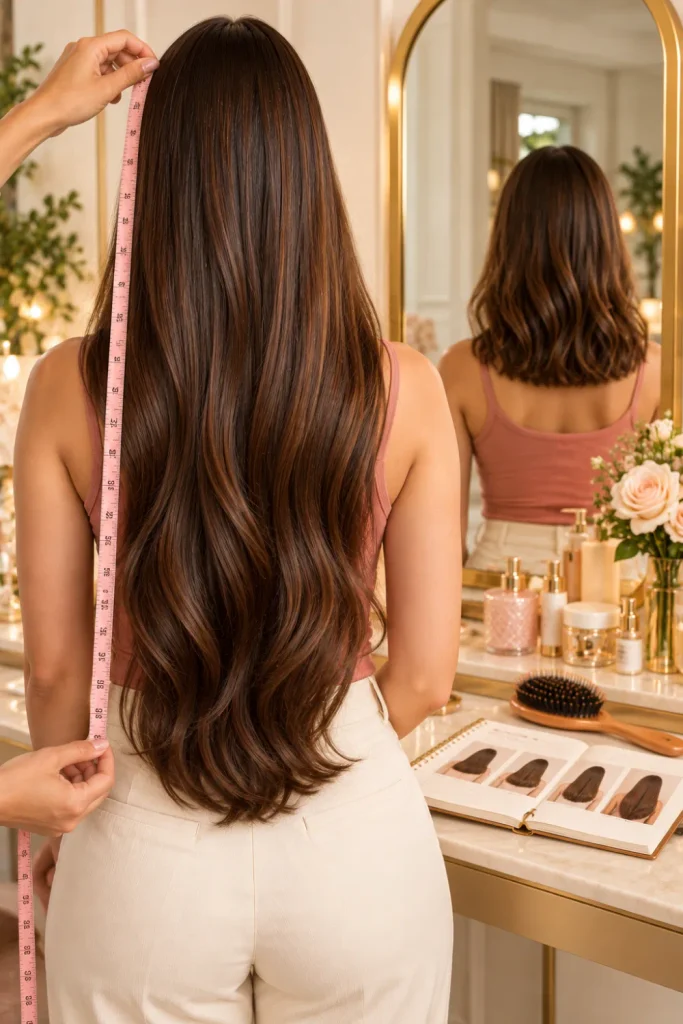
Growing waist-length hair takes patience, consistency, and a little understanding of your natural growth cycle.
Hair generally grows around half an inch per month, although individual growth rates vary.
For example, if your shoulder-length hair measures approximately 12 inches and your waist-length goal is 26 inches, you need about 14 additional inches.
Estimated growth timeline:
- 3 months: Approximately 1.5 inches.
- 6 months: Approximately 3 inches.
- 12 months: Approximately 6 inches.
- 18 months: Approximately 9 inches.
- 24 months: Approximately 12 inches.
These are estimates, not guarantees. Breakage, genetics, age, health, and hair-care practices can influence how much length you retain.
Simple length-retention routine:
- Detangle gently, starting at the ends.
- Condition regularly.
- Reduce excessive heat styling.
- Protect hair while sleeping.
- Avoid unnecessarily tight hairstyles.
- Maintain a balanced diet.
- Address persistent shedding or breakage with a qualified professional.
One tip: Focus on length retention, not just growth. Keeping the ends healthy helps you see more noticeable progress.
7. Best Layered Haircuts for Every Hair Length

Layers can transform a simple haircut by adding movement, texture, and dimension.
The trick is choosing a layering technique that works with your natural hair density and length.
Popular 2026 haircut ideas:
- Pixie cut: Short, textured layers create a lightweight, modern appearance.
- Layered bob: Adds movement around the jawline and works beautifully with straight or wavy hair.
- Long bob (lob): A versatile shoulder-to-collarbone cut that looks polished or relaxed.
- Butterfly haircut: Features shorter face-framing layers and longer lengths for a voluminous finish.
- Long layers: Preserve overall length while creating softness and movement.
- Curly layered cut: Helps shape curls and distribute volume.
- U-shaped layers: Create a soft, rounded outline at the back.
How to choose your layers:
- Decide whether you want volume, movement, or face-framing.
- Consider how your hair behaves naturally.
- Show your stylist photographs from multiple angles.
- Ask how the layers will look when your hair is air-dried.
One tip: If retaining length is important, request subtle layers rather than removing too much weight from the ends.
8. Hair Extension Length Chart: 12, 16, 18, 20, 24, and 30 Inches
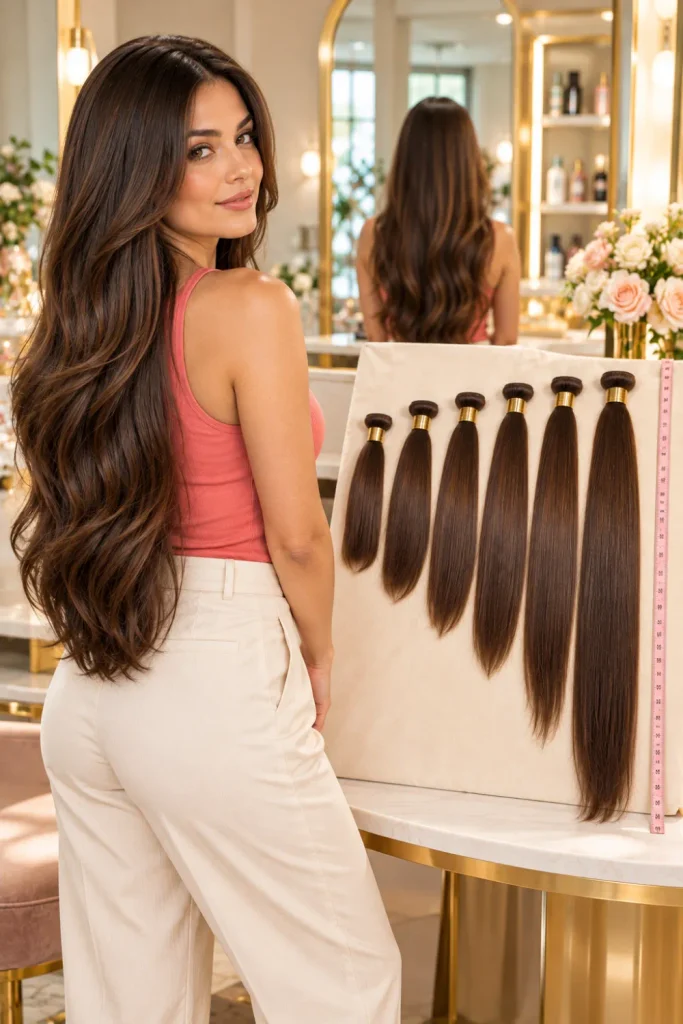
Choosing the correct hair extension length can make the difference between a natural-looking finish and an unexpected result.
Extension lengths are generally measured from the top of the weft or attachment to the ends when the hair is straightened.
Extension length guide:
- 12 inches: Usually creates a shoulder-length or slightly longer bob.
- 16 inches: Often falls around the upper chest.
- 18 inches: Commonly reaches the chest or bra-strap area.
- 20 inches: Creates a longer, fuller look around the mid-back.
- 24 inches: Often reaches the waist, depending on body proportions.
- 30 inches: Creates dramatic extra-long hair that can reach the hips or beyond.
Before purchasing extensions:
- Measure your natural hair.
- Consider your height and torso length.
- Check whether the extensions are straight, wavy, or curly.
- Compare the product’s actual length chart.
- Match the extension density to your natural hair.
One tip: Curly extensions may appear several inches shorter than straight extensions of the same advertised length.
9. How to Choose the Right Hair Length for Your Lifestyle
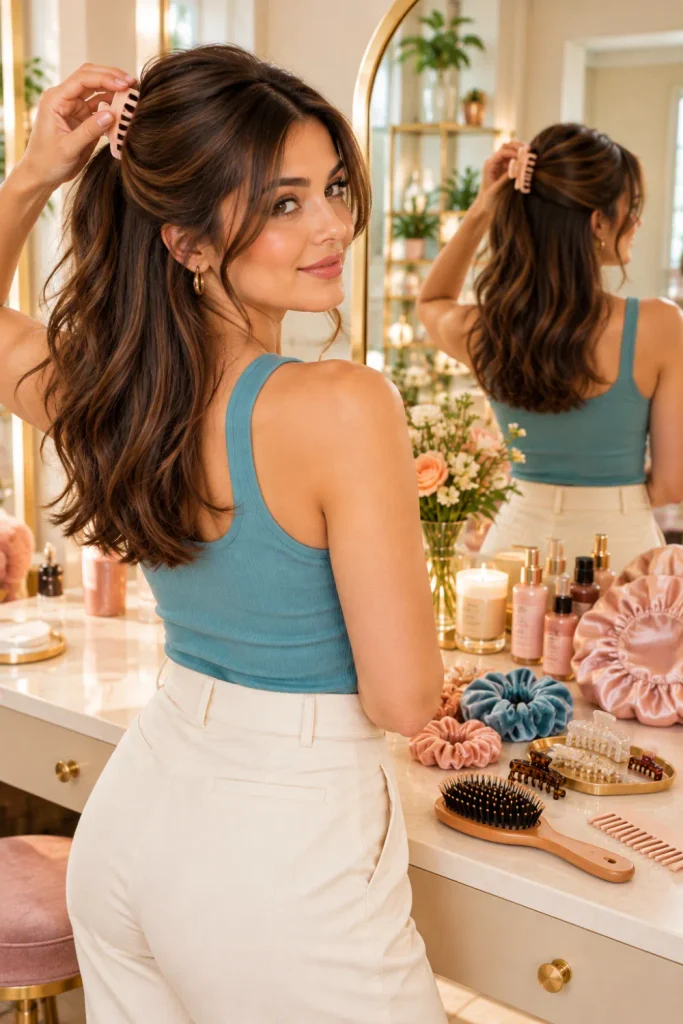
A hairstyle should look beautiful, but it should also work with your everyday routine.
Consider your styling habits, hair density, and natural texture before choosing your next cut.
Think about these factors:
- Busy schedules: Chin-length bobs and shoulder-length cuts can simplify daily styling.
- Active lifestyles: Medium lengths are practical for ponytails, braids, and protective styles.
- Fine hair: Blunt bobs and carefully placed layers can create the appearance of fullness.
- Thick hair: Long layers can help distribute volume and improve movement.
- Curly hair: Choose a cut designed around your natural curl pattern.
- Protective styling: Consider whether your preferred length accommodates braids, twists, and buns.
A simple decision-making process:
- Write down your usual styling routine.
- Decide how much length you want to maintain.
- Consider your natural hair density.
- Save three hairstyles you genuinely like.
- Discuss maintenance requirements with your stylist.
One tip: Don’t choose a haircut simply because it is trending. Choose one you can comfortably maintain after leaving the salon.
10. Hair Length Mistakes to Avoid Before Your Next Salon Visit

A beautiful haircut starts with clear communication.
Even a gorgeous reference photograph can lead to disappointment when the measurements and expectations are unclear.
Avoid these common mistakes:
- Using unclear reference photos: Bring pictures showing the front, sides, and back.
- Ignoring shrinkage: Explain whether your hair is curly, coily, wavy, or straight.
- Cutting too much at once: If you are unsure, ask for a gradual trim.
- Confusing layers with overall length: Specify whether you want shorter layers or a shorter haircut.
- Using inconsistent measurements: Always measure from the same starting point.
- Ignoring hair density: A cut that looks voluminous on thick hair may look different on fine hair.
- Following trends blindly: Make sure the style suits your routine and preferences.
Before your appointment:
- Save your favorite reference images.
- Measure your current hair length.
- Decide on your desired final length.
- Explain how much you are comfortable cutting.
- Ask your stylist to confirm the length before the first cut.
One tip: Instead of saying “just a little shorter,” tell your stylist exactly where you want the ends to fall.
Final Thoughts: Find Your Perfect Hair Length in 2026
Finding your ideal hair length is about more than counting inches.
It involves understanding your natural texture, choosing flattering proportions, considering your lifestyle, and knowing how to maintain healthy-looking ends.
Whether you love a chic pixie, a shoulder-length bob, a voluminous butterfly cut, or dramatic waist-length hair, there is a style worth exploring.
Before choosing your next hairstyle, remember:
- Use a flexible tape measure to track your actual length.
- Compare inches with body landmarks.
- Account for curly and coily hair shrinkage.
- Choose layers that complement your natural texture.
- Consider maintenance before committing to a dramatic cut.
- Bring clear reference photographs to your salon appointment.
Your next step: Use the hair length chart to identify your current measurement, save a few hairstyle inspirations, and discuss your preferred length with your hairstylist.
A little planning can make your next hair transformation much more rewarding.