Think you need a big backyard to grow fresh vegetables?
Not at all!
These easy DIY vertical vegetable garden ideas for small spaces turn empty walls, sunny balconies, and tiny patios into productive growing areas.
From budget-friendly recycled planters to stylish wooden shelves, you’ll find ten creative designs with simple instructions and practical growing tips.
Get ready to grow more food without sacrificing precious outdoor space.
1. Three-Tier Vertical Vegetable Garden With Space-Saving Shelves
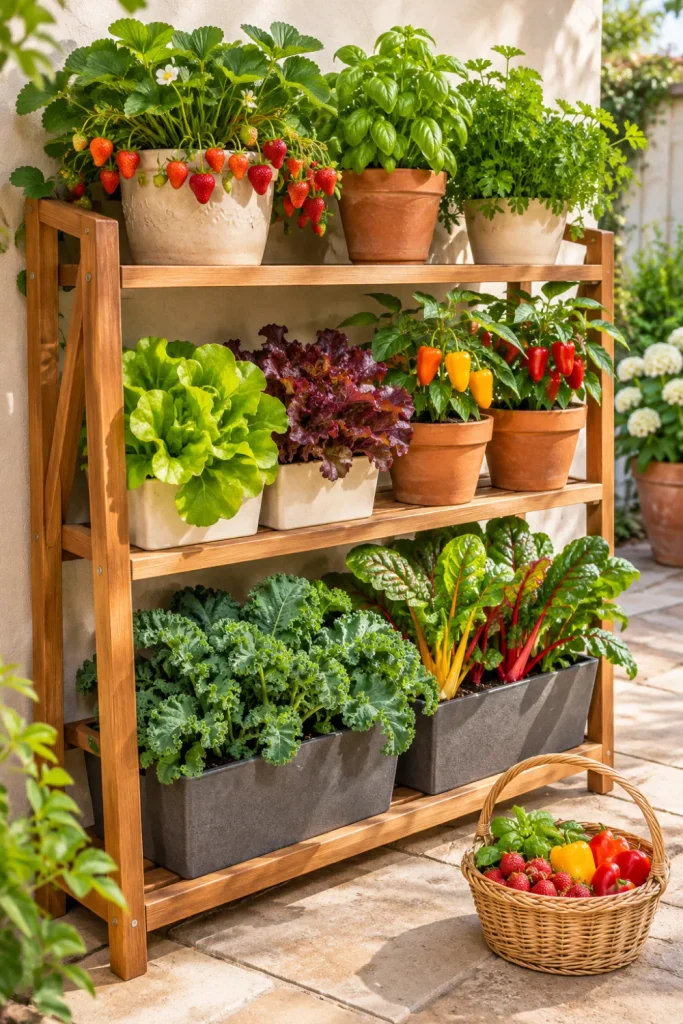
Transform an empty patio corner into a colorful, productive garden using three levels of shelving.
This organized design makes harvesting easy while keeping your outdoor space beautifully arranged.
Simple Steps:
- Choose a sturdy, weather-resistant three-tier shelving unit.
- Place strawberries and compact herbs on the upper shelf.
- Grow colorful lettuce and compact peppers on the middle level.
- Add larger containers of kale or Swiss chard below, where sufficient light reaches.
Tip: Position taller plants carefully to prevent them from shading vegetables on lower shelves.
2. Small Balcony Vegetable Garden With Railing Planters
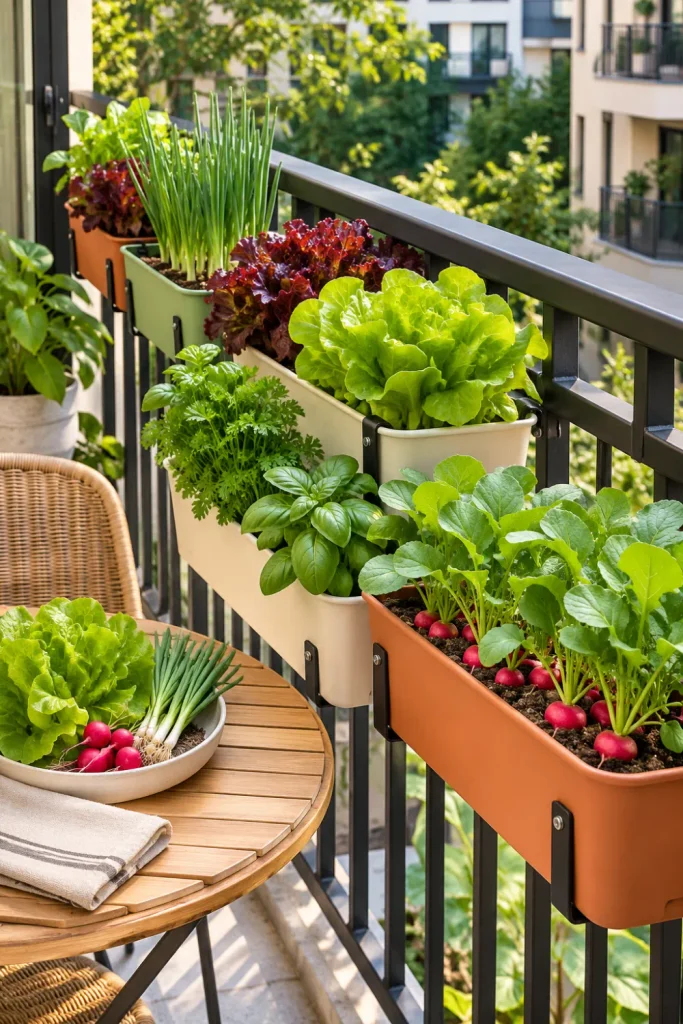
Limited balcony space? Railing planters create a charming edible garden without taking up valuable floor space.
They’re especially useful for apartments with sunny outdoor areas.
Simple Steps:
- Select lightweight railing planters with secure mounting brackets.
- Fill containers with quality vegetable potting mix.
- Plant leaf lettuce, radishes, spring onions, and compact herbs.
- Arrange planters along the brightest section of your balcony.
Tip: Check balcony weight restrictions and secure planters on the inward-facing side for added safety.
3. DIY Tiered Wooden Ladder Vegetable Garden for Small Patios
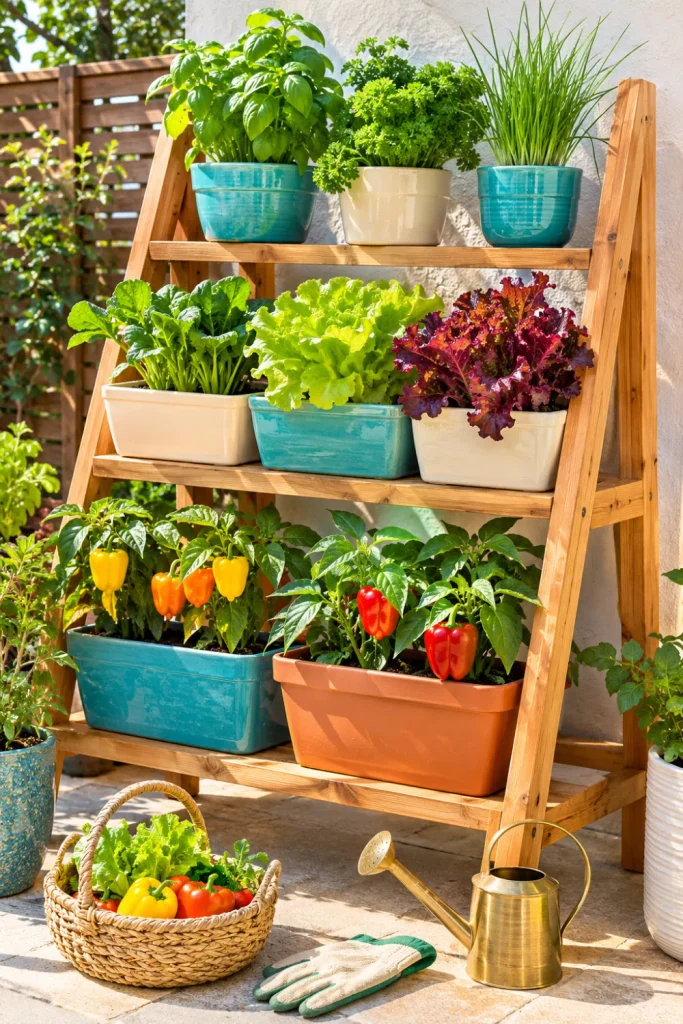
A wooden ladder garden brings rustic charm and clever functionality to small patios.
Its stepped design creates an attractive display of greenery while allowing easy access to your vegetables.
Simple Steps:
- Repurpose a sturdy wooden ladder or build a tiered frame.
- Attach wooden shelves securely across the ladder supports.
- Arrange pots containing spinach, lettuce, herbs, and compact peppers.
- Protect the wood with an exterior finish suitable for its intended use.
Tip: Keep heavier vegetable containers on lower shelves to improve stability.
4. Wall-Mounted Vertical Vegetable Garden With Fresh Herbs and Leafy Greens
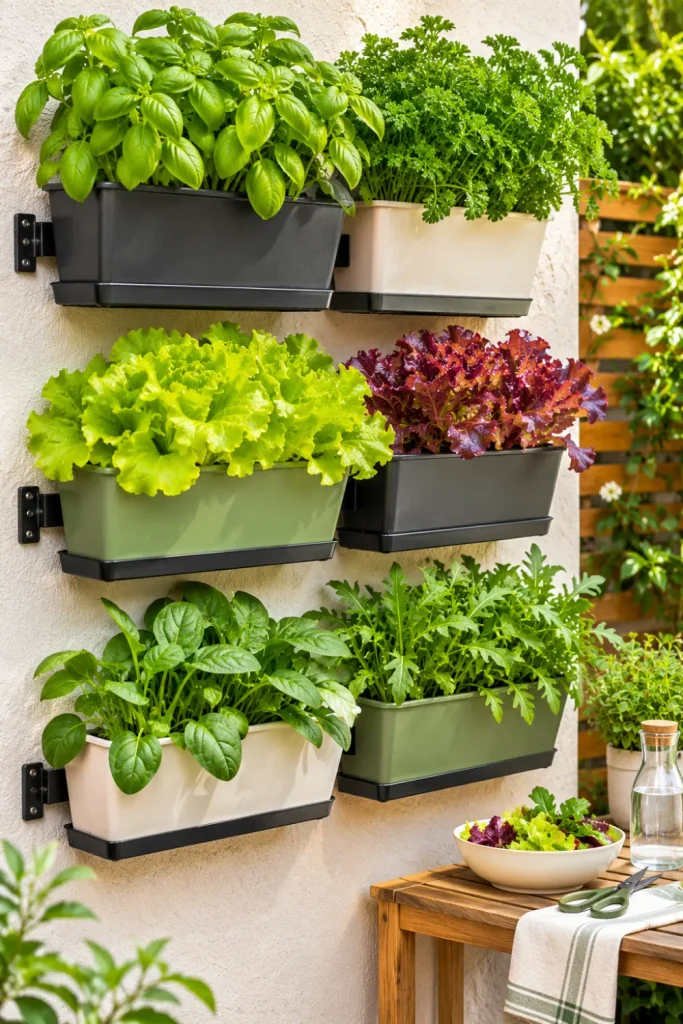
Make an unused outdoor wall work harder with mounted vegetable planters.
This sleek garden design brings fresh ingredients within reach and creates a beautiful living wall.
Simple Steps:
- Install strong mounting brackets against a suitable wall.
- Attach lightweight rectangular planters with drainage holes.
- Fill containers with nutrient-rich potting mix.
- Grow basil, parsley, arugula, baby spinach, and leaf lettuce.
Tip: Leave enough space between planters for airflow, plant growth, and convenient watering. Protect the wall from excess moisture.
5. Vertical Cucumber Garden With a Space-Saving Climbing Trellis
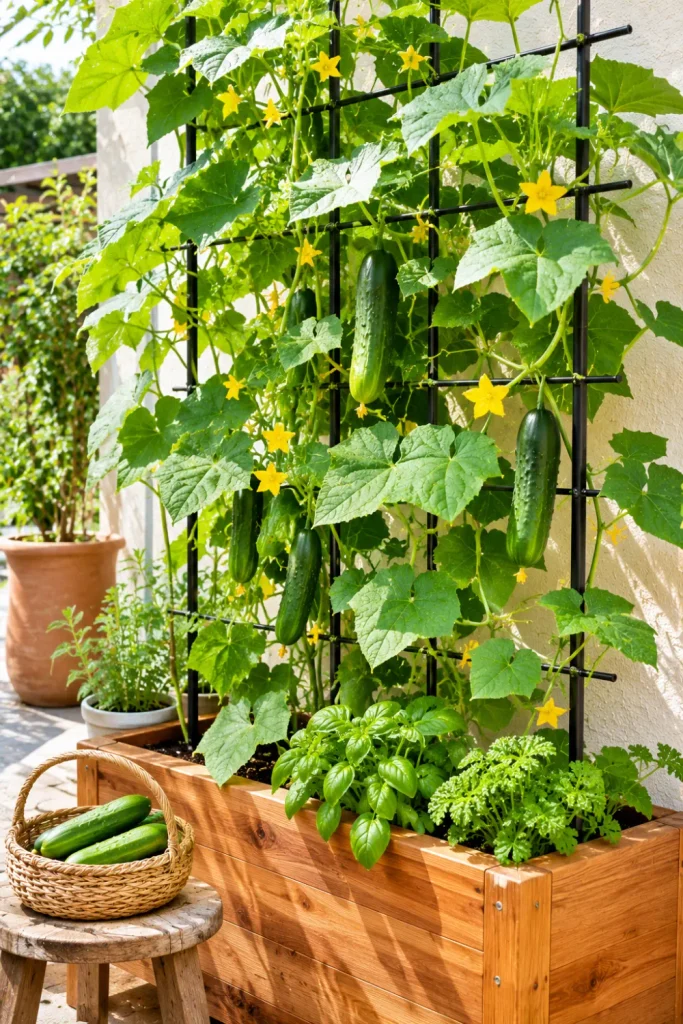
Cucumbers naturally climb, making them perfect for vertical vegetable gardens.
A simple trellis keeps vines organized, improves airflow, and makes picking cucumbers surprisingly convenient.
Simple Steps:
- Choose a large container with excellent drainage.
- Install a sturdy bamboo, metal, or wooden climbing trellis.
- Plant a climbing cucumber variety near the trellis base.
- Gently guide developing vines upward using soft garden ties.
Tip: Keep the soil consistently moist, especially during flowering and fruit development, to support healthy cucumber growth.
6. Recycled Plastic Bottle Vertical Vegetable Garden
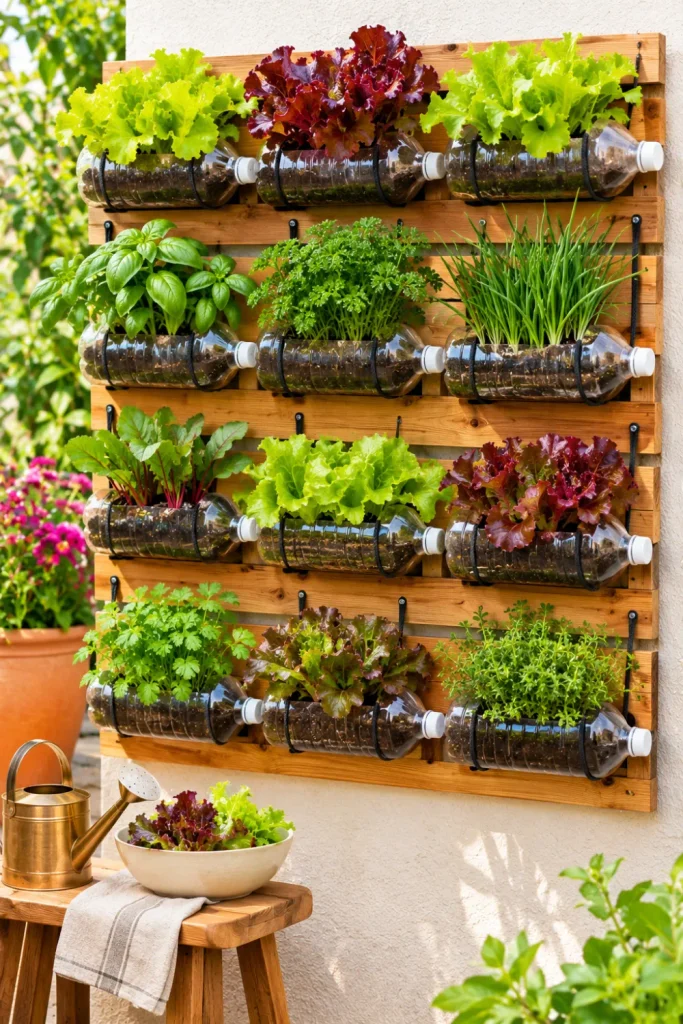
Give empty plastic bottles a useful second life with this inexpensive garden project.
It’s a creative solution for growing small edible plants along fences and compact outdoor walls.
Simple Steps:
- Collect clean, food-grade plastic beverage bottles.
- Cut planting openings and create drainage holes.
- Secure bottles horizontally using strong garden cord or brackets.
- Add potting mix and plant compact lettuce, chives, or small herbs.
Tip: Replace bottles when they become brittle, and avoid containers previously used for chemicals.
7. Hanging Basket Vegetable Garden for Compact Outdoor Spaces
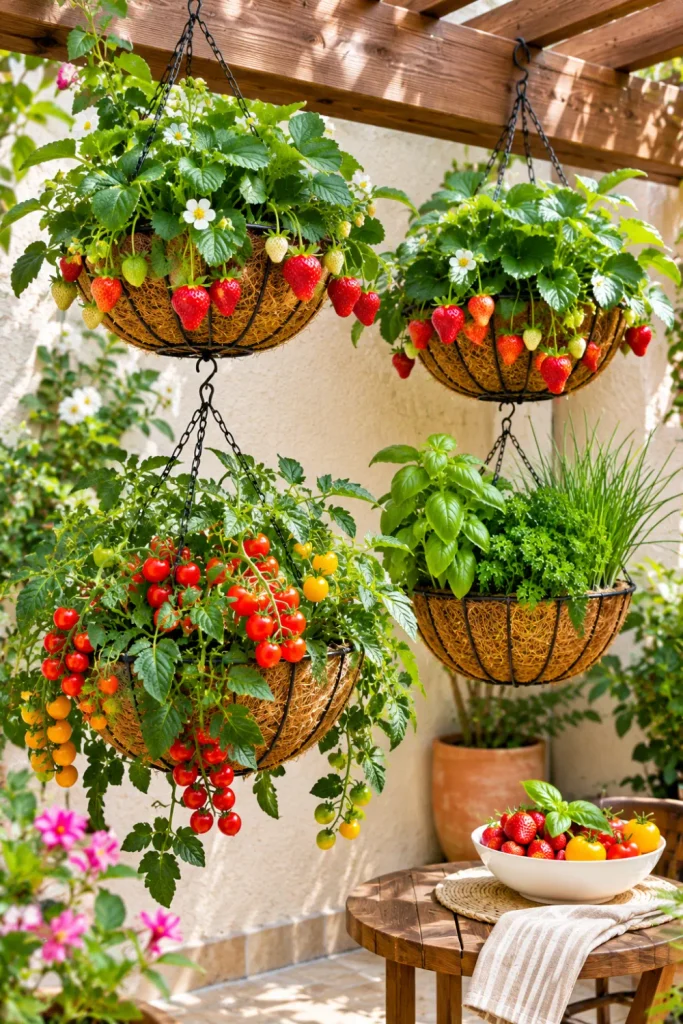
Hanging baskets aren’t just for flowers!
They can hold delicious edible plants while creating an inviting, layered garden above patios, balconies, and small seating areas.
Simple Steps:
- Choose deep hanging baskets with drainage and strong supports.
- Fill them with lightweight vegetable potting mix.
- Plant trailing strawberries, tumbling tomatoes, or compact herbs.
- Hang baskets where plants receive their recommended sunlight.
Tip: Hanging containers dry out quickly. Check soil moisture regularly, particularly during hot or windy weather.
8. Stackable Vertical Vegetable Garden With Space-Saving Planters
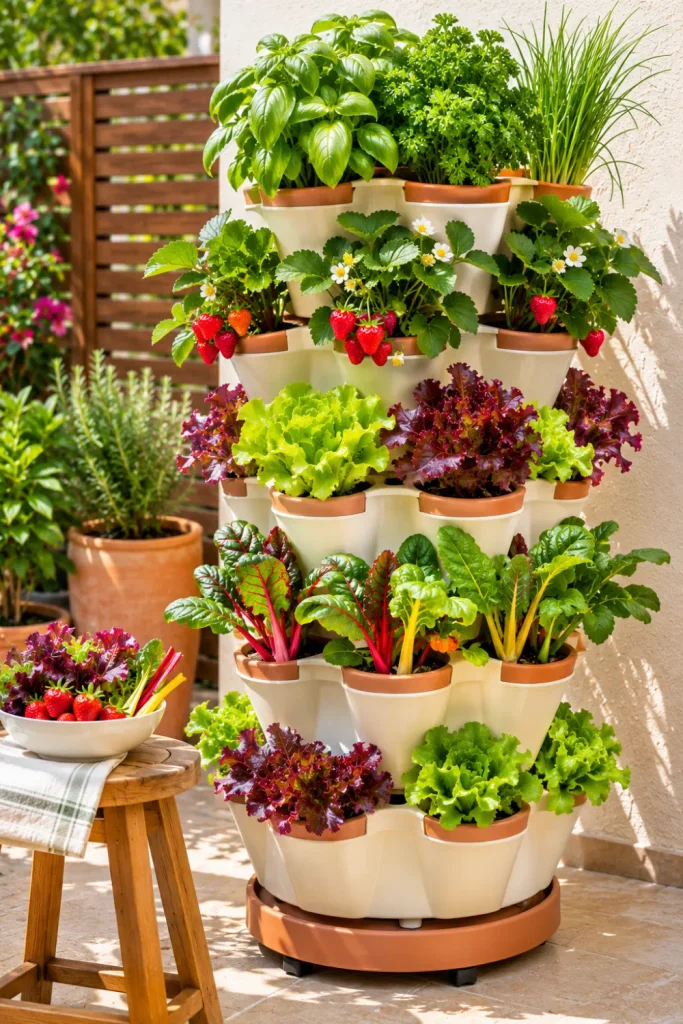
Stackable planters make growing several vegetables in one compact footprint incredibly simple.
Their modern design works beautifully on balconies, patios, and sunny courtyard corners.
Simple Steps:
- Select a stackable planter system with effective drainage.
- Assemble the tiers on a level, stable surface.
- Fill each planting pocket with container potting mix.
- Grow lettuce, strawberries, dwarf Swiss chard, and small herbs.
Tip: Check moisture throughout the tower because upper planting pockets may dry faster than lower ones.
9. Compact Raised Vegetable Garden Bed With Vertical Trellises
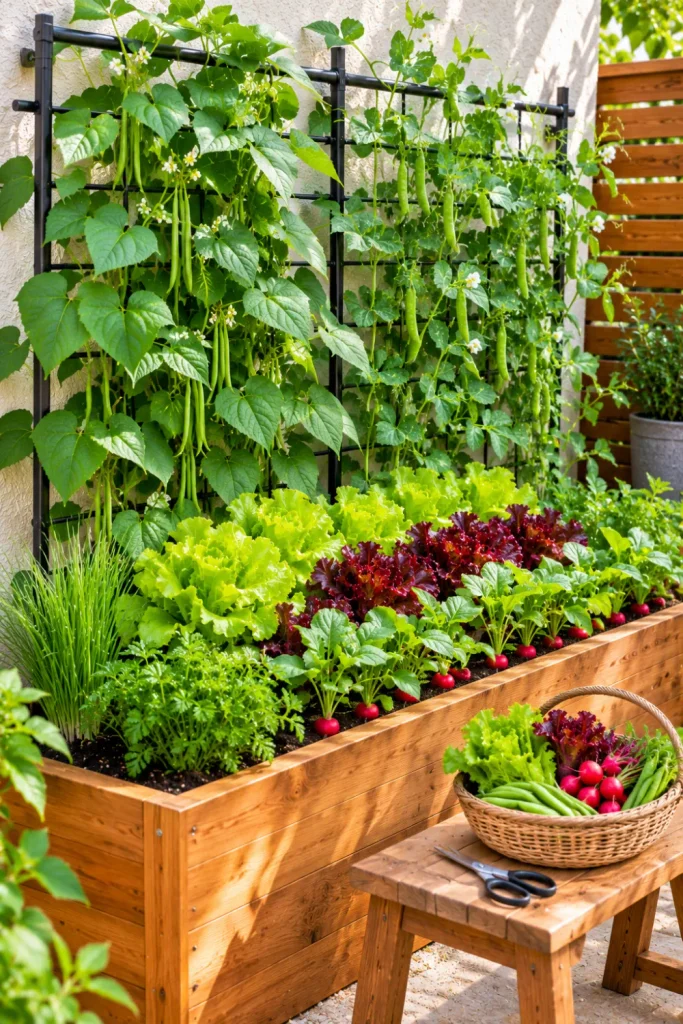
Combine a small raised garden bed with vertical supports to maximize growing space.
This practical design accommodates climbing vegetables alongside smaller crops, creating a wonderfully productive mini garden.
Simple Steps:
- Build or purchase a compact raised vegetable bed.
- Fill it with a suitable raised-bed soil mix.
- Install sturdy trellises along the back.
- Grow climbing beans or peas vertically, with lettuce and radishes in front.
Tip: Position trellises to minimize unwanted shading of shorter vegetables.
10. Budget-Friendly DIY Wooden Pallet Vegetable Garden
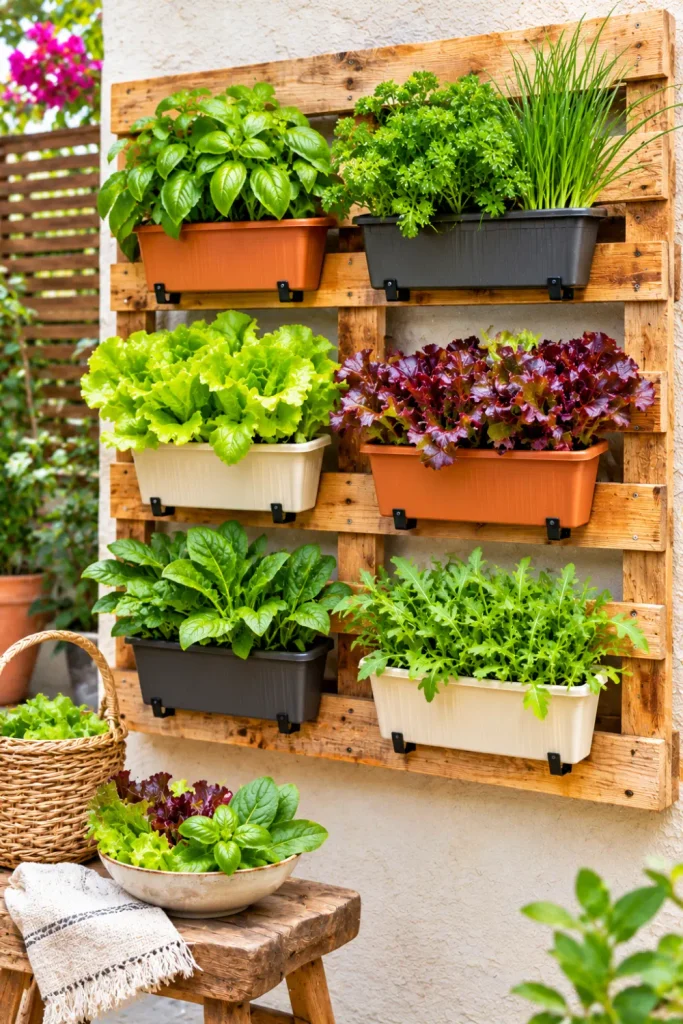
A repurposed wooden pallet can become a charming vertical vegetable garden without a hefty price tag.
Its rustic appearance complements modern patios and cozy backyard corners.
Simple Steps:
- Select a clean, heat-treated pallet marked HT with a known history.
- Sand rough edges and remove loose nails.
- Secure the pallet upright and attach planting containers.
- Fill containers with potting mix and grow herbs, lettuce, or baby spinach.
Tip: Avoid chemically treated, stained, or contaminated pallets when growing edible plants.
Final Thoughts
Creating a productive vegetable garden doesn’t require acres of land.
With thoughtful planning, even the smallest balcony or patio can provide fresh, homegrown ingredients.
For the best results:
- Give fruiting vegetables at least six hours of direct sunlight daily.
- Choose containers with adequate drainage and suitable root space.
- Water regularly and harvest leafy greens frequently.
Save your favorite vertical vegetable garden ideas and start transforming your small outdoor space into a beautiful, edible oasis!