Winter recipes feel even more inviting when the recipe card looks just as cozy as the food itself.
These easy winter recipe card design ideas blend seasonal colors, warm photography, readable layouts, and creative details you can easily recreate.
From Nordic minimalism to luxury winter styling, you’ll get practical design inspiration, simple steps, and Pinterest-friendly ideas worth saving and sharing.
1. Cozy Nordic Winter Recipe Card
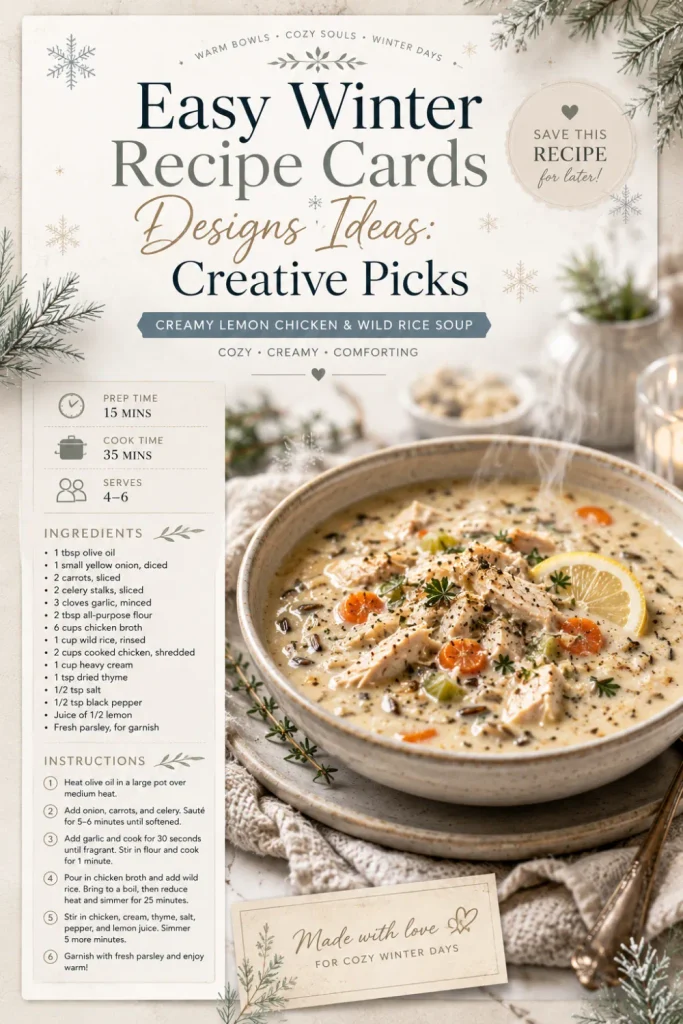
A soft Nordic design makes almost any winter recipe feel calm, clean, and inviting.
Think snowy mornings, warm kitchens, and simple food presented beautifully.
Simple steps:
- Start with a white, ivory, or cream background.
- Add tiny snowflake details around the edges.
- Use clean serif or modern sans-serif typography.
- Place a warm, close-up food photo beside or beneath the recipe.
- Keep ingredients and instructions visually separated.
One tip: Use plenty of empty space so the design feels airy rather than crowded.
- Best for: Soups, casseroles, baked dishes, and Scandinavian recipes.
- Pinterest detail: Make the finished food photo the visual focal point.
- Click-worthy addition: Add a small “Save This Recipe” badge.
2. Rustic Farmhouse Winter Recipe Card
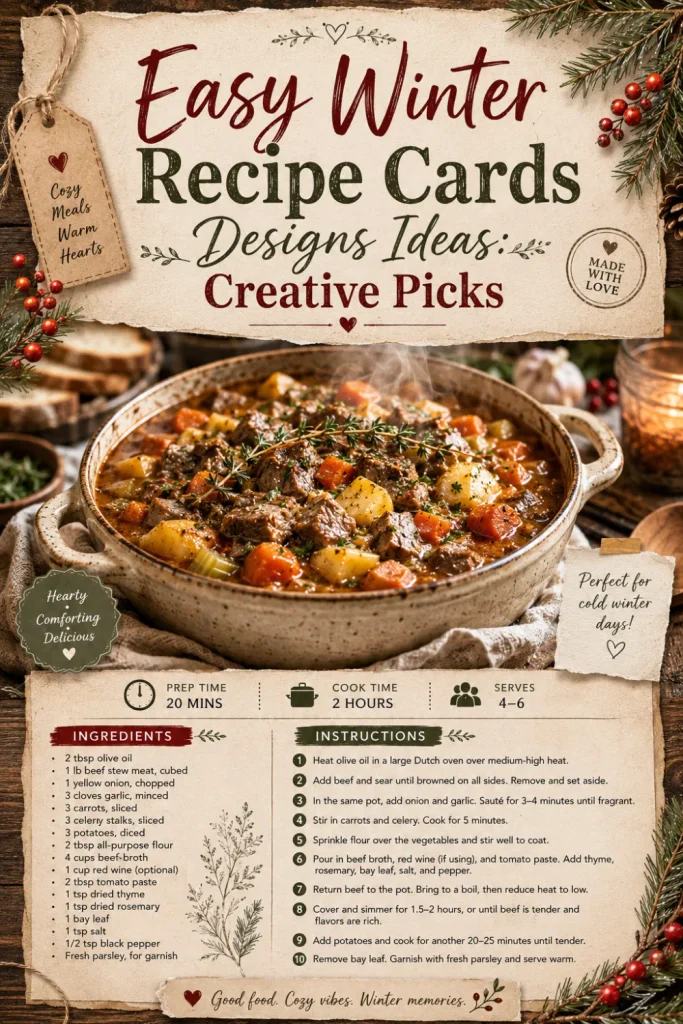
Rustic farmhouse styling brings that homemade, just-out-of-the-oven feeling to your recipe cards.
It works especially well for comfort food.
Simple steps:
- Choose a kraft-paper or warm-beige background.
- Add subtle wood or paper texture.
- Use a handwritten-style heading with an easy-to-read body font.
- Frame the card with pine branches or simple greenery.
- Include a cozy food photograph with natural-looking styling.
One tip: Keep the texture subtle so the recipe remains easy to read.
- Best for: Bread, stews, pies, roasted vegetables, and family meals.
- Design boost: Add tiny handwritten notes such as “Family Favorite.”
- Pinterest detail: Combine texture with close-up food photography for warmth.
3. Elegant Snowflake Recipe Card
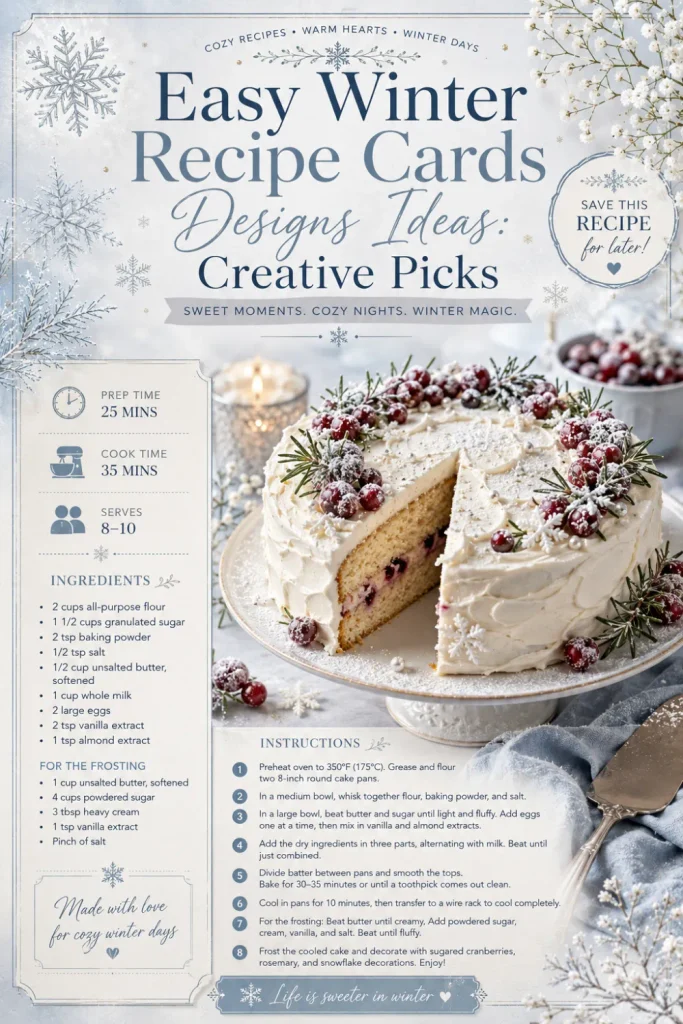
This sophisticated concept takes winter design in a more refined direction.
Instead of bold holiday decorations, it relies on icy colors and polished typography.
Simple steps:
- Use pale blue, white, silver-inspired gray, or cream.
- Add very delicate snowflakes.
- Select a refined serif font for the recipe title.
- Create clear ingredient and instruction sections.
- Add one elegant food photograph.
One tip: Use seasonal decorations sparingly to maintain the upscale appearance.
- Best for: Holiday desserts, dinner-party dishes, and elegant drinks.
- Design boost: Add a thin decorative line between recipe sections.
- Pinterest detail: Choose a vertical layout with a strong title near the top.
4. Modern Minimalist Winter Recipe Card
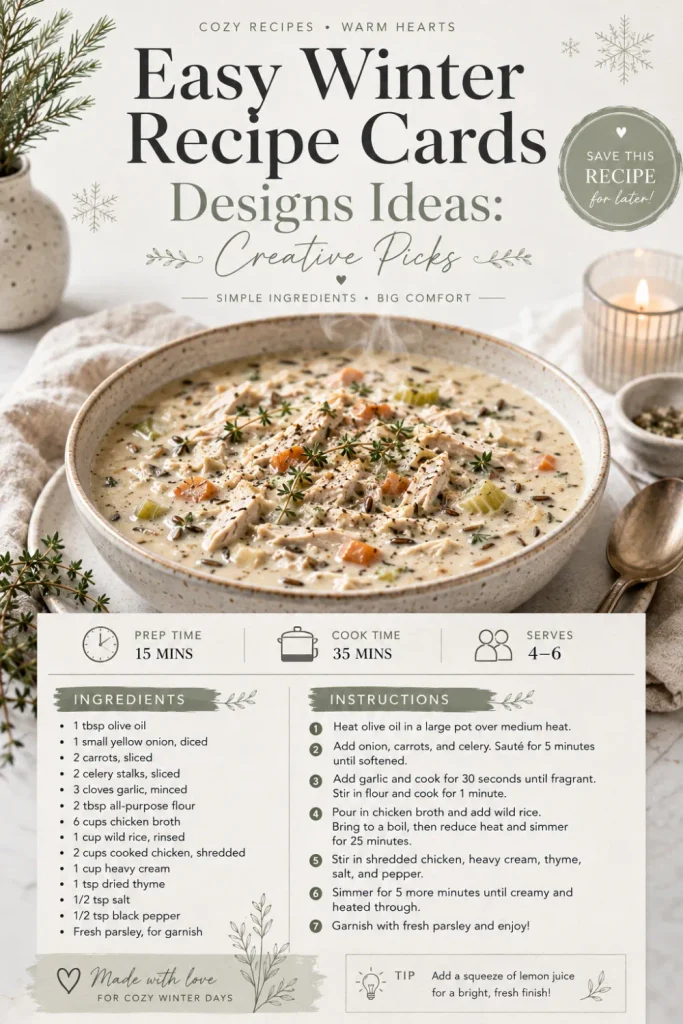
Clean design is perfect when the recipe itself should do most of the talking.
A minimalist card also performs well visually because readers can understand it quickly.
Simple steps:
- Build a simple grid.
- Choose two or three neutral shades.
- Add small ingredient or utensil icons.
- Leave generous margins around text.
- Use consistent heading sizes.
One tip: Avoid adding decorative elements just because there is empty space.
- Best for: Everyday winter dinners and meal-prep recipes.
- Design boost: Use bold numbers for each cooking step.
- Pinterest detail: Make the recipe title large enough to remain readable on mobile.
5. Festive Red and Green Recipe Card
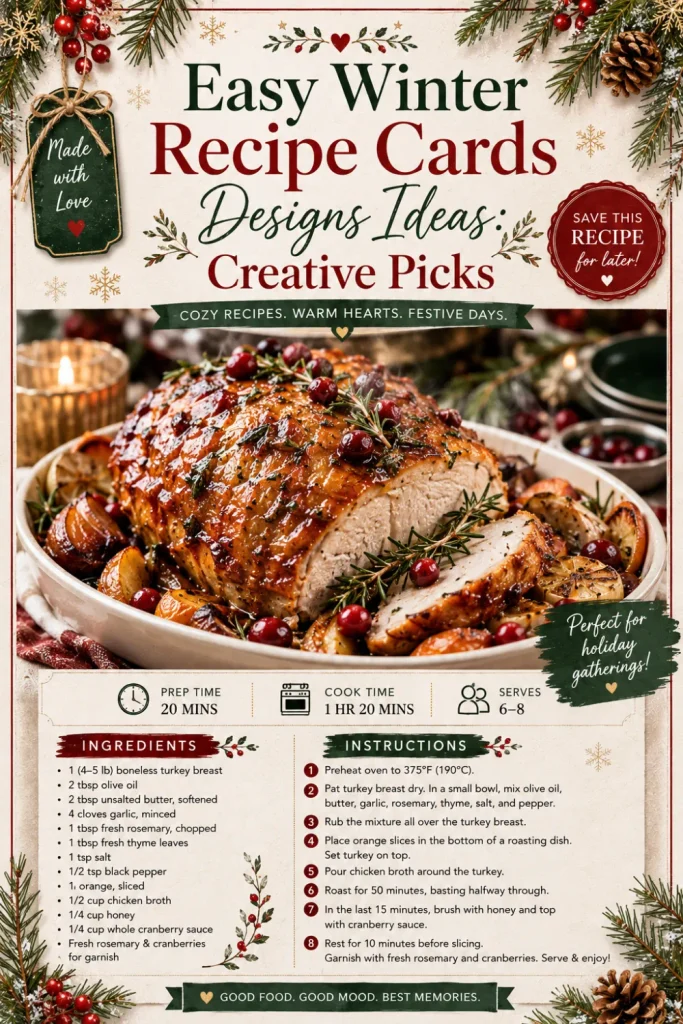
Classic red and green instantly communicate holiday season.
The trick is making them feel stylish instead of overly busy.
Simple steps:
- Choose one dominant background color.
- Add evergreen branches as accents.
- Use a decorative border around the card.
- Pair bold seasonal headings with a simple body font.
- Include a festive food photograph.
One tip: Keep red and green accents concentrated around the border, title, or small details.
- Best for: Christmas cookies, holiday appetizers, roasts, and festive desserts.
- Design boost: Include a “Holiday Favorite” ribbon.
- Pinterest detail: Use a bright food image against the darker seasonal accents.
6. Warm Gingerbread Recipe Card
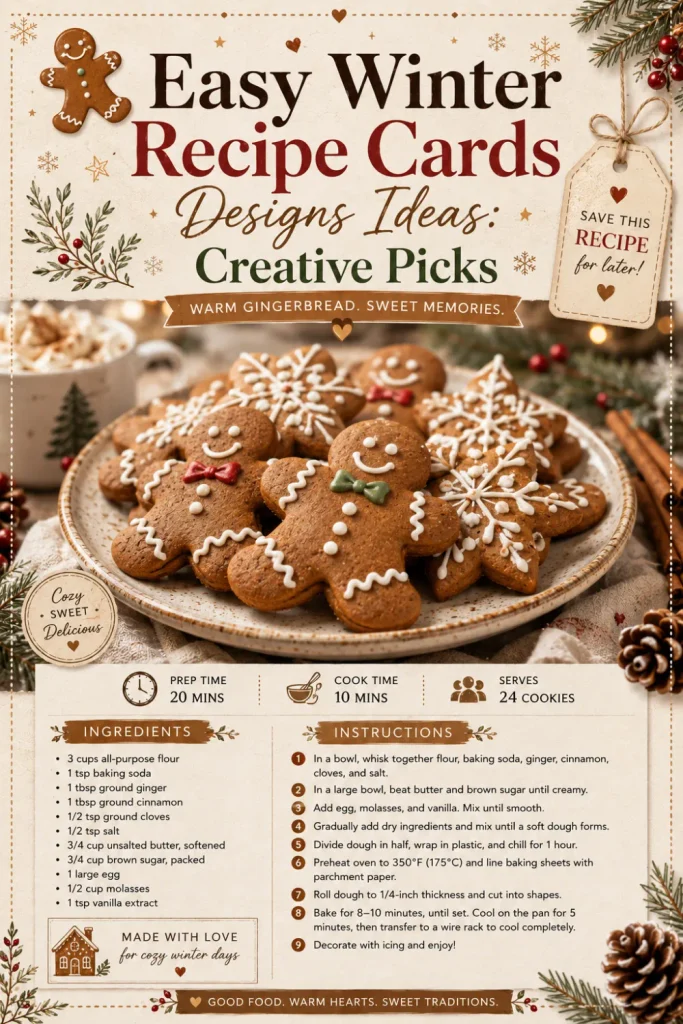
Cinnamon, cream, and gingerbread tones make this design especially charming.
It has a playful personality without losing its practical recipe structure.
Simple steps:
- Start with cream or warm tan.
- Add gingerbread illustrations.
- Use cinnamon-brown accents.
- Choose playful typography for headings.
- Add decorative stars, hearts, or tiny winter motifs.
One tip: Repeat one accent element throughout the card for visual consistency.
- Best for: Gingerbread, cookies, cakes, and hot drinks.
- Design boost: Add illustrated spice jars or cookie shapes.
- Pinterest detail: Pair the card with a warm, overhead baking photograph.
7. Winter Soup Recipe Card
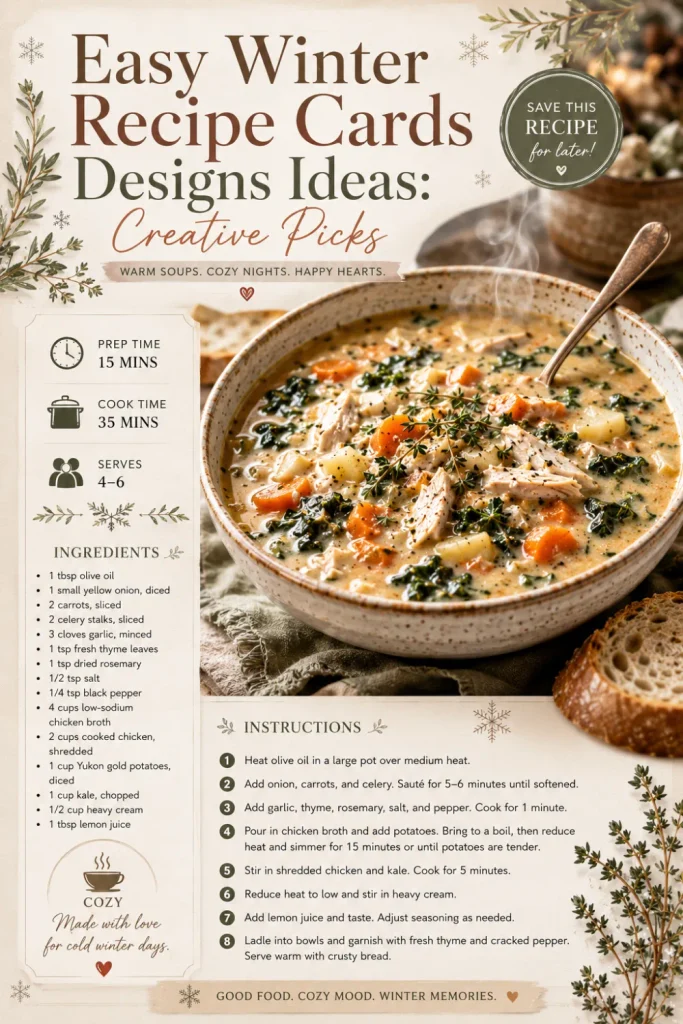
Nothing says cold-weather comfort quite like a steaming bowl of soup.
Let the photography create the emotional pull while keeping the recipe information simple.
Simple steps:
- Select a close-up steaming soup photograph.
- Use warm neutrals such as cream, beige, or taupe.
- Place ingredients in a clearly defined column.
- Add numbered cooking instructions.
- Include a small garnish detail in the image.
One tip: Photograph or illustrate visible steam for an instantly cozy winter mood.
- Best for: Tomato soup, chicken soup, potato soup, chowders, and stews.
- Design boost: Add a small “Cozy Night In” label.
- Pinterest detail: Make the soup bowl large and visually dominant.
8. Hot Cocoa Recipe Card
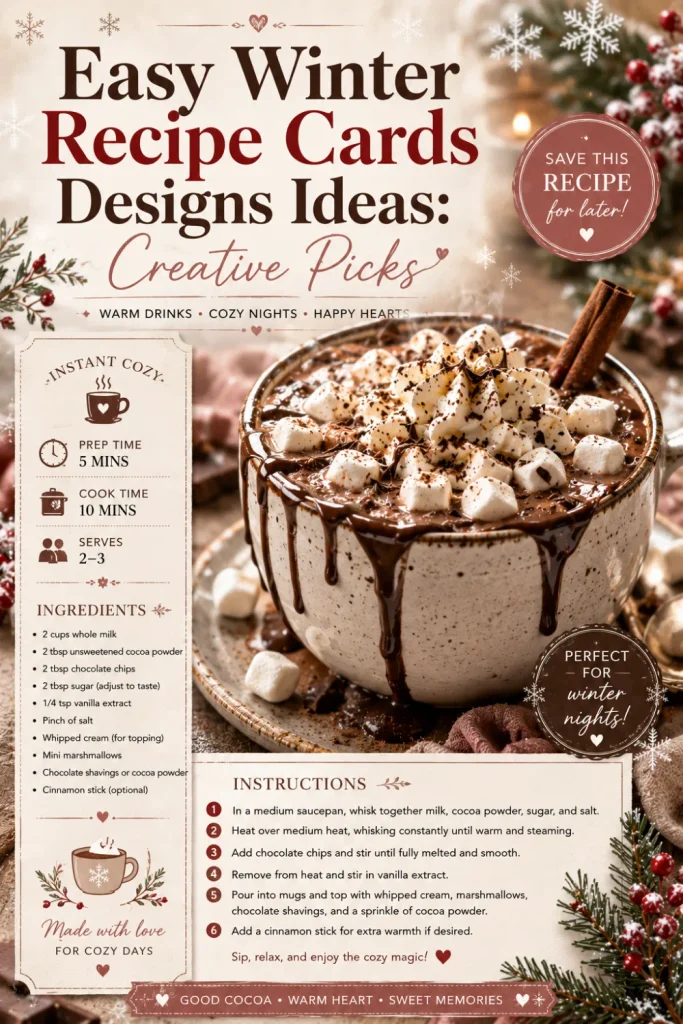
A hot cocoa card can feel like a tiny winter café menu.
Rich cocoa colors and marshmallow details naturally create warmth.
Simple steps:
- Use chocolate brown, cream, and soft winter accents.
- Add a cocoa mug as the hero image.
- Include marshmallows, whipped cream, or cinnamon visually.
- Use rounded icons for ingredients.
- Add a concise preparation section.
One tip: Keep the background lighter than the cocoa image so the drink stands out.
- Best for: Hot cocoa, mocha drinks, flavored cocoa, and winter beverages.
- Design boost: Include serving suggestions beneath the recipe.
- Pinterest detail: Add a cozy phrase such as “Perfect for Snow Days.”
9. Scandinavian Winter Recipe Card
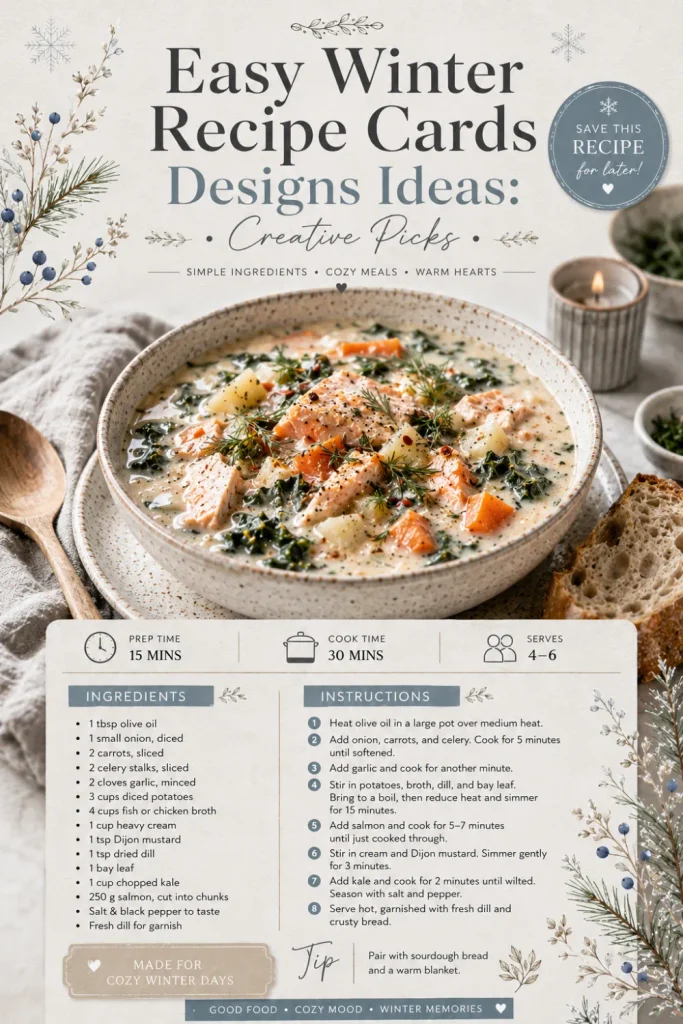
This style takes Nordic simplicity a step further with quiet colors and natural botanical elements.
It feels modern but wonderfully seasonal.
Simple steps:
- Select muted beige, gray, cream, or dusty blue.
- Add minimalist botanical illustrations.
- Use modern typography.
- Keep decorative elements symmetrical.
- Include a clean food image.
One tip: Use fewer colors than you think you need.
- Best for: Breads, soups, roasted dishes, and simple desserts.
- Design boost: Add tiny evergreen, berry, or branch illustrations.
- Pinterest detail: Keep the overall composition calm and uncluttered.
10. Holiday Baking Recipe Card
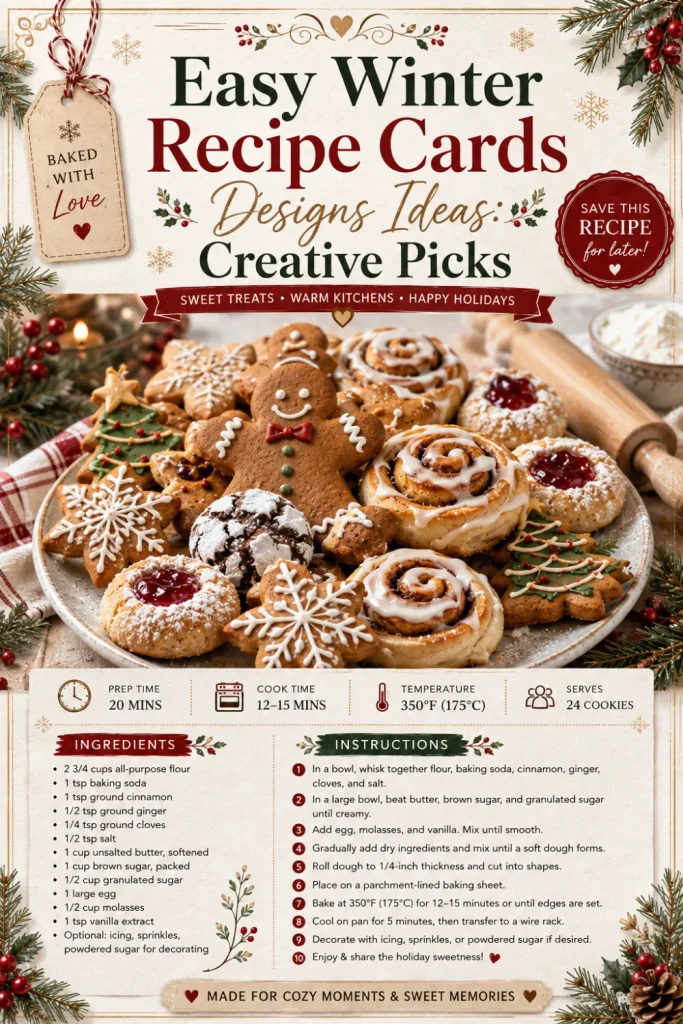
A baking-focused card can showcase both the finished treat and the practical process.
Cookies, cakes, and pastries naturally provide highly clickable visual content.
Simple steps:
- Start with a warm neutral background.
- Add a large cookie or pastry photo.
- Give ingredients their own clearly marked section.
- Number each preparation step.
- Add small festive accents around the edges.
One tip: Use consistent measurements and spacing so the card remains functional.
- Best for: Cookies, cinnamon rolls, pies, pastries, and cakes.
- Design boost: Add a small “Baking Time” and “Servings” box.
- Pinterest detail: Show several finished treats instead of only one.
11. Plaid Cozy Winter Recipe Card
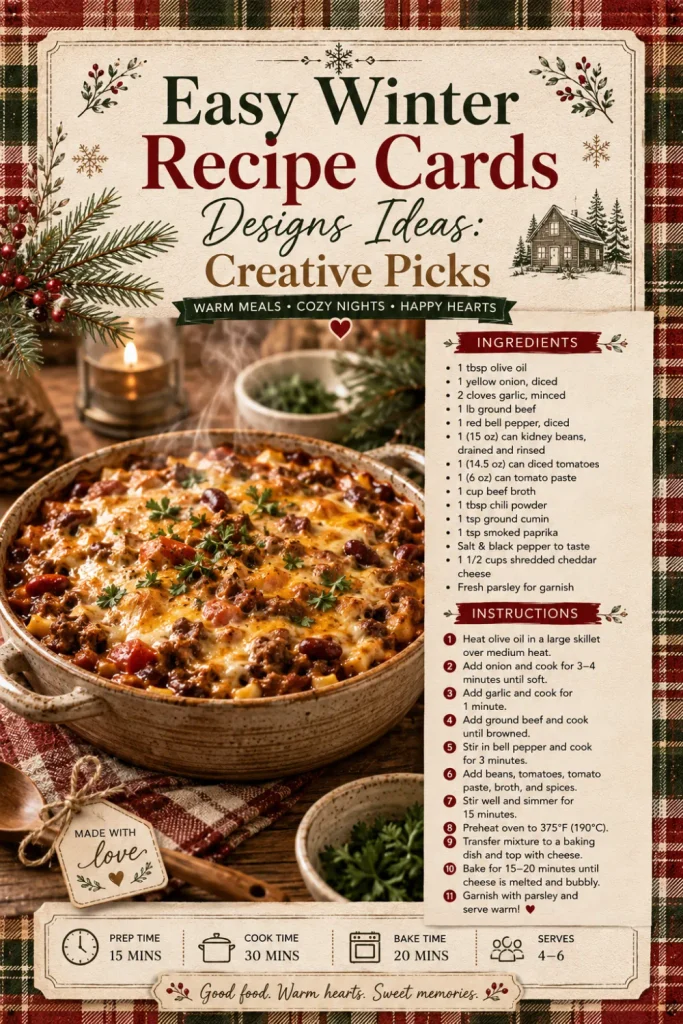
Plaid immediately brings to mind cabins, wool blankets, fireplaces, and hearty meals.
It is a strong choice for rustic winter content.
Simple steps:
- Choose a classic plaid pattern.
- Keep the center area mostly plain.
- Add wood-inspired textures sparingly.
- Use warm cream, brown, or muted seasonal shades.
- Place the recipe over a clean central panel.
One tip: Let plaid act as a border rather than covering every inch of the card.
- Best for: Chili, casseroles, roasts, baked potatoes, and hearty dinners.
- Design boost: Add a small wooden spoon or rustic kitchen illustration.
- Pinterest detail: Pair plaid with a warmly lit food photo.
12. Modern Photo-Focused Recipe Card
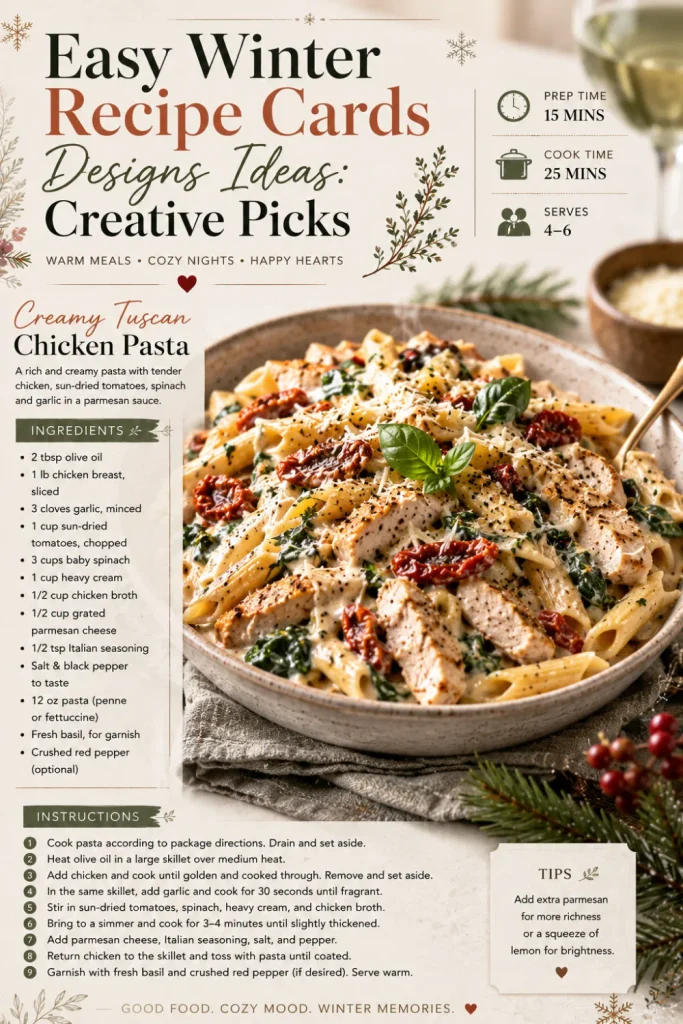
Sometimes the food deserves almost all the attention.
This editorial approach is especially effective when the finished dish is naturally beautiful.
Simple steps:
- Reserve a large section for the main food image.
- Use sleek, contemporary typography.
- Place ingredients in a compact block.
- Use thin lines to separate sections.
- Keep supporting graphics minimal.
One tip: Choose photography with strong texture, color, and close-up detail.
- Best for: Gourmet winter meals, desserts, brunch, and specialty dishes.
- Design boost: Add a small ingredient preview strip.
- Pinterest detail: Use high-contrast text over a clean section of the image.
13. Vintage Winter Recipe Card
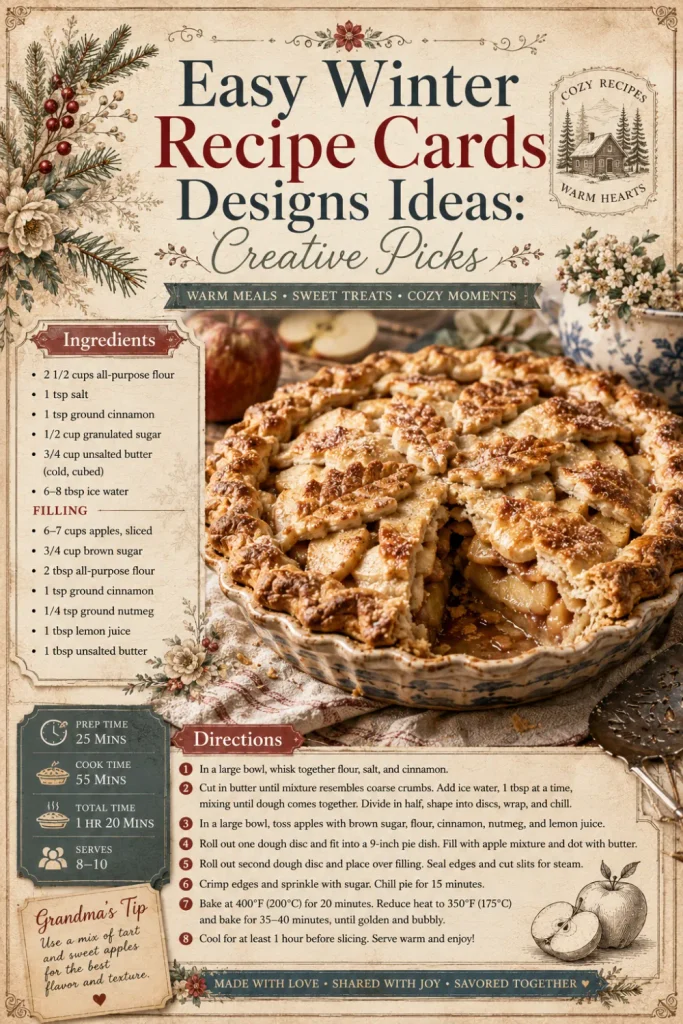
Vintage styling gives a recipe card the feeling of a treasured cookbook discovered in a kitchen drawer.
Simple steps:
- Use cream or softly aged paper tones.
- Add subtle paper grain.
- Choose classic serif fonts.
- Include delicate botanical or seasonal illustrations.
- Arrange the text like a traditional cookbook page.
One tip: Avoid making the paper texture too dark or distressed.
- Best for: Family recipes, pies, biscuits, preserves, and traditional dishes.
- Design boost: Add a faux handwritten note such as “Bake until golden.”
- Pinterest detail: Use slightly imperfect illustration details for authenticity.
14. Winter Brunch Recipe Card
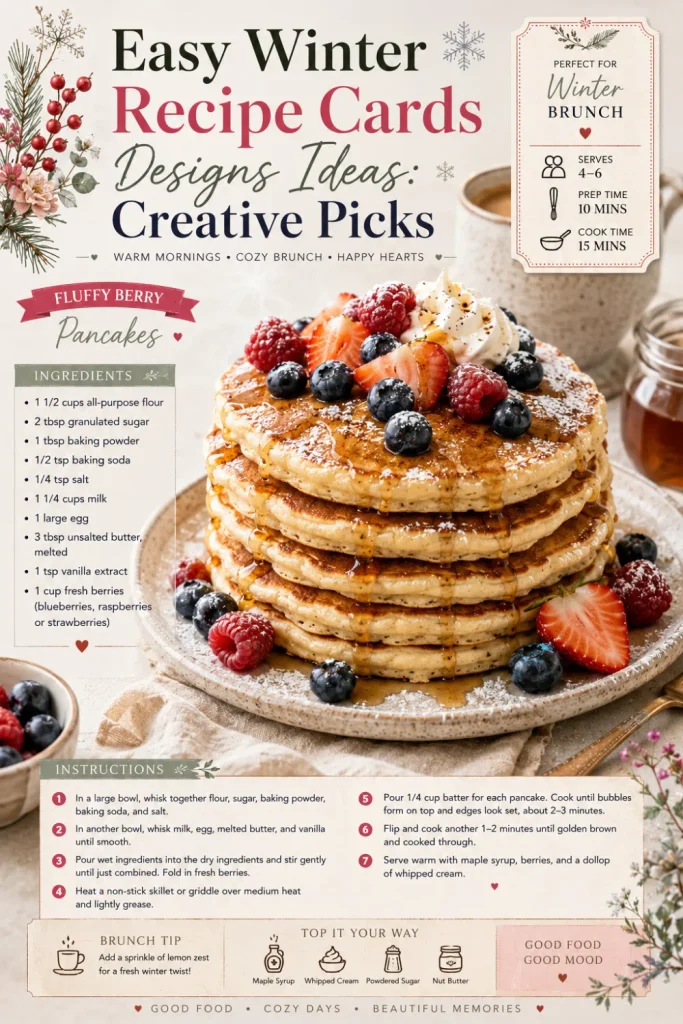
Winter brunch gives you room to use brighter photography and softer seasonal colors.
This idea can feel festive without becoming strictly holiday-themed.
Simple steps:
- Choose a bright food photograph.
- Add soft winter accents such as berries, branches, or linen.
- Use stylish typography.
- Create separate ingredient and serving sections.
- Include a small preparation timeline.
One tip: Photograph brunch foods in natural-looking daylight whenever possible.
- Best for: Pancakes, waffles, French toast, pastries, egg dishes, and fruit recipes.
- Design boost: Add “Weekend Brunch” or “Serves 4” as a small visual cue.
- Pinterest detail: Show the recipe alongside coffee, berries, or syrup for a fuller scene.
15. Luxury Winter Recipe Card
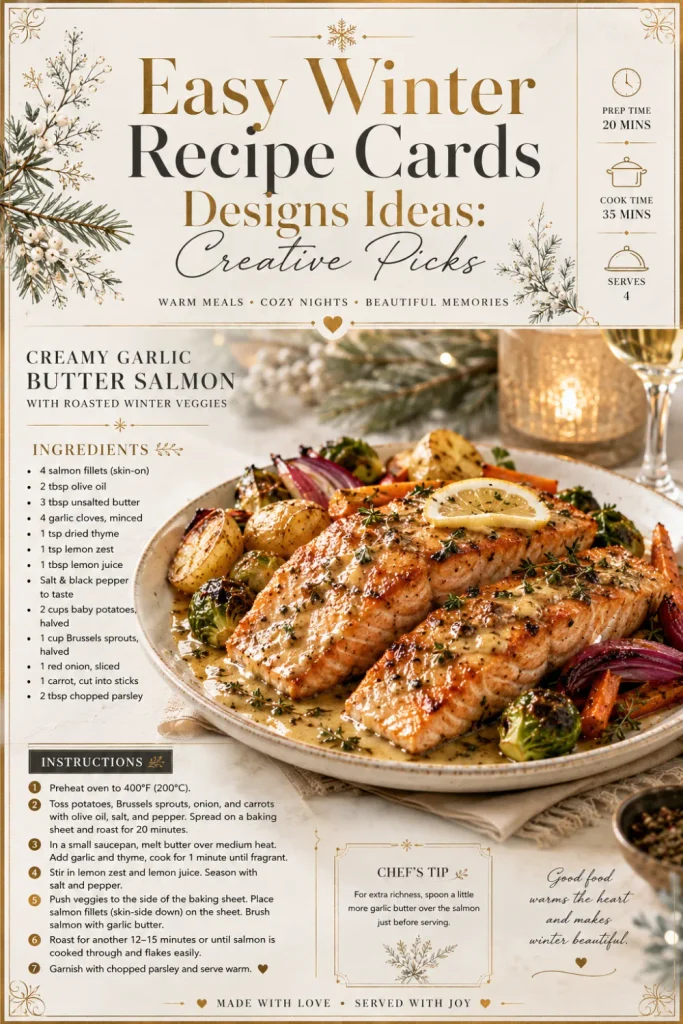
For a premium editorial feel, combine restrained color, sophisticated typography, and tiny metallic-inspired details.
This style can make a simple recipe look surprisingly elevated.
Simple steps:
- Choose cream, taupe, charcoal, or soft gray.
- Add refined serif typography.
- Use thin metallic-inspired borders or accents.
- Include a polished food photograph.
- Keep the layout spacious and balanced.
One tip: Use metallic effects as accents rather than making them the main feature.
- Best for: Dinner-party recipes, desserts, cocktails, appetizers, and gourmet dishes.
- Design boost: Add elegant serving notes beneath the ingredients.
- Pinterest detail: Use a clean vertical composition with a premium-looking hero image.
Extra Winter Recipe Card Designing Tips
A beautiful card needs to do more than look seasonal.
It should also communicate the recipe quickly, especially when someone discovers it while scrolling on Pinterest.
Use these design principles:
- Make mobile readability a priority. Use larger headings and avoid tiny ingredient text.
- Create visual hierarchy. The recipe title should be the first thing readers notice.
- Keep contrast strong. Decorative winter backgrounds should never compete with important instructions.
- Use high-quality food photography. Steam, melted cheese, powdered sugar, glossy sauces, and warm textures can make a recipe much more appealing.
- Choose one visual theme. Nordic, rustic, vintage, or luxury styling becomes stronger when carried consistently throughout the card.
- Add useful information. Servings, prep time, cook time, difficulty, and storage notes make a recipe card more practical.
- Design vertically for Pinterest. A tall layout gives you room for a large food photograph, readable title, and useful recipe details.
- Use seasonal keywords naturally. Phrases such as “winter recipes,” “cozy dinner ideas,” “holiday baking,” and “easy comfort food” can help communicate what the content offers.
How to Make Your Winter Recipe Cards More Click-Worthy
A recipe card should give viewers a reason to continue beyond the image.
Try this simple structure:
- Start with a compelling recipe title.
- Place the most appetizing food image near the top.
- Add a short description that creates curiosity.
- Highlight one useful benefit, such as “30-minute winter dinner.”
- Show ingredients and steps clearly.
- Add related-recipe suggestions beneath the card.
- Include a subtle call to action encouraging readers to see the complete recipe.
Design tip: Don’t cram the entire article onto one graphic. Give Pinterest users enough information to become curious, then direct them to the full recipe for the remaining details.
Final Thoughts
The best easy winter recipe card designs and ideas balance seasonal personality with practical readability.
A gorgeous card can stop the scroll, but thoughtful typography, useful recipe information, strong photography, and a clear visual hierarchy are what encourage readers to click through.
Whether you prefer the calm simplicity of a cozy Nordic winter recipe card, the charm of a rustic farmhouse winter recipe card, or the polished appearance of a luxury winter recipe card, the winning formula is surprisingly consistent: make the food irresistible, make the information easy to scan, and give the design one memorable seasonal detail.
For Pinterest, think beyond decoration.
Create recipe cards that are save-worthy, searchable, readable on mobile, and visually strong enough to make someone curious about the full recipe.
That combination gives your winter content more opportunities to earn saves, clicks, and long-term search visibility.