A stylish metal rocking lounger can turn an ordinary patio, porch, or garden into a relaxing outdoor retreat.
But how do you build one that looks modern and feels stable?
These 10 DIY metal rocking lounger frame plans and dimensions explore steel tube layouts, rocker curves, reclining backrests, durable finishes, and space-saving designs to help you plan a practical, contemporary lounger for 2026.
1. DIY Metal Rocking Lounger Frame Plans With Dimensions and Cut Lists
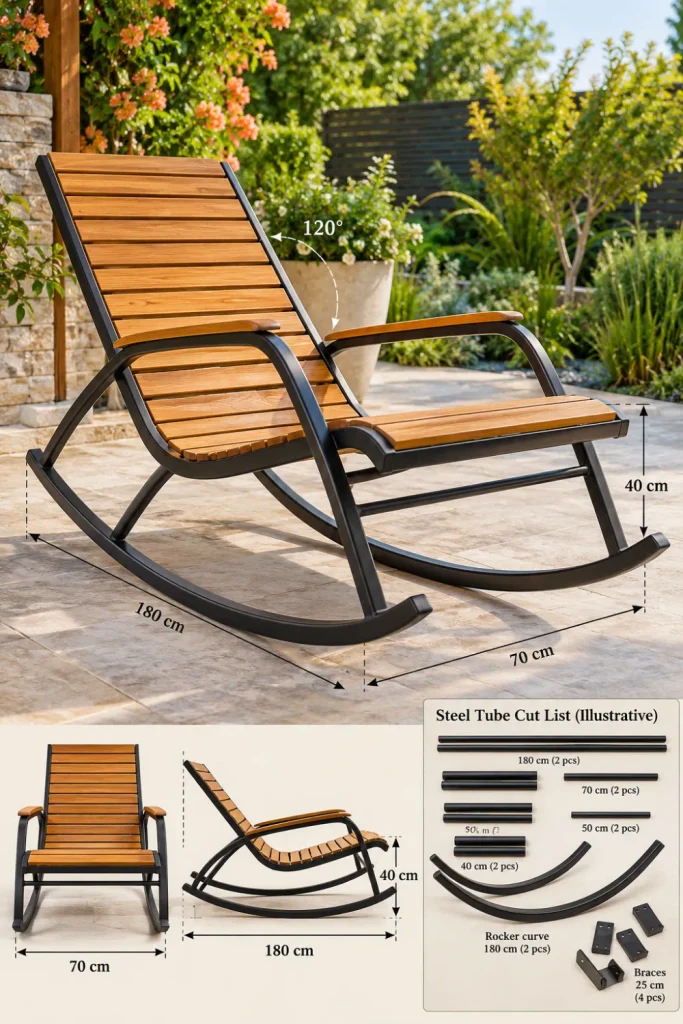
A well-planned frame is the foundation of a comfortable rocking lounger.
Modern 2026 designs favor clean lines, gently curved rockers, slim steel tubing, and supportive reclining surfaces.
Before cutting metal, sketch the complete frame and decide whether the lounger will be welded permanently or designed with removable components.
Suggested starting dimensions for a full-size lounger:
- Overall length: 170–190 cm (67–75 inches).
- Overall width: 65–75 cm (26–30 inches).
- Seat height: approximately 35–45 cm (14–18 inches).
- Backrest angle: approximately 110–130 degrees between the seat and backrest.
- Main frame tubing: a preliminary 30 × 30 mm or 40 × 20 mm steel tube layout, subject to structural design.
Simple building steps:
- Draw a side elevation showing the seat, backrest, and rocker profile.
- Create a front view to establish the width and cross-brace positions.
- Prepare a cut list after confirming the final dimensions.
- Cut matching left and right frame components.
- Tack-weld the assembly, check alignment, and complete the welds only after verification.
One tip: Treat these measurements as a concept, not a certified load-bearing plan. Rocker curvature, steel thickness, weld quality, and user weight all affect safety. Have the design checked before use.
2. Metal Rocking Lounger Frame Blueprints for Modern Outdoor Seating
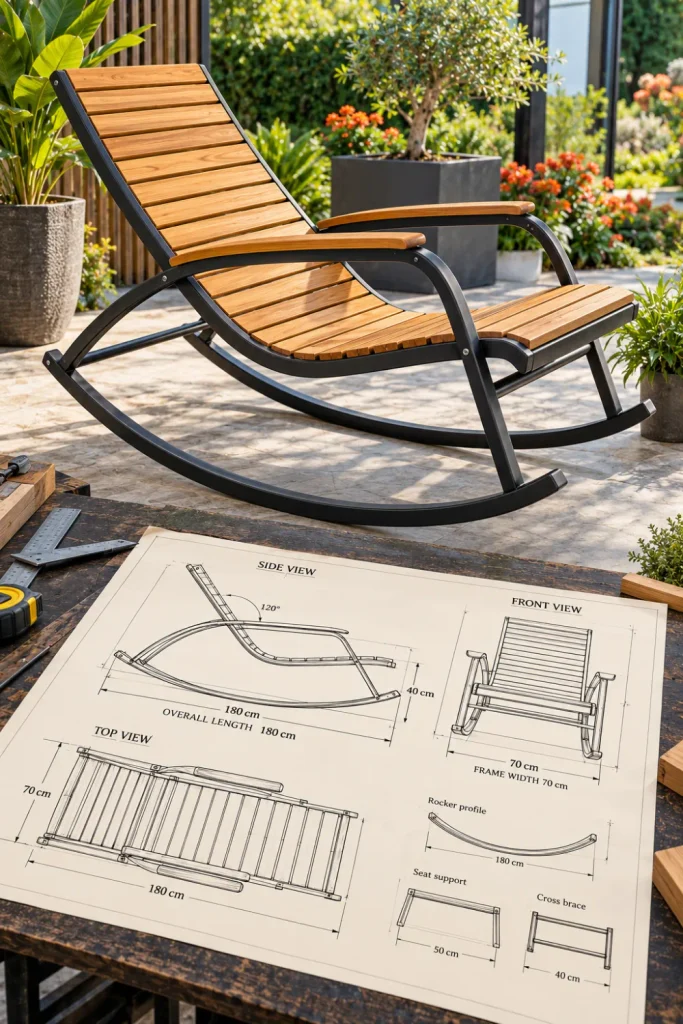
Blueprints make it easier to turn a furniture idea into a buildable project.
For a contemporary outdoor lounger, start with a simple geometric frame and introduce the rocking motion through two matching curved runners.
A useful blueprint should include:
- A side view showing the rocker radius, seat angle, and backrest position.
- A front view showing frame width and cross-bracing.
- A top view showing the seat platform and armrest spacing.
- Detail drawings for joints, mounting plates, and reclining hardware.
- A dimensioned cut list with tubing sizes and material thicknesses.
Simple steps:
- Choose a low-profile, armless, or armrest-supported design.
- Draw the seat and backrest as separate components.
- Mark the rocker contact line and expected movement.
- Add reinforcement at major joints.
- Confirm that the design cannot easily tip forward or backward throughout its intended rocking range.
For an updated 2026 look, consider matte-black steel paired with warm teak-colored slats or neutral outdoor cushions. The contrast feels contemporary without making the furniture look overly industrial.
One tip: A blueprint should specify more than the outside dimensions. It also needs the joint details and rocker geometry that determine how the lounger behaves.
3. DIY Metal Lounger Frame Designs With Practical Steel Tube Layouts
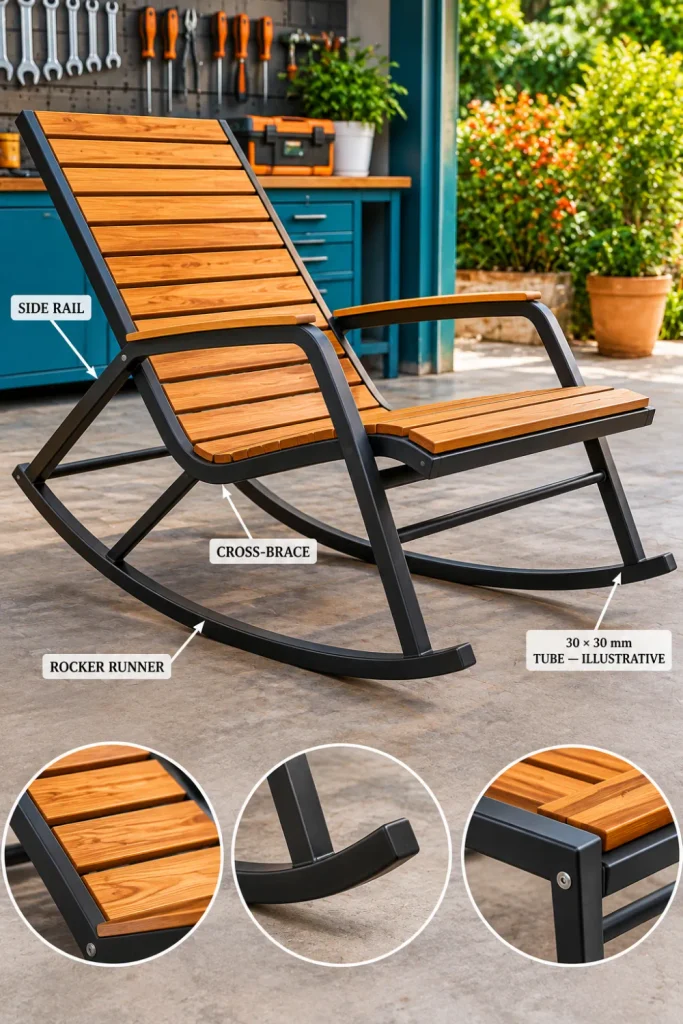
Steel tubing is popular for DIY outdoor furniture because it creates a clean profile and can be fabricated into strong, visually lightweight structures when correctly engineered.
The trick is choosing a layout that balances appearance, rigidity, and ease of assembly.
Consider these three approaches:
- Rectangular tube frame: Creates a minimalist silhouette and provides broad faces for joining brackets and mounting slats.
- Round tube frame: Produces softer, flowing lines that suit curved modern loungers, although joints may require more careful fitting.
- Hybrid frame: Combines steel tubing with timber slats, weather-resistant panels, or removable cushions for a warmer finish.
Simple fabrication steps:
- Select tubing based on the design loads and intended outdoor conditions.
- Measure and mark every component from the approved drawing.
- Deburr cut edges and prepare clean joining surfaces.
- Assemble the frame on a flat workbench or jig.
- Check diagonals, symmetry, and cross-bracing before final welding.
One tip: Do not assume thicker steel automatically creates a better lounger. Excessive weight can make handling difficult, while poorly placed reinforcement can interfere with the rocking movement.
4. Rocking Lounger Frame Dimensions to Plan Before Cutting Metal
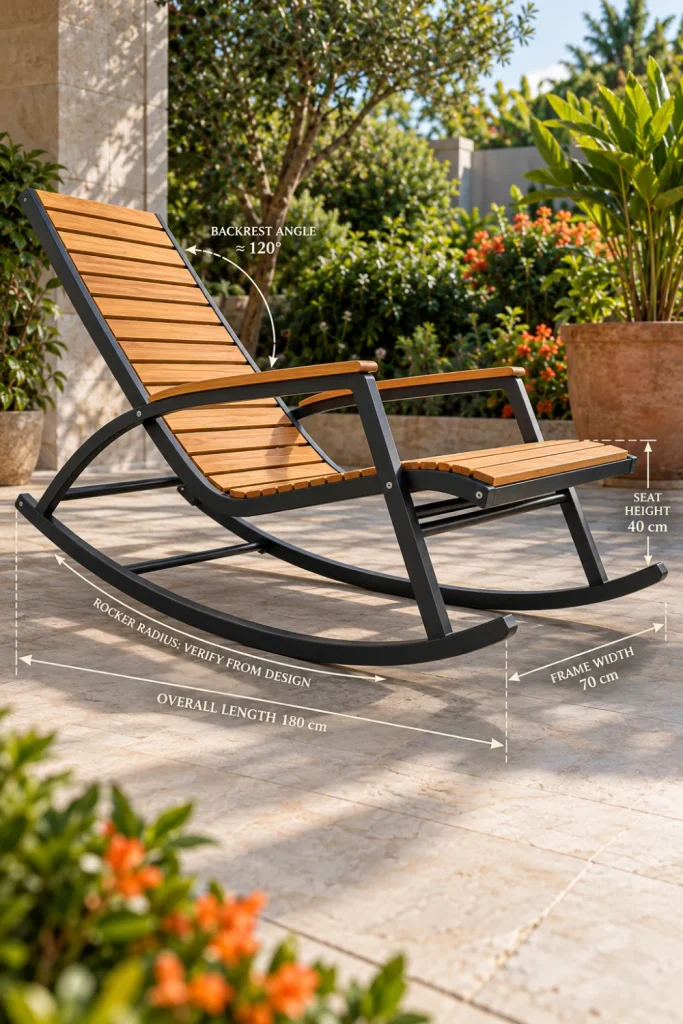
The proportions of a rocking lounger affect its appearance, comfort, and stability.
A frame that looks elegant in a sketch may feel awkward if the seat is too short or the backrest sits at the wrong angle.
Important dimensions include:
- Rocker radius: Determines the shape of the curved runners and influences the rocking motion.
- Seat height: Affects how easily users get in and out of the lounger.
- Overall length: Must accommodate the seat, backrest, and intended reclining position.
- Frame width: Should provide adequate support without making the lounger unnecessarily bulky.
- Backrest geometry: Determines the reclining posture and where loads transfer into the main frame.
Simple planning steps:
- Establish the intended user’s height range and sitting position.
- Draw the side profile at full scale if possible.
- Compare alternative rocker curves using a physical template.
- Check clearances between the runners and frame throughout the movement.
- Review the design for tipping risks before fabrication.
One tip: There is no universally safe rocker radius. It must be assessed together with the center of gravity, frame geometry, user position, and the intended rocking limits.
5. Essential Materials and Tools for a DIY Metal Lounger Frame
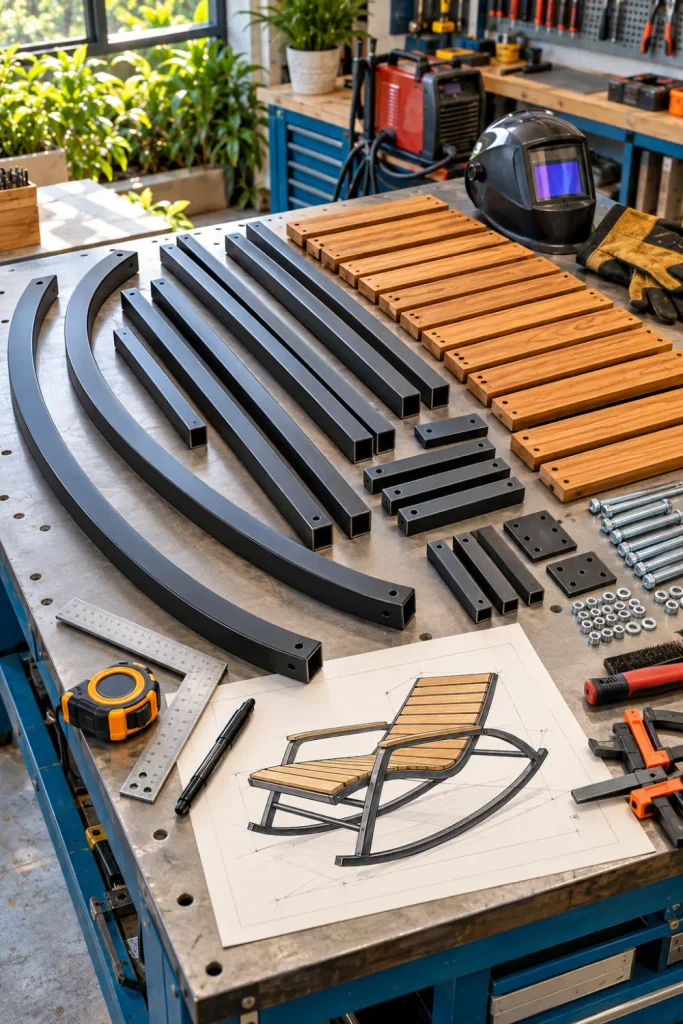
Gathering the right materials before fabrication helps prevent delays and unnecessary waste.
A modern DIY metal lounger generally combines a steel frame, stable joining hardware, weather protection, and a comfortable seat surface.
Materials checklist:
- Suitable structural steel tubing and runner material.
- Cross-braces, mounting plates, and approved fasteners.
- Outdoor-rated timber slats or a suitable seating platform.
- Exterior-grade protective coating or a compatible powder-coating system.
- Weather-resistant cushions and corrosion-resistant hardware, where appropriate.
Tools checklist:
- Tape measure, square, marker, and straightedge.
- Appropriate metal-cutting saw or cutting equipment.
- Deburring tools and clamps.
- Welding equipment suitable for the selected material and joint.
- Protective eyewear, welding helmet, gloves, and appropriate protective clothing.
Simple preparation steps:
- Verify material dimensions and condition.
- Prepare a cutting schedule to reduce scrap.
- Organize the frame components by assembly stage.
- Check that tools and protective equipment are suitable for the work.
- Arrange professional fabrication support if the required welding skills are unavailable.
One tip: Never weld galvanized or coated metal without the correct preparation and controls. Hazardous fumes can result, and appropriate ventilation and professional safety guidance are essential.
6. Modern Metal Rocking Lounger Ideas for Patios, Porches, and Gardens
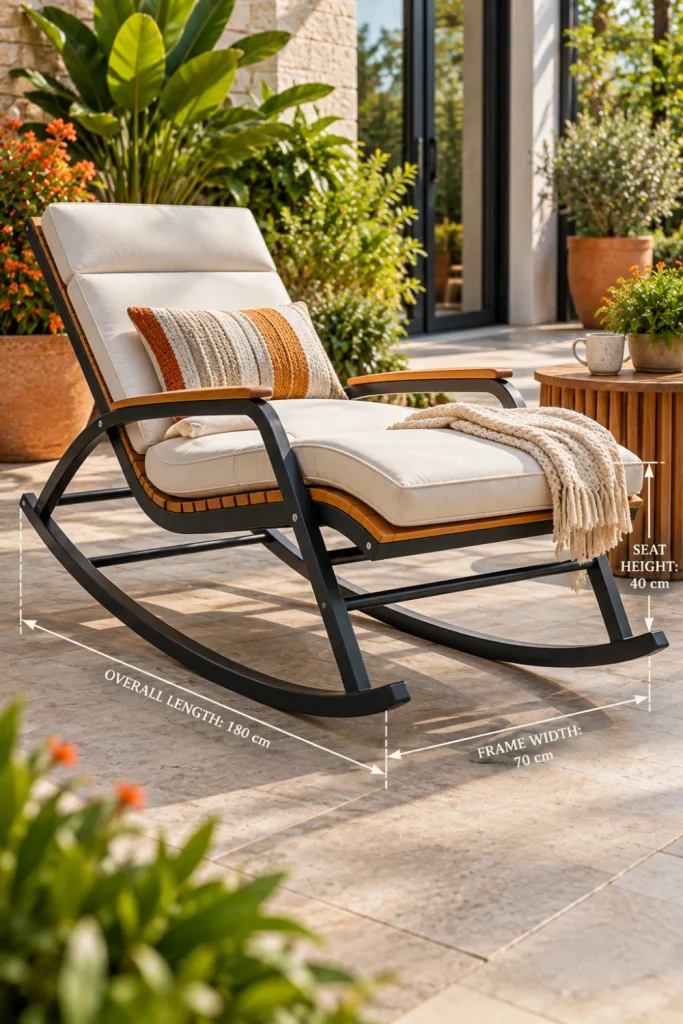
Outdoor furniture in 2026 increasingly lends itself to a mix of simple silhouettes, tactile materials, and colors that blend into the surrounding landscape.
A DIY rocking lounger can follow that direction without requiring complicated decorative details.
Try these design ideas:
- Matte-black frame with natural timber: Creates a crisp, architectural look against greenery.
- Warm bronze or dark-brown finish: Works well with stone patios and earthy garden palettes.
- Soft-gray steel with cream cushions: Gives a porch a lighter, understated appearance.
- Black steel with teak-style slats: Adds visual warmth while preserving a modern profile.
- Minimal armless lounger: Keeps the design streamlined and easier to position in a garden corner.
Simple styling steps:
- Match the frame finish to existing outdoor fixtures.
- Choose cushions made for outdoor exposure.
- Add a small side table within comfortable reach.
- Position the lounger on a level, suitable surface.
- Leave enough room for the full rocking movement.
One tip: A beautiful finish cannot compensate for an unstable frame. Complete the structural design first, then choose colors and accessories.
7. Adjustable Metal Lounger Frame Ideas for a More Comfortable Recline
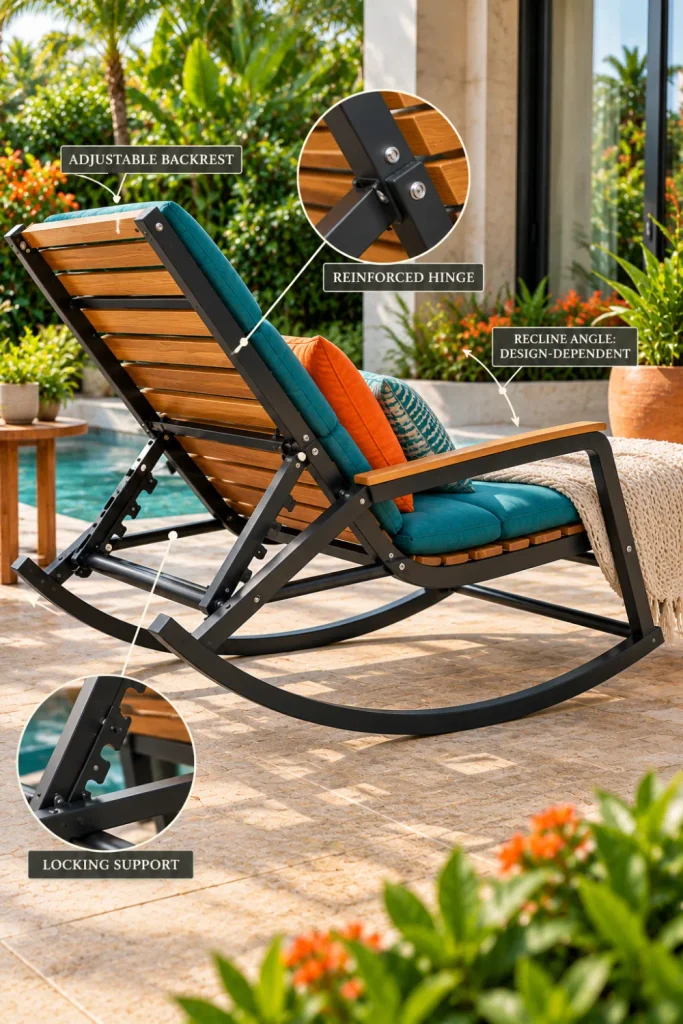
An adjustable backrest can make a metal rocking lounger more versatile.
It allows users to move between an upright reading position and a more relaxed lounging posture without building an entirely different frame.
Possible mechanisms include:
- Multi-position support bar: Uses a purpose-designed support that engages with several reinforced positions.
- Locking hinge system: Allows the backrest to rotate while locking securely at selected angles.
- Removable-position pin system: Uses engineered brackets and locking pins to secure the backrest.
- Fixed reclining frame: Eliminates moving hardware for a simpler design with fewer maintenance requirements.
Simple design steps:
- Decide which reclining positions are genuinely useful.
- Design reinforced attachment points for the backrest.
- Select hardware rated for the expected loads and movement.
- Check pinch points and prevent accidental release.
- Test the mechanism under controlled conditions before regular use.
One tip: Avoid improvised hinges or loose support bars. A backrest that suddenly collapses can cause injury, so locking components must be properly designed and inspected.
8. Space-Saving Metal Rocking Lounger Designs for Small Outdoor Spaces
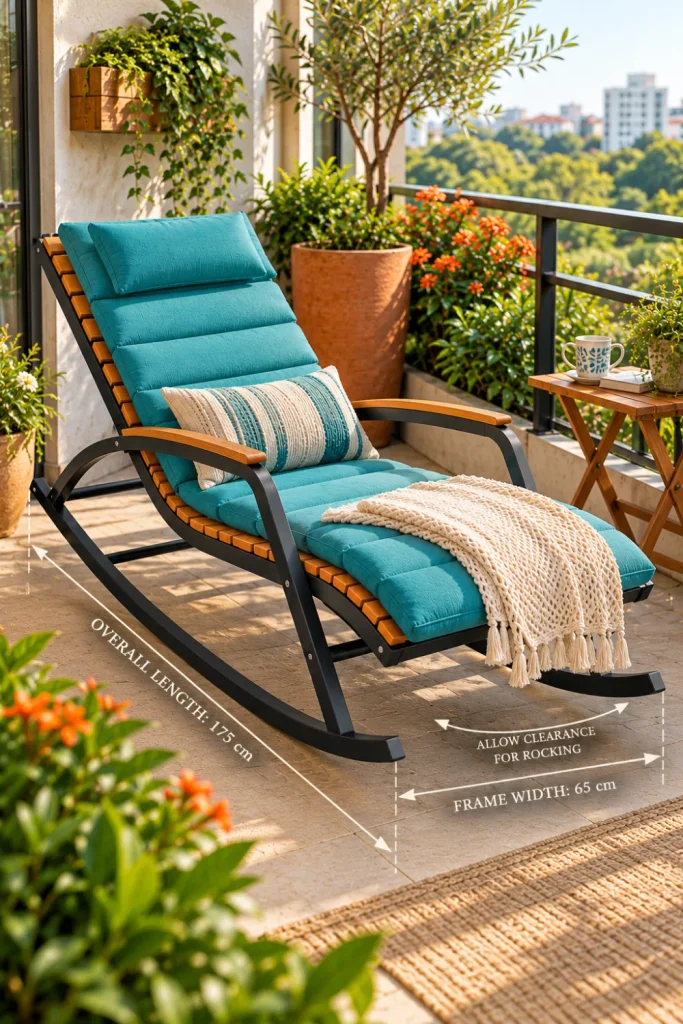
A small balcony or narrow patio does not automatically rule out a rocking lounger.
The key is to reduce unnecessary bulk while preserving the support and clearance needed for comfortable movement.
Consider these practical layouts:
- Slim-profile lounger: Uses a narrow silhouette suited to compact outdoor areas.
- Armless design: Removes bulky side structures and creates a lighter visual footprint.
- Compact reclining frame: Shortens the overall design where appropriate, while retaining adequate leg and back support.
- Removable cushion system: Makes storage and seasonal cleaning easier.
- Stack-free, lightweight design: Prioritizes convenient movement without sacrificing structural stability.
Simple planning steps:
- Measure the usable patio or balcony area.
- Mark the lounger footprint on the ground.
- Add clearance for the full rocking movement.
- Check access to doors, walkways, and railings.
- Confirm the floor or balcony can safely support the furniture and occupants.
One tip: Do not shorten the frame simply to make it fit. Preserve comfortable proportions and safe clearances, even if that means choosing a different furniture style.
9. Metal Lounger Frame Finishes for a Durable and Modern Garden Look
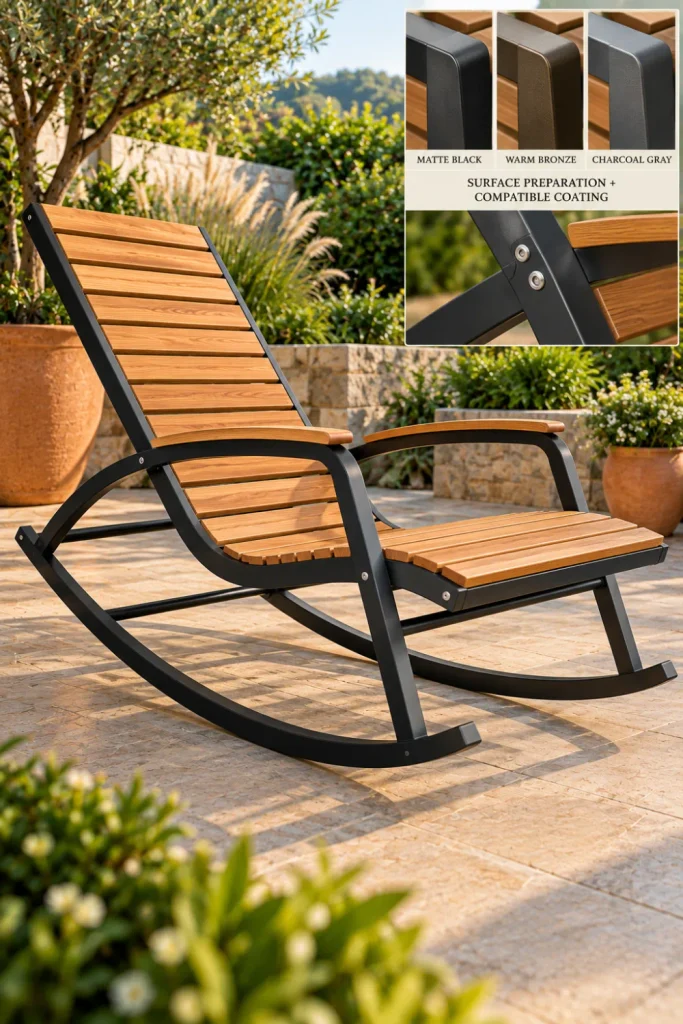
Outdoor steel faces moisture, sunlight, dirt, and temperature changes.
A suitable finish protects the metal while helping the lounger maintain its appearance over time.
Popular options include:
- Powder coating: Provides an attractive, even finish when the metal is properly prepared and the coating is professionally applied.
- Exterior metal primer and paint: Offers a practical finishing option when the products are compatible with the steel and exposure conditions.
- Corrosion-resistant metal: May be appropriate for some components, depending on the material, budget, and fabrication requirements.
- Timber and steel combination: Introduces natural texture while allowing the metal frame to retain a contemporary appearance.
Simple finishing steps:
- Remove dirt, grease, rust, and fabrication residue.
- Prepare the steel according to the coating manufacturer’s instructions.
- Apply compatible primer and protective coating where required.
- Allow the finish to cure fully before assembly or outdoor use.
- Inspect exposed edges, joints, and fastener areas periodically.
One tip: If powder coating is planned, coordinate it with the fabrication process. Drainage holes, concealed joints, and coating access should be considered before the frame is assembled.
10. DIY Metal Rocking Lounger Frame Mistakes to Avoid Before Welding and Assembly
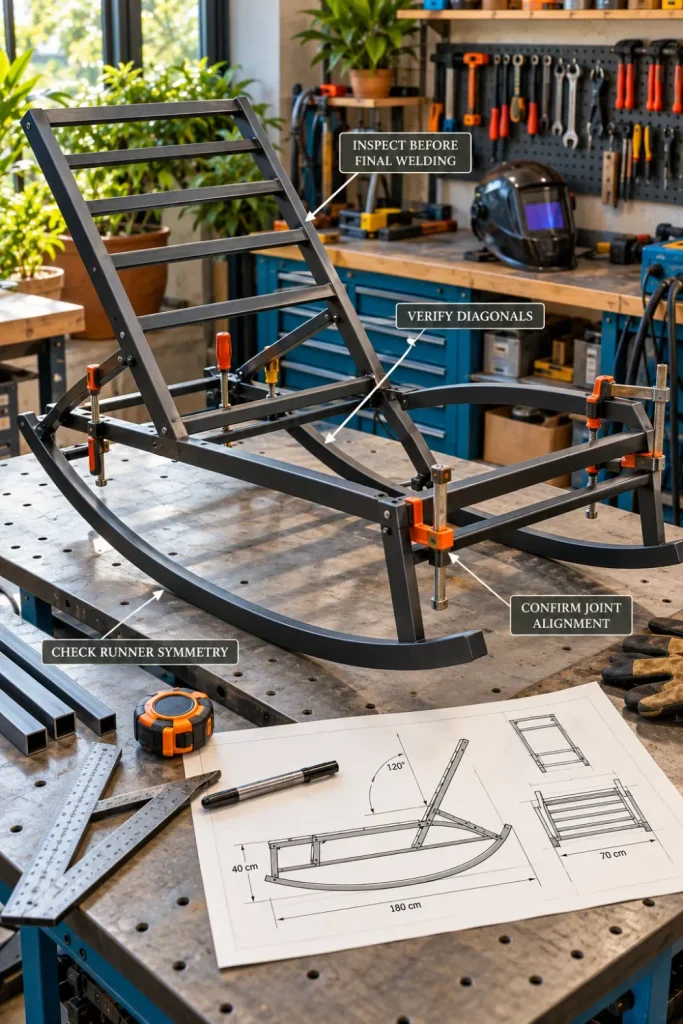
Even a stylish design can disappoint if small fabrication errors accumulate.
Careful measuring, alignment, and inspection are often more valuable than adding decorative features.
Avoid these common mistakes:
- Cutting before confirming dimensions: Incorrect lengths can create alignment problems and waste steel.
- Using mismatched rocker profiles: Unequal runners can produce an uneven rocking motion.
- Ignoring cross-bracing: Insufficient lateral rigidity may allow the frame to twist.
- Welding without checking alignment: Heat can distort components and pull the structure out of square.
- Choosing unsuitable hardware: Weak hinges, fasteners, or support brackets can compromise the backrest.
- Skipping corrosion protection: Bare steel can rust, particularly around joints and exposed edges.
- Testing with a person too early: An unverified frame should never be treated as ready for use.
Simple final inspection steps:
- Compare the finished frame against the approved drawing.
- Inspect welds and joints for defects using an appropriate inspection method.
- Verify the rocker profiles, clearances, and intended movement.
- Have structural concerns assessed by a qualified fabricator or engineer.
- Complete controlled stability and load testing before the lounger is put into service.
One tip: Never use a homemade, unverified load rating. Safe capacity depends on the complete design, material specifications, welds, hardware, and testing—not just the dimensions of the steel tubing.
Final Thoughts: Build a Modern Metal Rocking Lounger That Lasts
A DIY metal rocking lounger can become a standout feature in a modern patio, porch, or garden.
The best projects combine thoughtful dimensions, carefully matched rocker curves, sturdy construction, comfortable reclining geometry, and weather-resistant finishes.
Before starting, keep these priorities in mind:
- Plan first: Prepare dimensioned drawings and a verified cut list before buying or cutting steel.
- Prioritize safety: Use appropriate materials, sound fabrication methods, and qualified structural review.
- Design for comfort: Consider seat height, backrest angle, width, and the intended user’s proportions.
- Protect the frame: Choose a suitable corrosion-resistant finish and maintain it regularly.
- Personalize the style: Pair modern steel with outdoor cushions, timber slats, and complementary patio accessories.
For a stronger project plan, research steel tube fabrication techniques, rocker geometry, adjustable backrest hardware, outdoor powder-coating systems, and safe welding practices before construction.
These additional details can help turn an attractive Pinterest inspiration into a more practical, durable outdoor furniture project.