Modern kitchen windows do more than brighten a room.
The right design can make a compact kitchen feel larger, improve ventilation, frame a beautiful outdoor view, and add architectural character.
These 10 modern kitchen window ideas combine practical function with contemporary style.
You’ll discover smart placement ideas, styling tips, and simple remodeling steps to create a brighter, more polished kitchen.
1. Black-Framed Picture Window
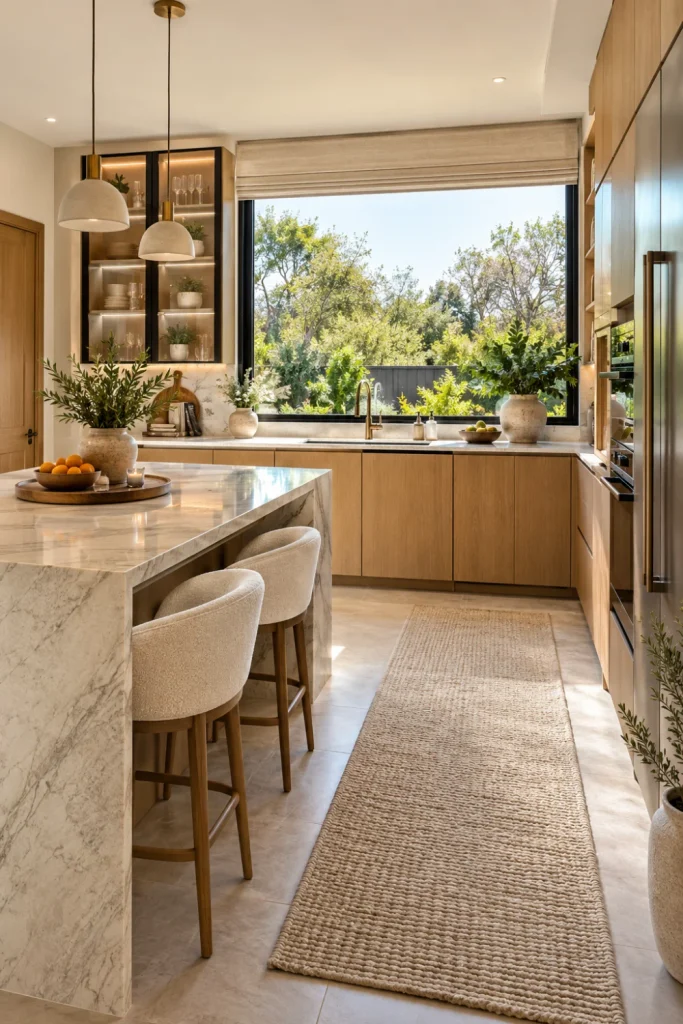
A black-framed picture window brings instant architectural drama to a modern kitchen.
Its large uninterrupted glass area floods the room with daylight, while the dark frame creates a sharp contrast against white, cream, wood, or stone finishes.
Simple steps:
- Choose a wall with strong natural light and an attractive exterior view.
- Select a slim black frame to keep the look contemporary.
- Coordinate nearby hardware with matte black or dark bronze accents.
- Keep window treatments minimal so daylight remains the main feature.
One tip: Pair the window with warm oak cabinetry to soften the bold black frame and create a balanced, upscale look.
Remodeling value: This option works especially well as a focal point above a dining zone, prep area, or open stretch of countertop.
2. Wide Horizontal Window Above the Sink
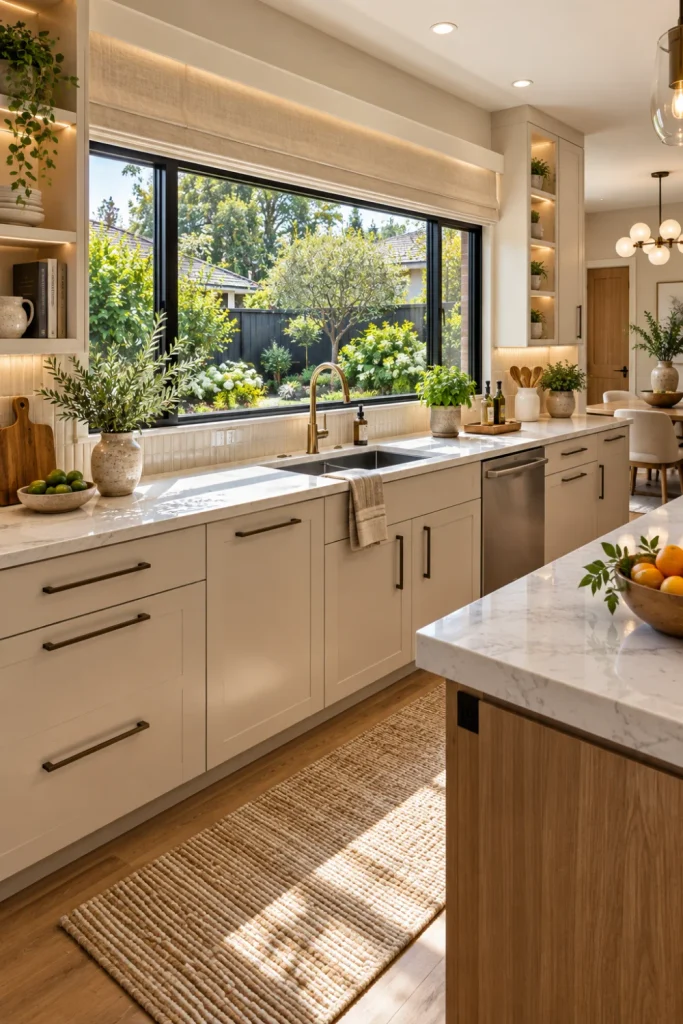
A wide horizontal window above the sink combines everyday practicality with a clean modern silhouette.
It places natural light exactly where kitchen tasks happen and can make the countertop area feel much less enclosed.
Simple steps:
- Measure the available wall space above the sink.
- Keep the lower window line high enough to protect cabinet and backsplash proportions.
- Choose a simple frame in black, white, aluminum, or natural wood.
- Add a discreet shade only where privacy requires it.
One tip: Extend the window visually across much of the sink wall for a spacious, custom-built appearance.
Styling idea: Use a few sculptural ceramics or trailing herbs on the countertop instead of cluttering the sill.
3. Corner Kitchen Windows
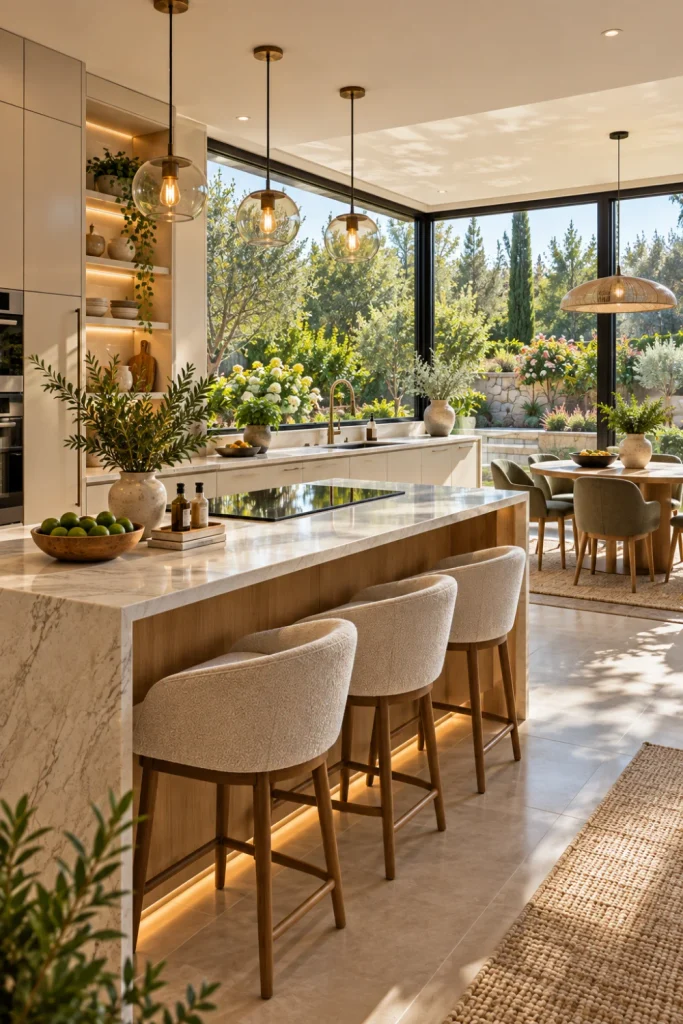
Corner kitchen windows create a bright, open feeling by bringing daylight in from two directions.
Wraparound glazing is especially striking in open-plan kitchens where the goal is to strengthen the connection between the interior and garden.
Simple steps:
- Identify a corner with access to useful exterior views.
- Plan cabinetry around the glazing rather than blocking it.
- Use slim frames to maximize the glass area.
- Continue flooring and colors toward the outdoor space for visual flow.
One tip: Avoid heavy curtains that interrupt the wraparound effect.
Design advantage: Corner glazing can make modern kitchens feel more expansive without increasing their actual footprint. It is particularly effective alongside minimalist cabinetry and large-format flooring.
4. Floor-to-Ceiling Glass Window
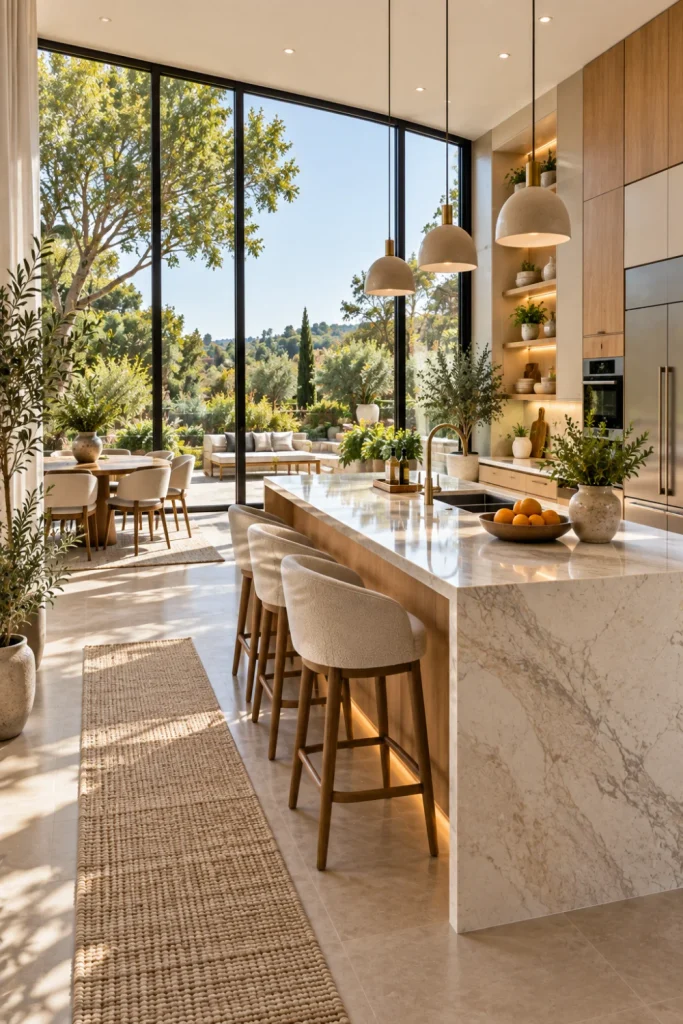
A floor-to-ceiling glass window is a bold contemporary statement that can completely transform the atmosphere of a kitchen.
It introduces abundant daylight, emphasizes ceiling height, and gives the room a luxurious indoor-outdoor relationship.
Simple steps:
- Reserve the feature for a wall where the view deserves attention.
- Check that the surrounding furniture will not block the lower glazing.
- Select energy-efficient glass suited to your climate.
- Coordinate the frame with doors, cabinetry, and architectural hardware.
One tip: Use soft furnishings in warm neutrals to prevent a large glass wall from making the kitchen feel visually cold.
Makeover idea: Continue the same flooring toward a patio or garden to create a seamless visual transition.
5. Clerestory Kitchen Windows
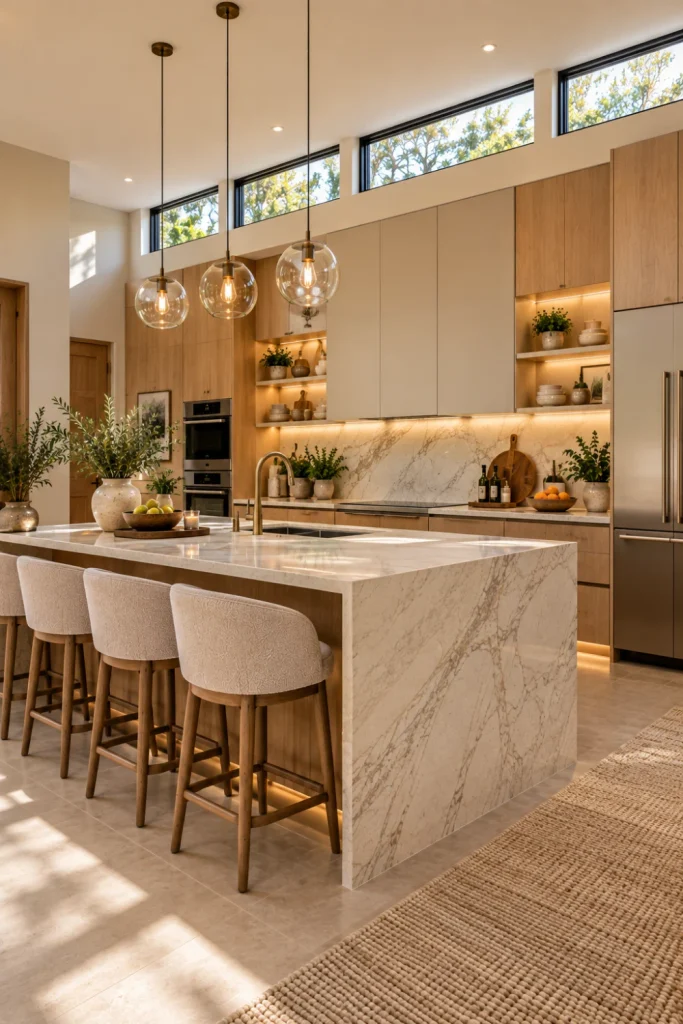
Clerestory kitchen windows sit high on the wall, allowing natural light into the room while preserving valuable space below.
They are excellent for contemporary kitchens where upper storage, privacy, or cleaner wall lines are priorities.
Simple steps:
- Locate the highest practical section of the wall.
- Determine the window height according to your storage plan.
- Choose fixed glazing or narrow opening sections for ventilation.
- Keep the surrounding wall finish simple to emphasize the architectural detail.
One tip: Place clerestory windows above tall cabinetry to brighten an otherwise dark zone.
Practical benefit: These windows can deliver daylight without exposing work surfaces or living areas directly to neighboring properties.
6. Modern Arched Kitchen Window
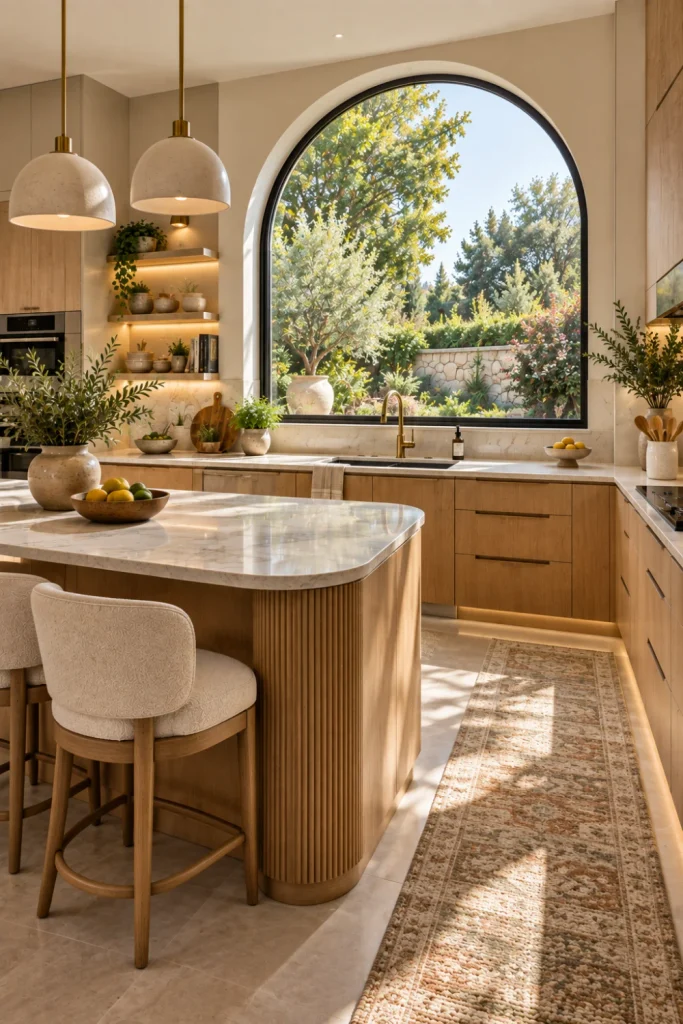
A modern arched kitchen window introduces a softer architectural element without abandoning contemporary style.
The curved top creates visual interest and pairs beautifully with streamlined cabinetry, natural stone, and warm wood.
Simple steps:
- Choose an arch proportion that complements the kitchen ceiling.
- Keep the surrounding trim simple and refined.
- Repeat subtle curves elsewhere through lighting, furniture, or decor.
- Select a frame finish that supports the overall palette.
One tip: Avoid adding too many decorative details—the shape itself should remain the star.
Styling idea: An arched window looks especially elegant above a sink or beside a built-in breakfast area, where it becomes both functional and decorative.
7. Double Casement Windows
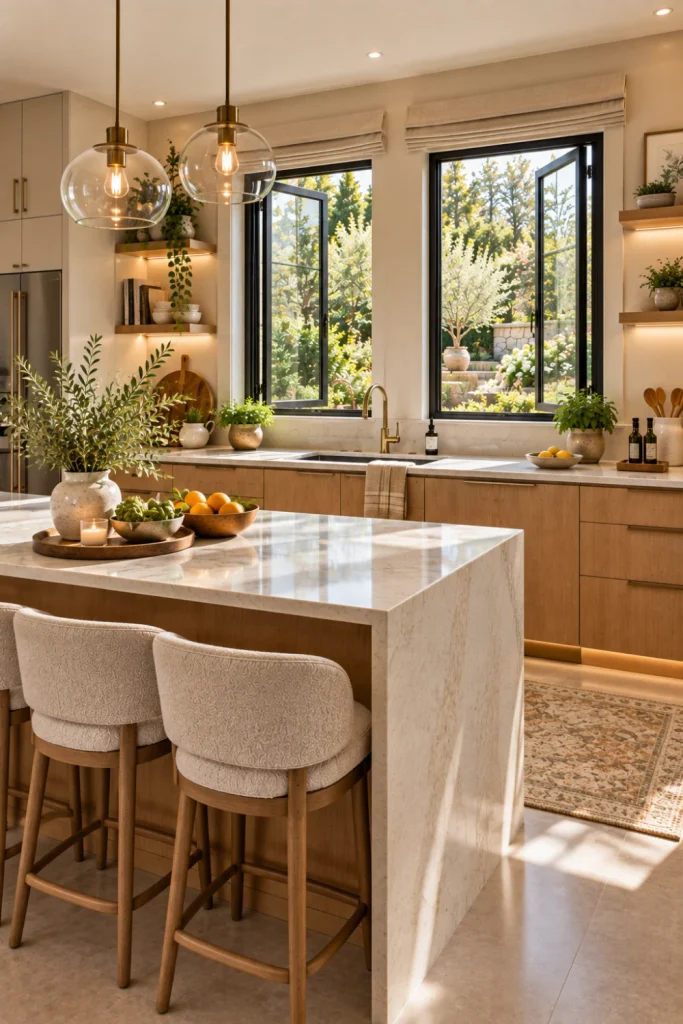
Double casement windows bring familiar functionality into a polished modern kitchen.
Their paired opening panels provide ventilation and daylight while creating a naturally symmetrical appearance.
Simple steps:
- Center the windows over the main work zone when possible.
- Select slim frames for a lighter contemporary appearance.
- Make sure the opening direction works with nearby cabinets and faucets.
- Add simple hardware that matches the kitchen fixtures.
One tip: Use matching windows on adjacent walls when the kitchen layout allows it for extra visual balance.
Design advantage: Casement windows are a smart choice for kitchens that need regular ventilation, particularly near cooking and washing areas.
8. Minimalist Awning Window
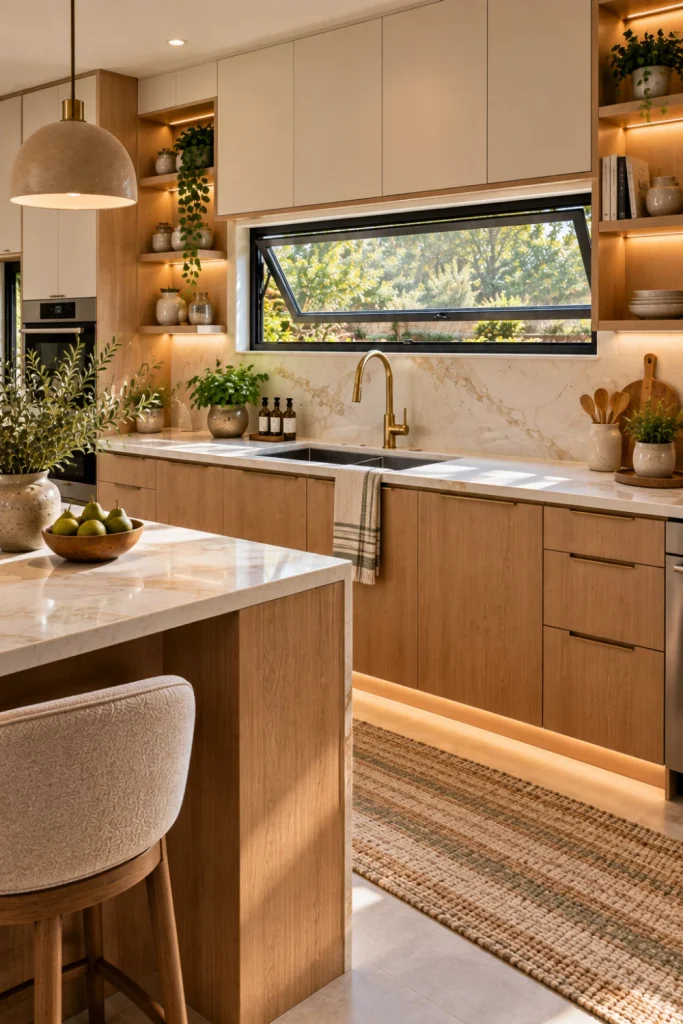
A minimalist awning window offers a streamlined solution for kitchens that need airflow without sacrificing privacy or clean lines.
Its compact profile works particularly well in contemporary and compact kitchen designs.
Simple steps:
- Select a horizontal format that fits naturally between cabinets or walls.
- Position it where ventilation will be useful.
- Choose a slim frame and uncluttered hardware.
- Keep surrounding finishes simple and continuous.
One tip: Install an awning window above the sink or countertop where controlled ventilation can help release cooking heat and moisture.
Styling advantage: Combine it with smooth cabinetry, integrated lighting, and a simple backsplash for a sophisticated minimalist composition.
9. Large Sliding Kitchen Window
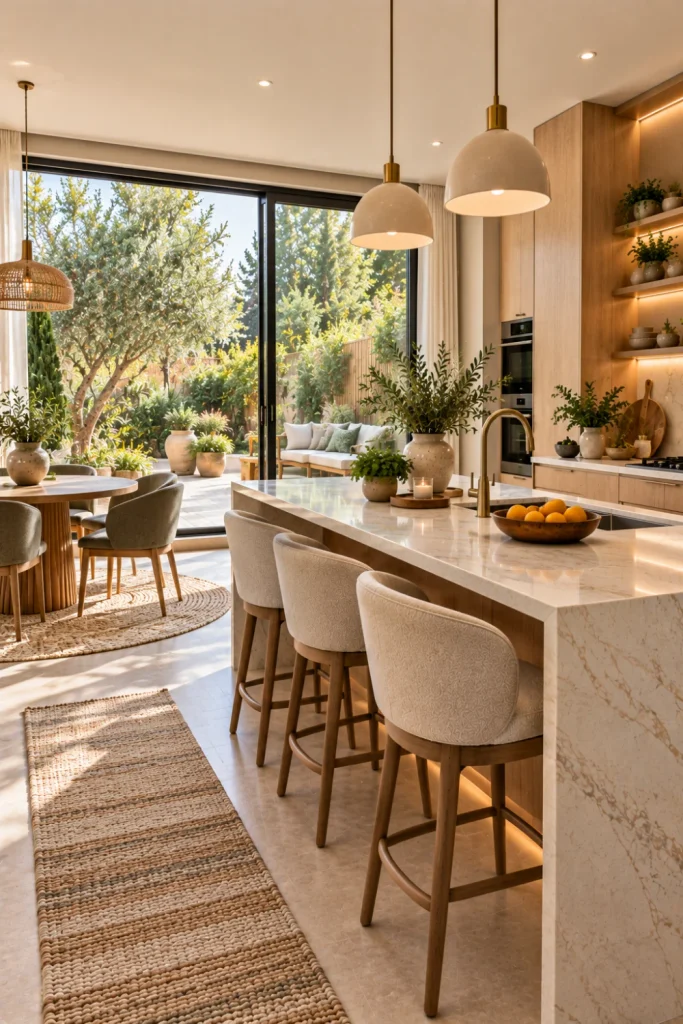
A large sliding kitchen window creates a strong visual connection to the outdoors while offering an effortless opening mechanism.
Positioned near a breakfast nook or dining area, it can make everyday meals feel more connected to fresh air and natural surroundings.
Simple steps:
- Choose a wall with enough width for generous glass panels.
- Plan nearby furniture around the sliding track.
- Match the window frame to other doors and exterior glazing.
- Use uncluttered window treatments that do not interfere with movement.
One tip: Consider a low-profile sill to emphasize the expansive glass and contemporary aesthetic.
Makeover idea: Add a small breakfast table, upholstered bench, or two sculptural chairs nearby to turn the window zone into a natural social hub.
10. Greenery-Framed Bay Window
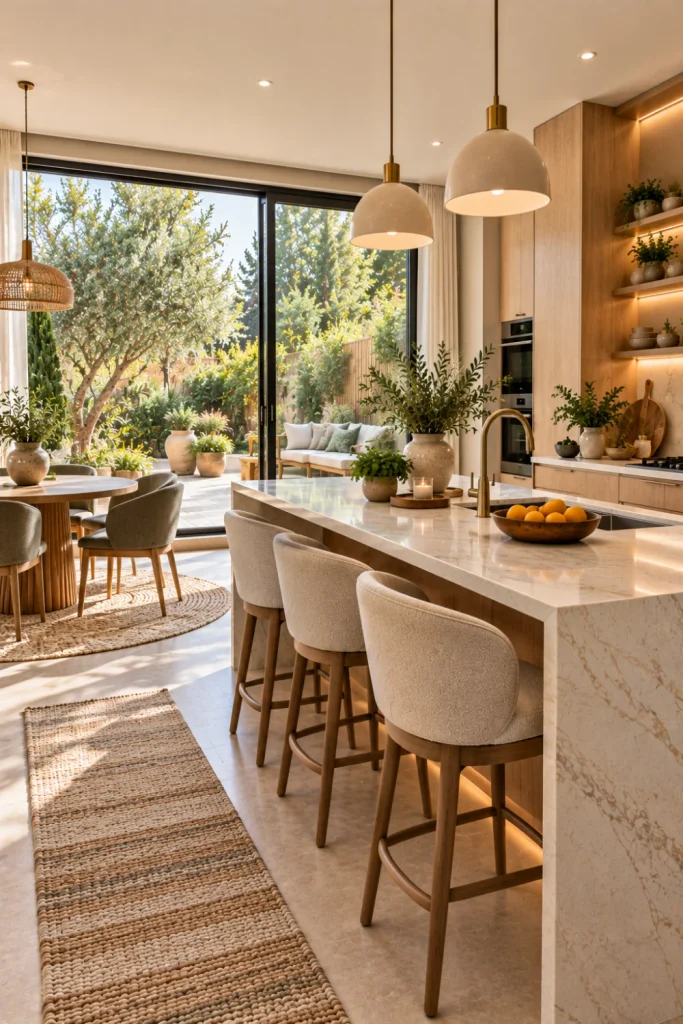
A greenery-framed bay window adds depth, natural light, and a welcoming architectural character to the kitchen.
Framed with plants, herbs, or views of a garden, it can become one of the most inviting parts of the room.
Simple steps:
- Position the bay where natural light can be enjoyed throughout the day.
- Select low-maintenance plants suited to the available light.
- Use the extended sill for herbs, ceramics, or small decorative pieces.
- Coordinate the window seat or surrounding cabinetry with the main kitchen palette.
One tip: Keep plant groupings varied in height but restrained in quantity so the space feels curated rather than crowded.
Design advantage: A bay window can also create useful extra seating, display space, or a small breakfast corner while giving the kitchen more architectural depth.
Final Thoughts
The best modern kitchen window ideas are not simply about adding more glass.
They are about choosing the right shape, placement, frame, and proportion for the way the kitchen is used.
A dramatic picture window can become the room’s focal point, while clerestory glazing can solve lighting and privacy challenges in a much subtler way.
Before starting a kitchen window makeover, consider these practical details:
- Study natural light first. Observe where sunlight enters during morning, afternoon, and evening before choosing the window location.
- Plan around cabinetry. Window dimensions should work with upper cabinets, countertops, appliances, and backsplash heights.
- Think about ventilation. Kitchens benefit from strategically placed opening windows, particularly around cooking zones.
- Consider privacy. Frosted, textured, shaded, or elevated glazing can provide daylight without compromising privacy.
- Match architectural finishes. Coordinate window frames with cabinet hardware, faucets, lighting, interior doors, and other metal finishes.
- Choose appropriate glazing. Energy-efficient and climate-suitable glass can improve comfort and help manage heat gain or loss.
- Frame the view. A beautiful garden, courtyard, tree canopy, or landscape can become living artwork when positioned correctly.
- Use window treatments selectively. Modern kitchens often look best with simple roller shades, woven shades, or minimal curtains rather than heavily layered treatments.
- Think beyond the window itself. Lighting, flooring, cabinetry, mirrors, plants, and reflective backsplash materials can all amplify the brightness created by new glazing.
- Check remodeling requirements. Structural changes, new openings, ventilation, waterproofing, and window installation may require professional assessment or local approvals.
For a truly polished kitchen makeover, combine the window design with warm natural materials, streamlined cabinetry, layered lighting, and a restrained decorative palette.
The result should feel bright and sophisticated—but still comfortable enough for everyday cooking, entertaining, and slow mornings.