Modern living room display cabinets can turn an ordinary wall into a polished focal point while keeping favorite pieces beautifully organized.
From warm wood and fluted finishes to glass doors and integrated lighting, these modern living room display cabinet ideas blend storage with style.
Below, you’ll find 10 practical designs, styling steps, and simple tips to create a living room that feels current, collected, and inviting.
1. Slim Floor-to-Ceiling Display Cabinet
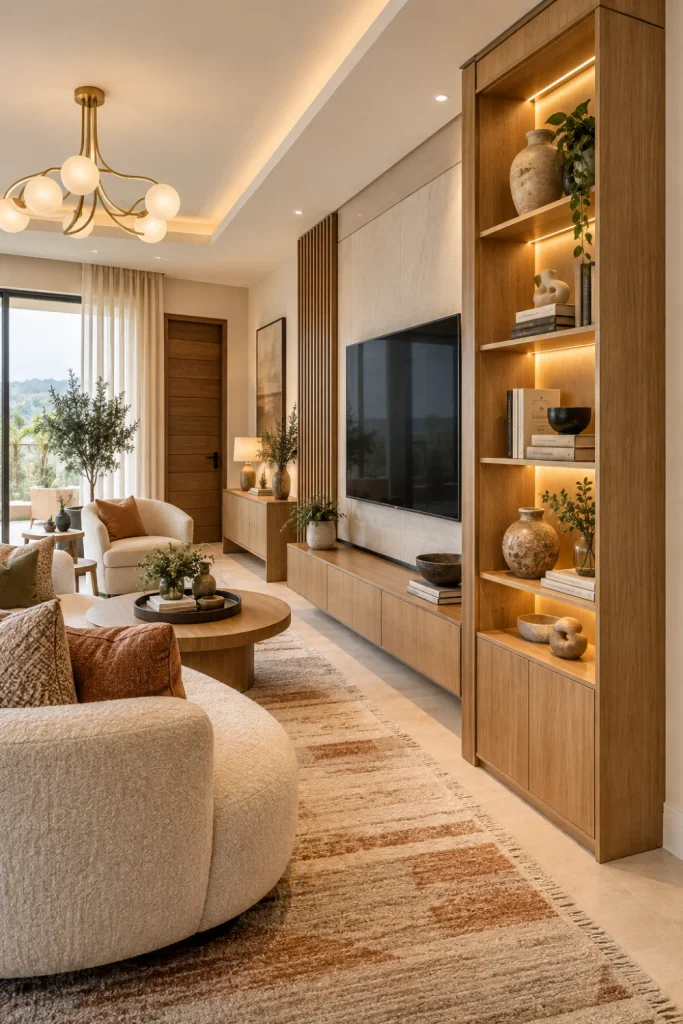
A slim floor-to-ceiling cabinet makes clever use of vertical space without overwhelming the room.
It works especially well beside a television, sofa, doorway, or unused corner.
Choose a warm oak or walnut finish to add height and character while keeping the footprint surprisingly small.
Simple steps:
- Measure the available wall width and ceiling height.
- Choose a narrow cabinet with adjustable shelves.
- Keep heavier objects on lower shelves for visual balance.
- Place books, ceramics, and framed art at varying heights.
- Leave some shelf space empty so the arrangement can breathe.
One tip:
Match the cabinet finish to another wood element in the room, such as the coffee table or flooring. That small connection makes the furniture feel intentional rather than randomly placed.
2. Fluted Wood Display Cabinet
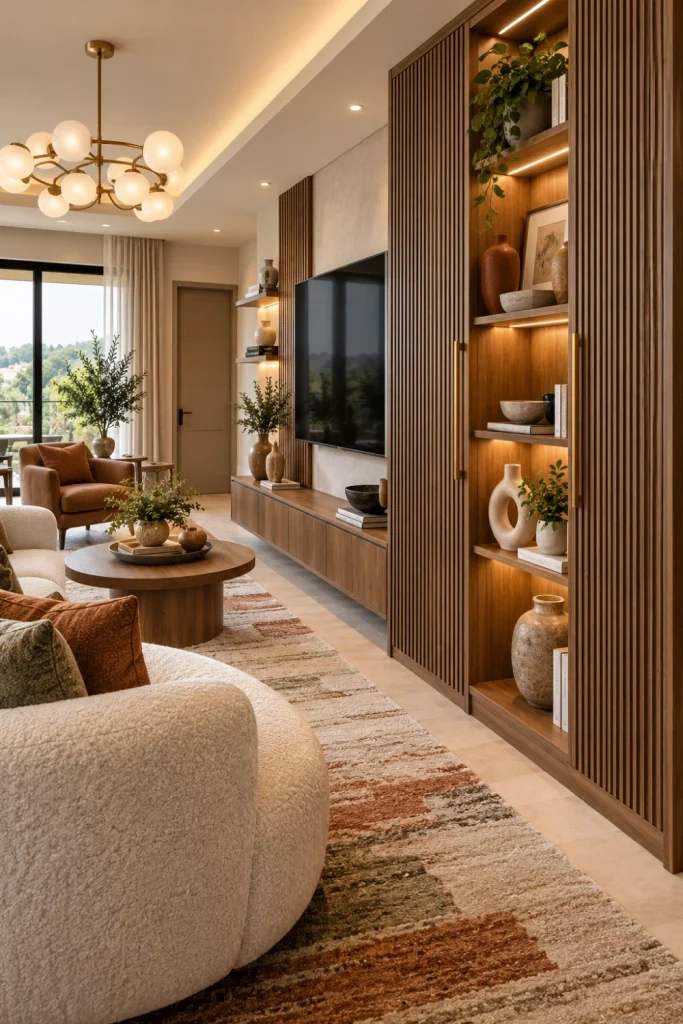
Fluted wood brings texture into a contemporary room without relying on bold patterns.
A cabinet with vertical oak or walnut fluting can look beautifully architectural while quietly hiding everyday clutter behind textured doors.
It is especially effective in neutral living rooms that need a little more depth.
Simple steps:
- Select fluted oak for a lighter look or walnut for richer contrast.
- Use closed sections for less attractive items.
- Reserve visible shelves for ceramics, books, and decorative pieces.
- Add one or two sculptural objects rather than filling every surface.
- Keep nearby furniture simple.
One tip:
Repeat the vertical fluting somewhere else, perhaps on a wall panel or media unit, to create a subtle visual rhythm.
3. Glass-Door Display Cabinet
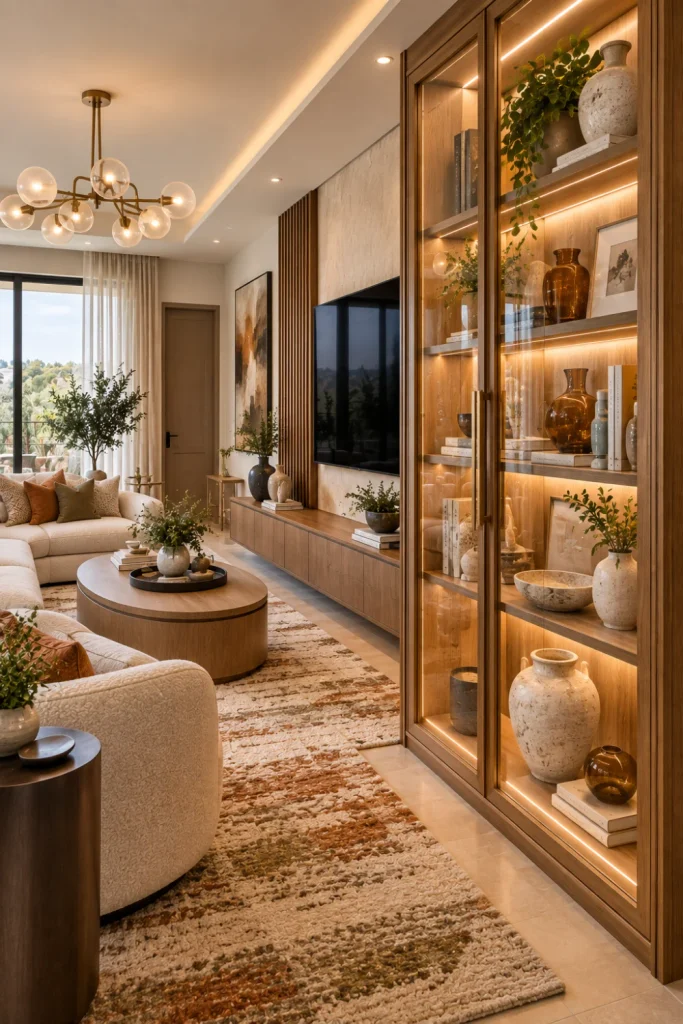
Glass doors create an airy display while protecting treasured pieces from dust.
This classic idea feels fresh when paired with streamlined cabinetry, thin frames, and carefully edited styling.
It is ideal for homeowners who want their collections visible without making the living room look crowded.
Simple steps:
- Select clear or lightly tinted glass based on your room’s style.
- Group similar objects together instead of scattering them.
- Mix books with ceramics, glassware, and small artwork.
- Place taller pieces toward the back of each shelf.
- Keep colors coordinated with the wider room palette.
One tip:
Use repeated tones—cream, brown, black, or muted green—to make a mixed collection look cohesive.
4. Built-In Wall Display Cabinet
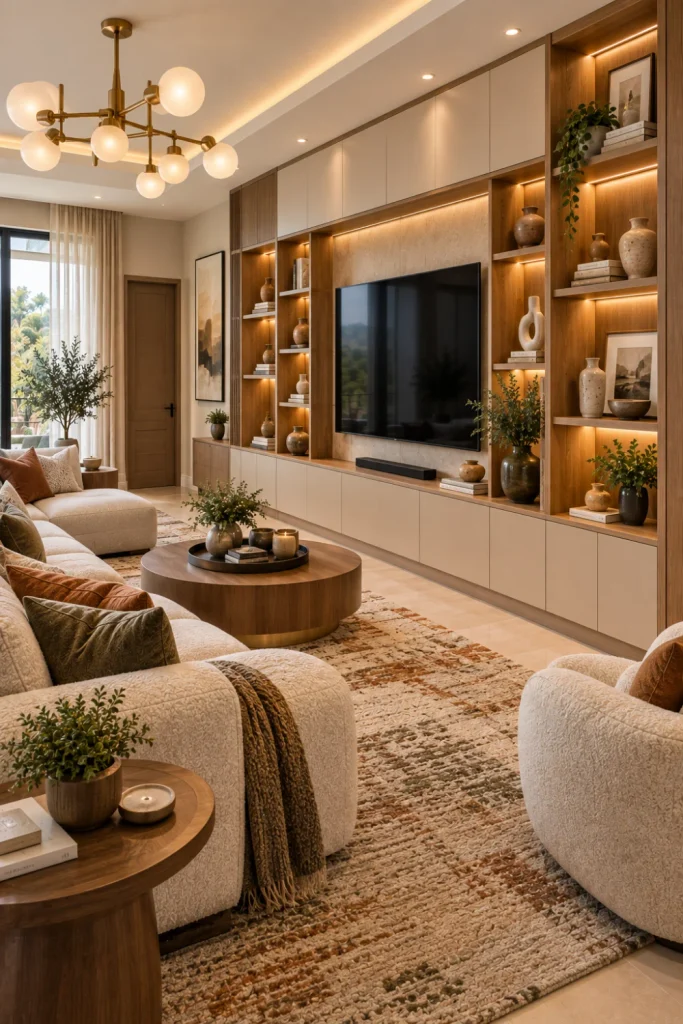
Built-in cabinetry gives a living room that tailored, expensive-looking finish designers often aim for.
Combining open niches, display shelves, and hidden compartments allows one wall to perform several jobs at once.
It can frame a television beautifully while making awkward wall space much more useful.
Simple steps:
- Plan the cabinet around the television and major furniture.
- Add open niches for decorative displays.
- Include closed storage below or beside the display sections.
- Use consistent hardware or handleless fronts.
- Paint the cabinetry to complement the surrounding walls.
One tip:
Add a concealed cable route during installation. A beautiful built-in can lose its impact quickly when cords are left exposed.
5. Two-Tone Display Cabinet
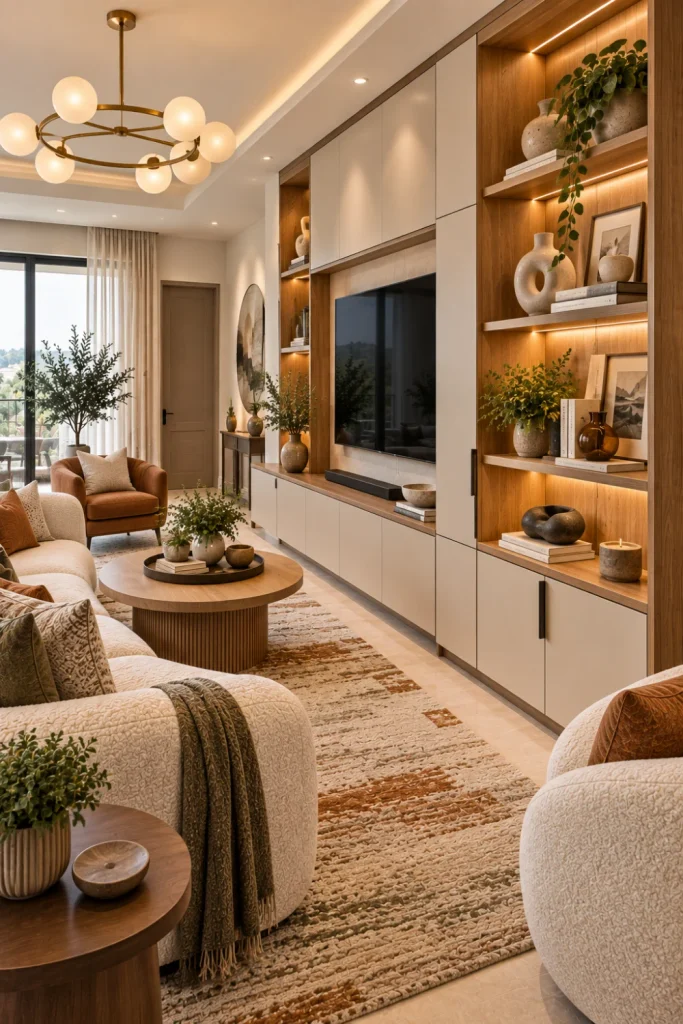
Two-tone cabinetry gives modern living rooms more visual depth without becoming overly decorative.
Warm wood paired with cream, beige, taupe, or matte black can define separate zones and make a simple cabinet feel custom-designed.
This approach works particularly well in contemporary neutral interiors.
Simple steps:
- Pick one dominant finish and one supporting finish.
- Use wood to bring warmth into the composition.
- Introduce the second tone on doors, shelving, or the cabinet frame.
- Echo the accent color in cushions or artwork.
- Keep decorative accessories restrained.
One tip:
Use the darker shade sparingly. A small amount of contrast often looks more sophisticated than a cabinet split evenly between two strong colors.
6. LED-Lit Display Cabinet
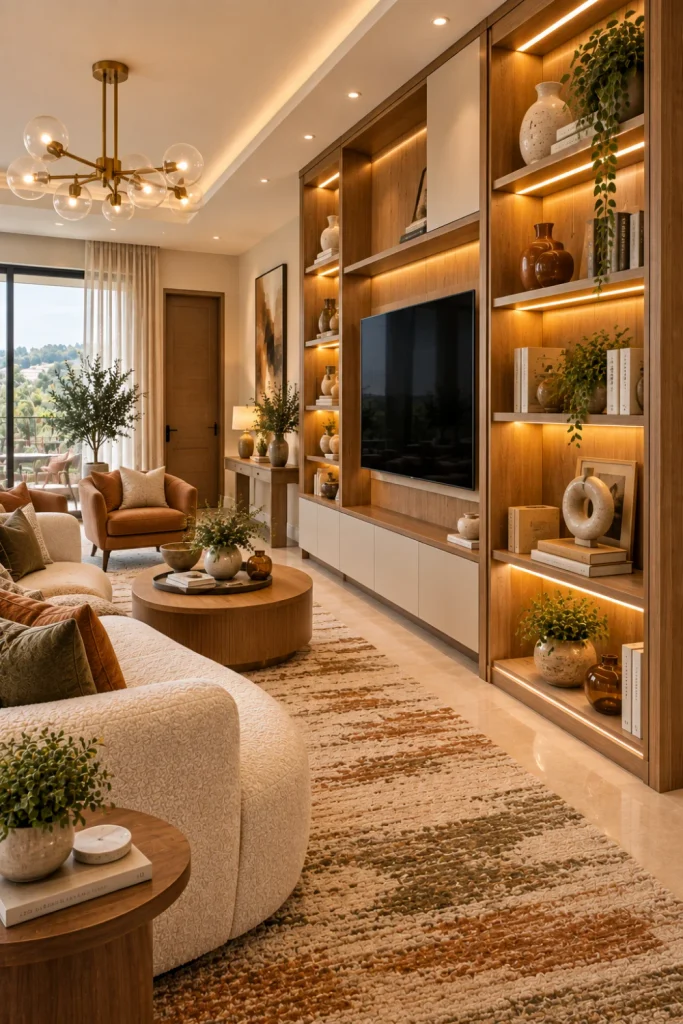
Integrated LED lighting can completely change how a display cabinet feels after sunset.
Warm illumination highlights ceramics, artwork, books, and glassware while adding a soft glow to the entire living room.
The result is functional storage that also acts like ambient architectural lighting.
Simple steps:
- Choose warm-white LED strips rather than harsh cool lighting.
- Install lighting beneath or along the sides of shelves.
- Hide wires inside the cabinet structure.
- Position special objects where the light naturally catches them.
- Use dimmable lighting where possible.
One tip:
Avoid lighting every shelf at maximum brightness. Gentle illumination usually creates a more luxurious evening atmosphere.
7. Low Display Cabinet With Open Shelves
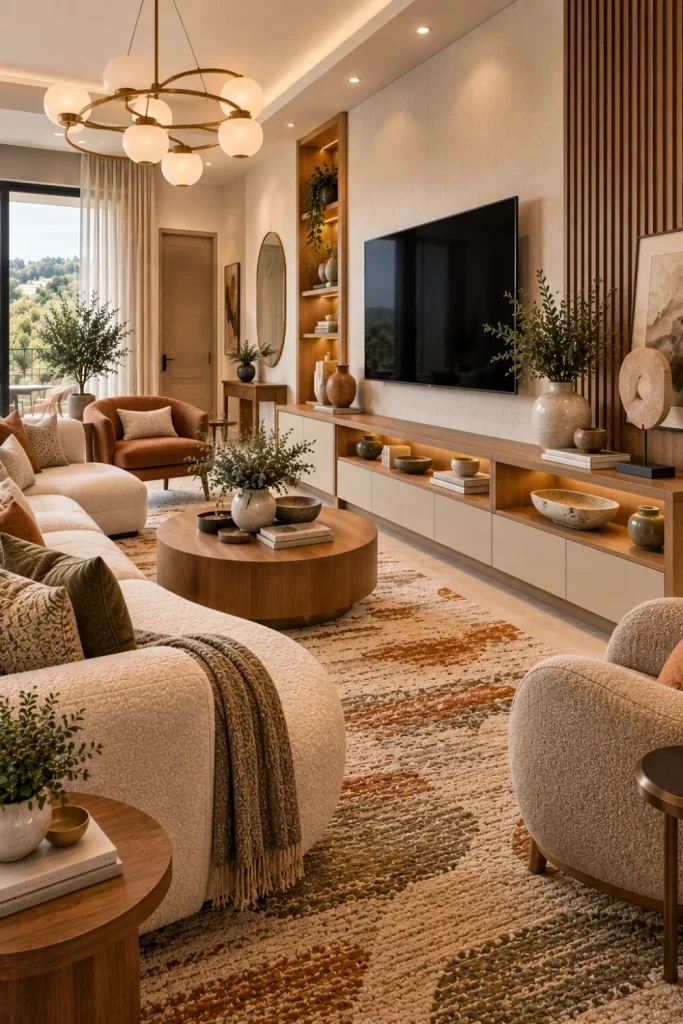
A low display cabinet is ideal for smaller living rooms or spaces where preserving an open sightline matters.
Its horizontal shape provides useful storage without adding visual height.
Pair it with open shelving to create a relaxed display zone for books, plants, framed art, and decorative accessories.
Simple steps:
- Choose a cabinet that sits comfortably below the television or window line.
- Store larger everyday items behind closed doors.
- Style open shelves with a few carefully selected objects.
- Add artwork or a mirror above the unit.
- Keep the top surface relatively uncluttered.
One tip:
Use baskets inside the closed sections for quick organization. It keeps the room tidy without demanding constant rearranging.
8. Arched Display Cabinet
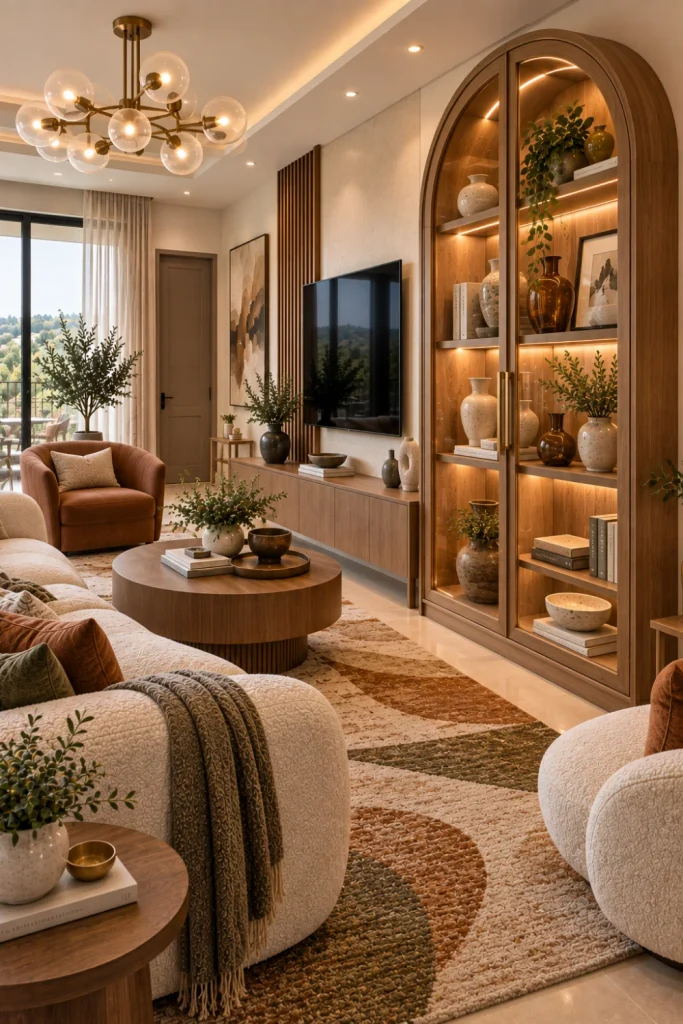
Arched cabinetry adds a softer architectural shape to a room filled with straight-edged sofas, televisions, and tables.
The curved silhouette feels contemporary yet welcoming, especially when finished in natural wood, cream, or softly painted tones.
It can become a standout feature without looking overly dramatic.
Simple steps:
- Place the cabinet where its curved profile can be appreciated.
- Choose rounded decor to reinforce the softer silhouette.
- Mix vertical books with low ceramic pieces.
- Keep the surrounding furniture relatively streamlined.
- Repeat curves through a mirror, occasional chair, or coffee table.
One tip:
Do not overcrowd the arched interior. Negative space helps the distinctive shape remain the star.
9. Minimalist Black Display Cabinet
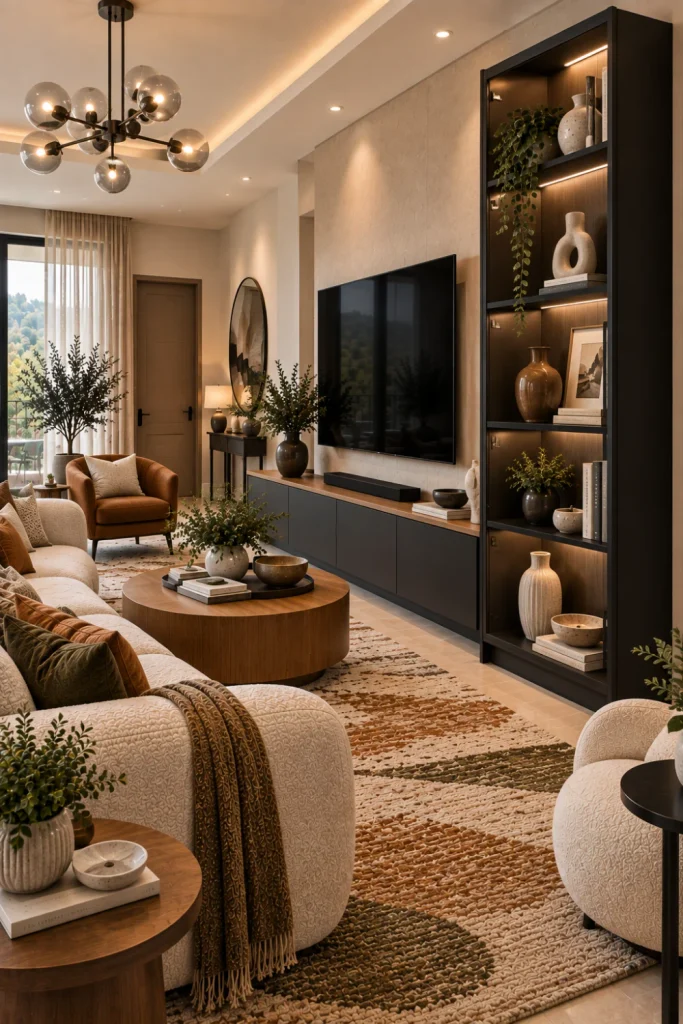
A slim matte-black display cabinet provides crisp contrast in living rooms dominated by cream, beige, white, and light wood.
The look is sleek, contemporary, and surprisingly versatile.
Use it as a visual anchor rather than trying to make it disappear into the background.
Simple steps:
- Choose a streamlined cabinet with minimal hardware.
- Place it against a lighter wall for maximum contrast.
- Add neutral ceramics and natural materials inside.
- Introduce a few black accents elsewhere in the room.
- Balance the dark cabinet with warm textures.
One tip:
Black cabinetry looks softer when paired with oak, linen, boucle, woven baskets, or other tactile materials.
10. Mixed Open-and-Closed Display Cabinet
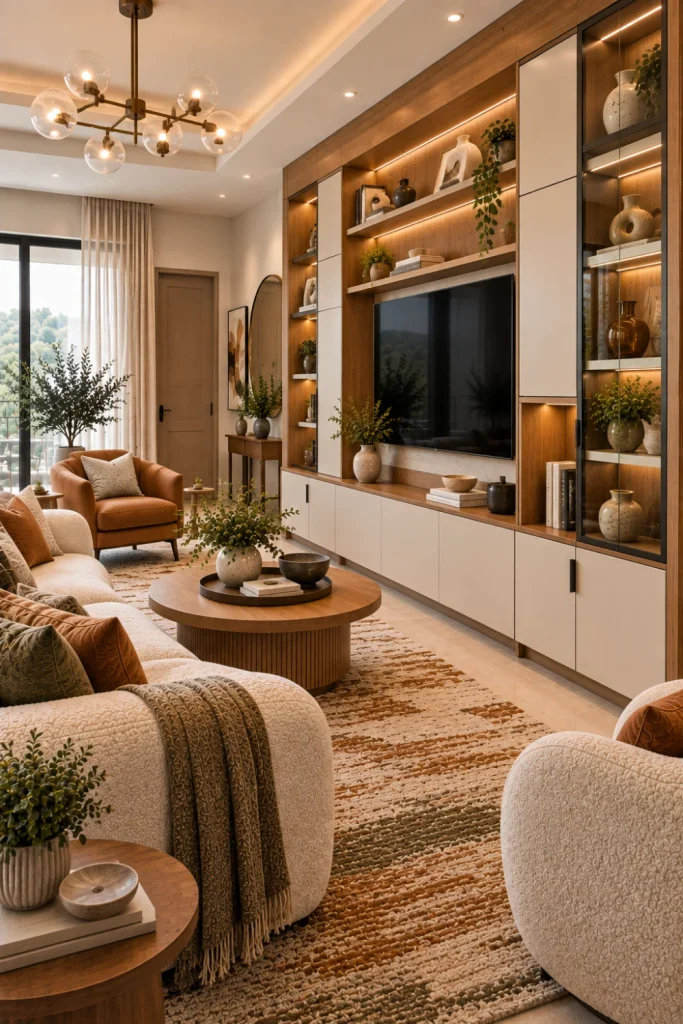
For many modern homes, the best cabinet is one that does a little of everything.
Open shelves make room for personality, while concealed compartments hide cables, paperwork, electronics, and daily mess.
This combination gives you the styled look of open shelving without sacrificing practicality.
Simple steps:
- Divide the cabinet into display and concealed zones.
- Place attractive decorative objects in open sections.
- Hide electronics and paperwork behind solid doors.
- Group accessories in threes or small visual clusters.
- Reassess the arrangement every few months.
One tip:
Keep everyday clutter behind doors and let only your most beautiful pieces remain visible. Display cabinets work best when they look curated, not stuffed.
Final Thoughts
Choosing the right modern living room display cabinet is about more than storage.
The cabinet can help define a focal wall, introduce texture, create contrast, showcase collections, and make a remodeled living room feel more complete.
For a cohesive makeover, think about the whole room before buying the cabinet.
Use this styling checklist:
- Measure first.
Record wall width, ceiling height, furniture depth, outlet locations, and television placement before ordering anything. - Choose a clear visual direction.
Warm oak and cream create a softer look, while walnut and black feel richer and more dramatic. - Mix storage types.
Combine drawers, closed cupboards, open niches, and shelves according to what you actually need to store. - Build in lighting where possible.
Warm LED lighting can make cabinetry feel more architectural and adds useful evening ambience. - Style with different heights.
Combine tall books, low bowls, medium ceramics, framed art, and small sculptural pieces instead of lining up identical objects. - Leave breathing room.
Empty shelf space is not wasted space. It helps important objects stand out. - Repeat materials.
Connect the cabinet with other room elements such as oak flooring, wood coffee tables, black lighting fixtures, cream upholstery, or woven accessories. - Hide the visual noise.
Cables, remotes, paperwork, chargers, and miscellaneous household items should have a concealed home. - Consider traffic flow.
Cabinet doors and drawers should open comfortably without blocking walkways or bumping nearby furniture. - Style in layers.
Start with larger pieces, add medium objects, and finish with a few small accents. Step back regularly and remove anything that feels unnecessary.
The most successful modern living rooms do not necessarily have the most furniture or the most decoration.
They have the right balance of storage, texture, negative space, lighting, and personality.
A well-chosen display cabinet can bring all of those elements together while making the room easier to live in every day.