Want to refresh your wash-day routine without buying another expensive hair product?
Rosemary, cloves, and bay leaves are popular ingredients in homemade herbal hair rinses, loved for their earthy fragrance and simple preparation.
These 10 rosemary, clove, and bay leaf hair rinse recipes offer easy ways to explore botanical hair care in 2026.
Discover beginner-friendly ingredients, step-by-step instructions, application tips, and practical safety advice for different hair types.
1. Classic Rosemary, Clove & Bay Leaf Hair Rinse

This classic three-herb hair rinse is a simple starting point for anyone exploring homemade herbal hair care.
The infusion has a warm, earthy fragrance and fits easily into a regular shampoo routine.
Ingredients
- 2 fresh rosemary sprigs or 1 tablespoon dried rosemary
- 4–5 whole cloves
- 2 dried bay leaves
- 2 cups water
Simple steps
- Bring the water to a gentle boil.
- Add the rosemary, cloves, and bay leaves.
- Simmer gently for 3–5 minutes, then turn off the heat.
- Cover and steep for another 15 minutes.
- Let the mixture cool completely before straining it through a fine strainer.
- After shampooing, slowly pour the rinse over your scalp and hair, avoiding your eyes.
One tip: Start with a small amount to see how your scalp responds before incorporating it into your routine.
This rinse can leave hair smelling pleasantly herbal, but it is not a proven treatment for hair loss or guaranteed hair growth.
2. Rosemary and Clove Water for a Simple Hair-Care Routine

Prefer a two-ingredient recipe?
Rosemary and clove water keeps things uncomplicated while introducing a fragrant botanical step to wash day.
Ingredients
- 1 tablespoon dried rosemary
- 3 whole cloves
- 2 cups water
Simple steps
- Heat the water until it boils.
- Add the rosemary and cloves.
- Cover, remove from the heat, and steep for 15 minutes.
- Cool completely and strain thoroughly.
- Apply gently to freshly washed hair, keeping the liquid away from your eyes.
One tip: Avoid adding essential oils to this water-based recipe. Essential oils are concentrated and do not disperse evenly in plain water.
This lightweight infusion may appeal to readers who prefer a minimal routine. Its benefits are mainly cosmetic and sensory; strong clinical evidence for rosemary-and-clove water promoting hair growth is lacking.
3. Rosemary and Bay Leaf Hair Rinse Recipe
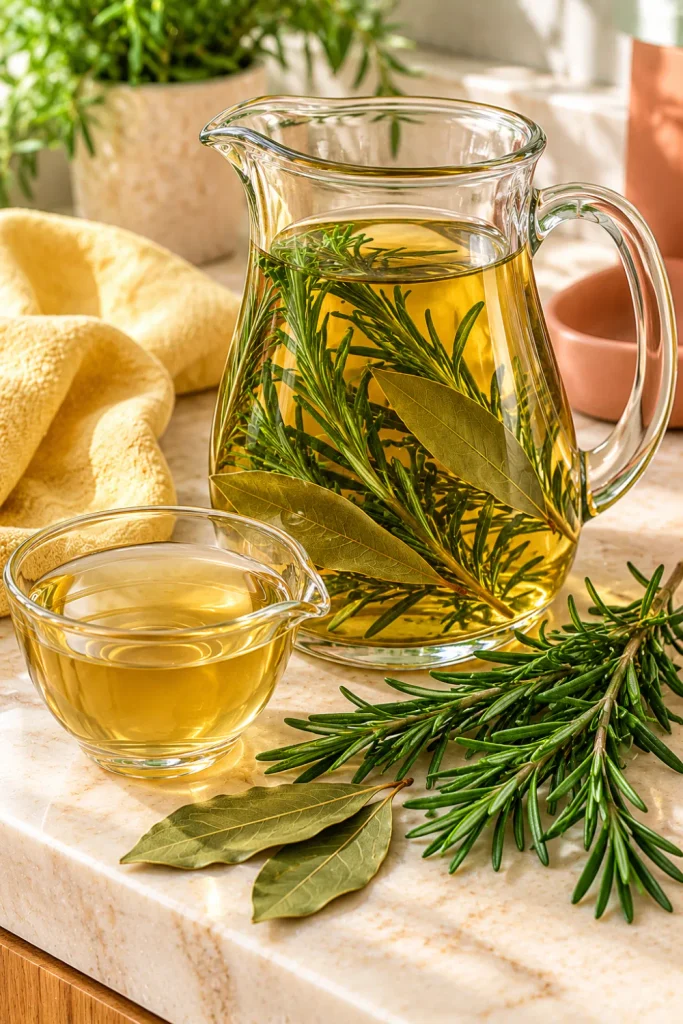
Sometimes, fewer ingredients are all you need.
This rosemary and bay leaf rinse offers a gentle-smelling alternative for people who want to experiment with botanical hair care without adding cloves.
Ingredients
- 1 tablespoon dried rosemary
- 2 dried bay leaves
- 2 cups water
Simple steps
- Bring the water to a boil.
- Add the rosemary and bay leaves.
- Cover and steep for 15–20 minutes.
- Allow the infusion to cool fully.
- Strain carefully and apply to clean hair after shampooing.
One tip: If your hair feels rough or tangled afterward, follow with your usual conditioner rather than repeating the rinse.
Rosemary and bay leaves are traditionally used in herbal preparations, but this homemade rinse has not been established as a treatment for dandruff, scalp conditions, or thinning hair.
4. Rosemary, Clove, Cinnamon & Bay Leaf Herbal Rinse

For a warmer, spiced fragrance, cinnamon adds another aromatic note to this four-ingredient infusion.
However, cinnamon can irritate sensitive skin, so this version deserves extra caution.
Ingredients
- 1 tablespoon dried rosemary
- 3 whole cloves
- 1 small dried bay leaf
- A very small piece of cinnamon stick
- 2 cups water
Simple steps
- Bring the water to a boil.
- Add all four ingredients.
- Simmer gently for 2–3 minutes.
- Cover and steep for 10 minutes.
- Cool completely and strain thoroughly.
- Before wider use, perform a cautious patch test on a small area of skin and monitor for a reaction.
One tip: Skip the cinnamon entirely if you have sensitive, irritated, or broken skin. A patch test cannot guarantee that irritation will not occur later.
Do not assume that a stronger-smelling infusion will produce better results. Keep the preparation simple, and discontinue use if you notice burning, redness, itching, or swelling.
5. Fresh Rosemary Water for a Lightweight Hair Rinse
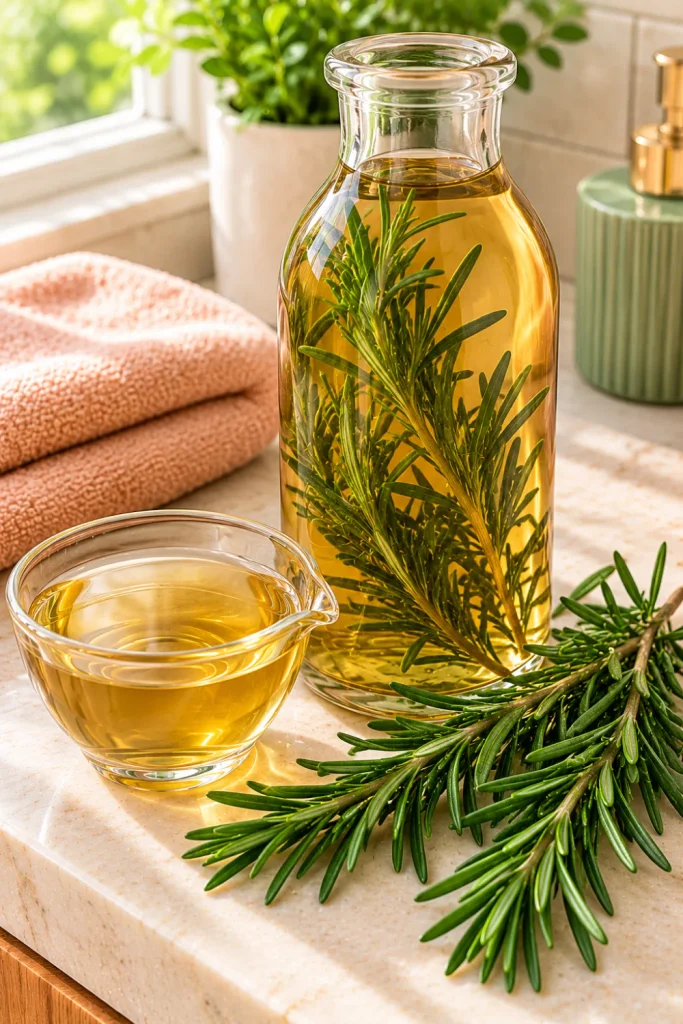
Fresh rosemary water is ideal for readers who want the simplest possible botanical rinse.
It requires just two ingredients and little preparation.
Ingredients
- 2 fresh rosemary sprigs, rinsed thoroughly
- 2 cups water
Simple steps
- Bring the water to a boil.
- Add the rosemary sprigs.
- Cover and steep for 15–20 minutes.
- Let the liquid cool completely.
- Remove the rosemary using a fine strainer.
- Apply a small amount to clean hair and scalp if tolerated.
One tip: Choose fresh, healthy rosemary leaves and discard any that look moldy or spoiled.
This recipe creates a light, fragrant rinse without oils or heavy additives. It may be a pleasant addition to wash day, but there is no guarantee that it will increase hair thickness, length, or density.
6. Dried Rosemary, Clove & Bay Leaf Hair Rinse
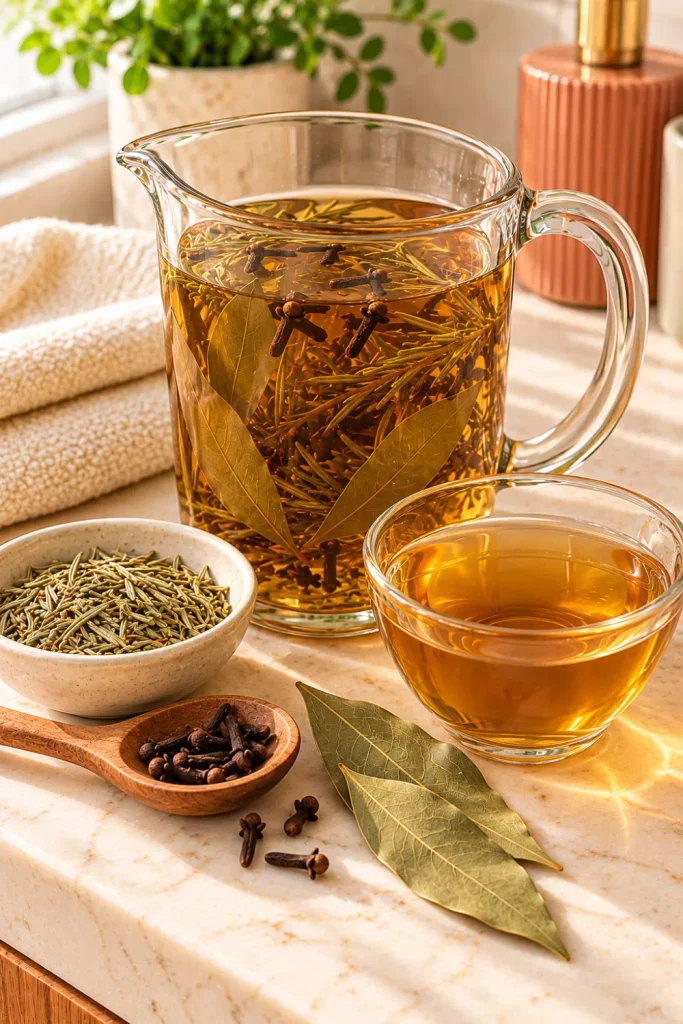
No fresh herbs in the kitchen?
Dried rosemary, cloves, and bay leaves make a convenient pantry-friendly alternative.
Ingredients
- 1 tablespoon dried rosemary
- 4 whole cloves
- 2 small dried bay leaves
- 2 cups water
Simple steps
- Bring the water to a boil.
- Add the measured dried herbs and cloves.
- Remove from the heat and cover.
- Steep for 15 minutes.
- Cool completely and strain through a fine-mesh strainer.
- Apply carefully after shampooing.
One tip: Strain twice if necessary. Tiny herb particles can become trapped in thick, curly, or coily hair and make rinsing more difficult.
Dried herbs are easy to measure and store before preparation. Once the rinse is made, however, it should be treated as a perishable homemade mixture rather than a shelf-stable cosmetic product.
7. Cooling Rosemary and Clove Final Hair Rinse

A final rinse is a simple way to finish a wash-day routine.
This version focuses on careful cooling and gentle application rather than complicated preparation.
Ingredients
- 1 tablespoon dried rosemary
- 3 whole cloves
- 2 cups water
Simple steps
- Boil the water and add the herbs.
- Cover and steep for 15 minutes.
- Strain the liquid thoroughly.
- Allow it to reach room temperature.
- After shampooing and conditioning as appropriate, pour a small amount over the hair.
- Follow the recipe’s rinse-off approach or leave-on approach only if the product is suitable for that use and your skin tolerates it. For this homemade preparation, rinsing with clean water afterward is the more cautious option.
One tip: Never apply a warm or hot herbal infusion directly to your scalp. Keep it away from your eyes and stop immediately if discomfort occurs.
This final rinse is best viewed as an optional cosmetic ritual, not a substitute for a conditioner or a treatment for scalp disease.
8. Freshly Strained Herbal Rinse for Wash Day
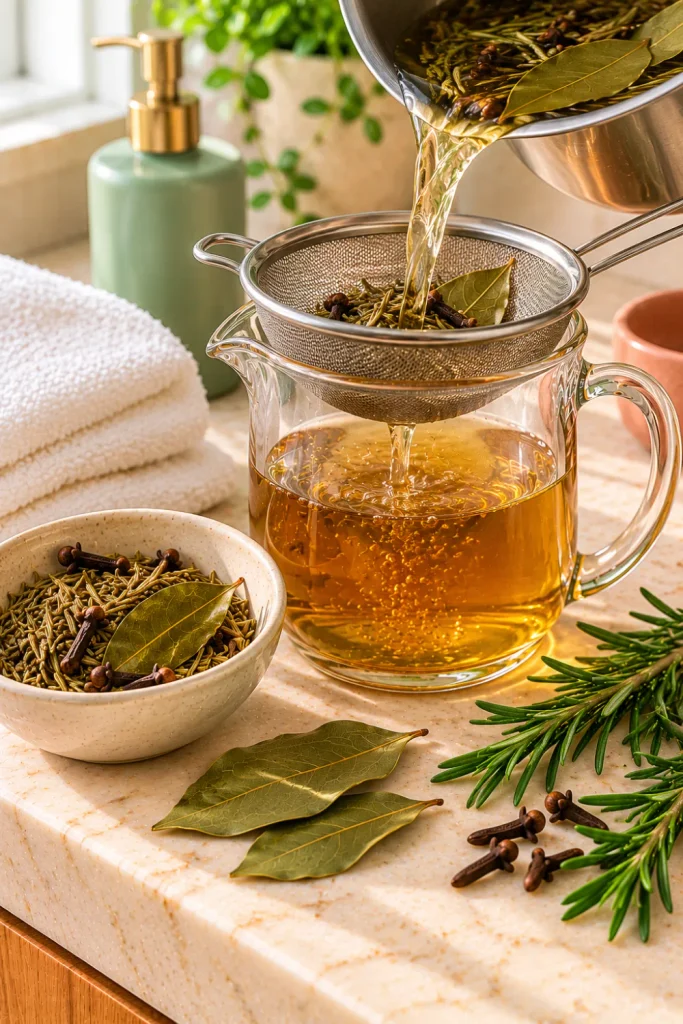
Freshness and hygiene matter just as much as the ingredients.
Homemade herbal water contains no reliable preservative system, so careful preparation is essential.
Ingredients
- 1 tablespoon dried rosemary
- 3 whole cloves
- 2 dried bay leaves
- 2 cups fresh drinking water
Simple steps
- Wash your hands and clean the saucepan, strainer, and storage container.
- Bring the water to a boil and add the herbs.
- Cover and steep for 15 minutes.
- Cool completely, then strain through a clean, fine strainer.
- Use a small amount during the same wash-day session.
- Discard any leftover mixture rather than keeping it for repeated applications.
One tip: Make only what you need. Clean equipment reduces contamination risk, but it does not make a homemade rinse sterile.
A freshly prepared batch is a more cautious choice than a bottle that has been sitting around. Never use a mixture that smells unusual, looks cloudy in an unexpected way, or shows visible mold.
9. Herbal Hair Rinse for Curly and Natural Hair Routines

Curly, coily, and natural hair often benefits from a routine that prioritizes moisture, gentle detangling, and reduced breakage.
An herbal rinse should complement those priorities, not replace them.
Ingredients
- 1 tablespoon dried rosemary
- 2 whole cloves
- 1 small dried bay leaf
- 2 cups water
Simple steps
- Prepare the infusion by boiling the water and steeping the herbs for 15 minutes.
- Cool completely and strain very thoroughly.
- Divide your hair into manageable sections.
- Apply a small amount gently, without aggressive scalp rubbing.
- Rinse with clean water.
- Apply your regular conditioner or moisturizing treatment, then detangle carefully.
One tip: Try the rinse on a small section first. If your hair feels dry, rough, or tangled, discontinue use and return to your usual moisturizing routine.
For textured hair, a botanical rinse is optional. Avoid claims that it will automatically define curls, prevent breakage, or stimulate new growth. Consistent conditioning and gentle handling are more dependable foundations for managing hair.
10. How to Use and Store Rosemary, Clove & Bay Leaf Rinse

Even the simplest homemade recipe needs sensible application and storage practices.
This final guide brings the preparation together so you can make informed choices about your hair-care routine.
Ingredients
- 1 tablespoon dried rosemary
- 3 whole cloves
- 2 dried bay leaves
- 2 cups water
Simple steps
- Prepare the infusion using clean equipment.
- Steep the herbs for 15 minutes and strain thoroughly.
- Cool the liquid completely before use.
- Apply a small amount to clean hair, avoiding the eyes and broken or irritated skin.
- Rinse with clean water afterward.
- Discard leftovers after the session. If you must prepare the mixture ahead, refrigerate it promptly in a clean, covered container and discard within 24 hours; do not rely on refrigeration to make it safe indefinitely.
One tip: Patch-test a small amount before first use, and avoid the mixture if you have known sensitivities to any ingredient.
Watch for warning signs: Stop using the rinse if you experience itching, burning, redness, swelling, or a rash. Seek medical advice for a severe reaction. Persistent or sudden hair shedding, bald patches, or scalp pain also deserve professional evaluation because causes can include conditions that an herbal rinse will not treat.
Final Thoughts
Rosemary, clove, and bay leaf hair rinses are inexpensive, customizable additions to a simple wash-day routine.
Whether you choose the classic three-herb infusion, a minimalist rosemary water, or a cinnamon-spiced variation, the best recipe is one that suits your scalp and does not leave your hair feeling dry or irritated.
Start with a small batch, use clean equipment, and keep expectations realistic.
These preparations have not been proven to deliver hair growth or reverse hair loss, and natural ingredients can still cause irritation.
For a more complete hair-care routine, pair gentle cleansing with regular conditioning, careful detangling, and appropriate scalp care.
If hair shedding persists, consult a qualified healthcare professional rather than relying on homemade rinses alone.