Looking for a pretty handmade project that feels special without becoming a sewing marathon?
These 10 Easy Girls Floral Maxi Dress Sewing Pattern Tutorial ideas combine beginner-friendly construction with sweet floral fabrics, comfortable shapes, and trendy details.
You’ll get simple sewing steps, fabric tips, fit suggestions, and easy ways to customize each dress so your finished creation looks polished, wearable, and Pinterest-worthy.
1. Simple Gathered Waist Floral Maxi Dress
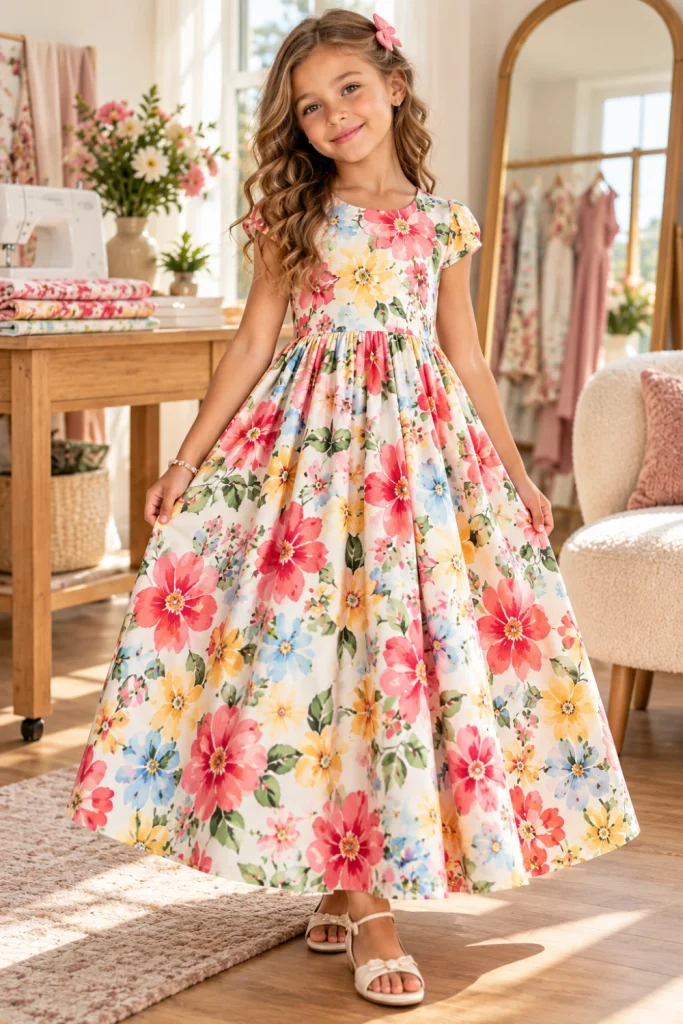
An easy silhouette with a fitted bodice, gathered skirt, and soft floral fabric.
This classic shape is a lovely starting point for beginners.
The fitted top gives the dress structure, while the gathered skirt creates that soft, floaty maxi effect.
Simple Steps
- Measure the child’s chest, waist, shoulder, and desired dress length.
- Cut a simple fitted bodice with front and back pieces.
- Sew the shoulder and side seams, then finish the raw edges.
- Cut the skirt panels and gather the upper edge evenly.
- Attach the gathered skirt to the bodice at the waistline.
- Add a hem and finish with a neat neckline or simple facing.
One Tip: Use lightweight cotton floral fabric because it gathers easily without making the skirt bulky.
2. Tiered Floral Maxi Dress
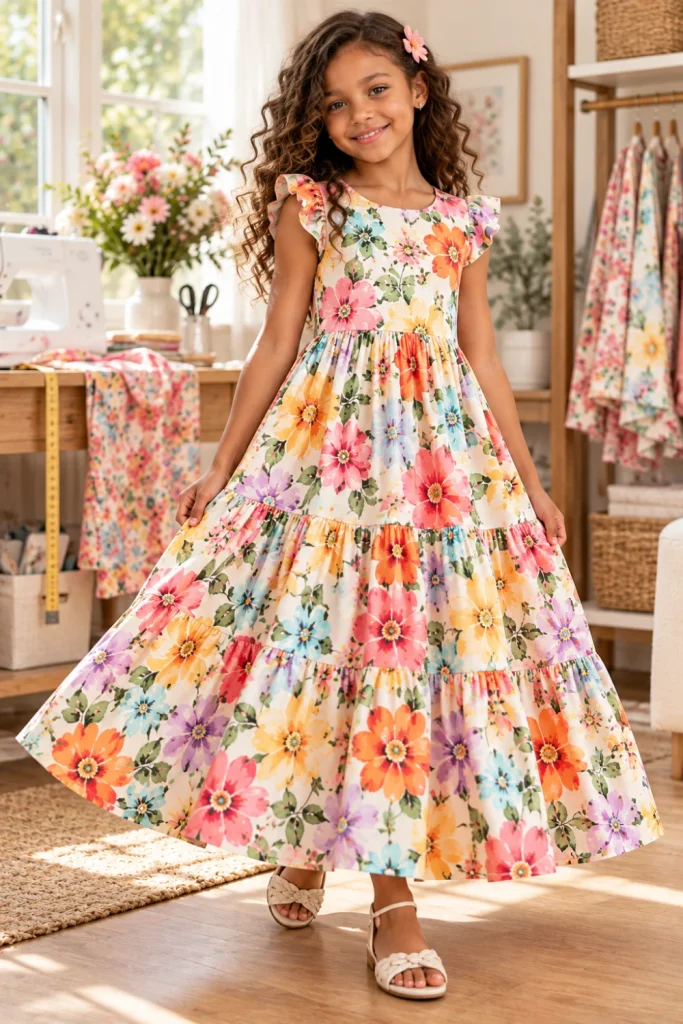
A playful three-tier skirt design that adds movement while keeping construction approachable.
Tiered dresses look detailed, but they can actually be quite straightforward.
Each additional section creates more fullness and gives the dress a fun, swishy shape.
Simple Steps
- Create a basic bodice using the child’s measurements.
- Cut the first skirt tier slightly wider than the waist.
- Make the second tier wider than the first.
- Cut the third tier even wider for maximum movement.
- Gather each tier along its top edge.
- Sew the tiers together from top to bottom.
- Join the completed skirt to the bodice and hem.
One Tip: Keep the floral print consistent between tiers so the finished dress feels intentional rather than overly busy.
3. Flutter Sleeve Floral Maxi Dress
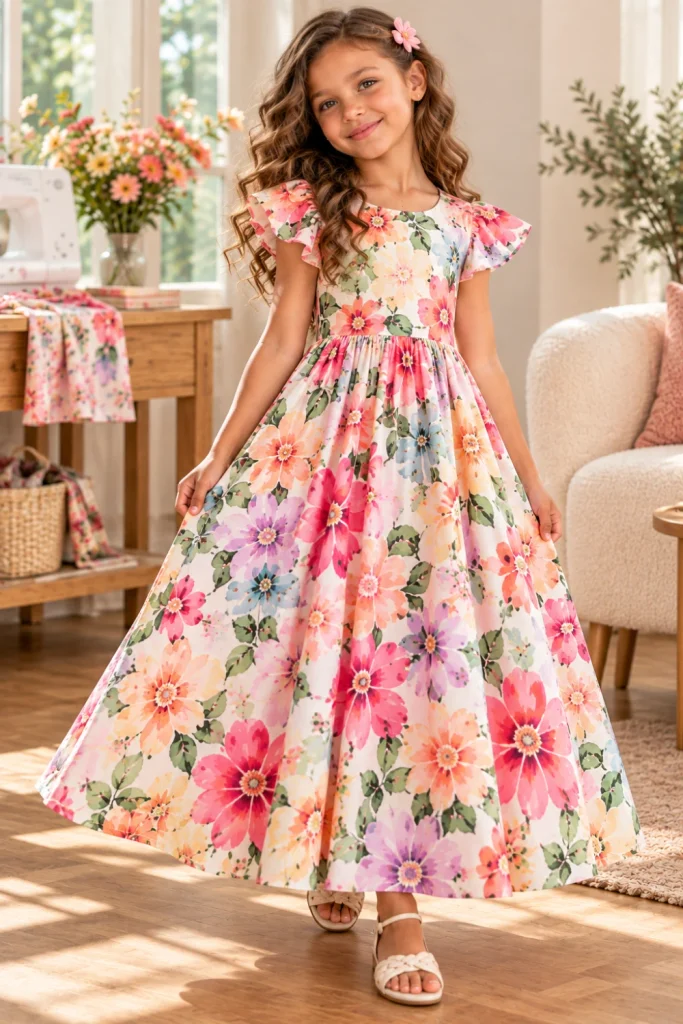
A sweet maxi dress featuring lightweight flutter sleeves and a relaxed flowing skirt.
Flutter sleeves bring a delicate, playful finish while keeping the construction fairly simple.
They are especially pretty in airy floral prints with small or medium-scale patterns.
Simple Steps
- Draft or cut a simple sleeveless bodice.
- Finish the neckline before attaching the sleeves.
- Cut two curved flutter sleeve pieces.
- Sew the sleeve edges with a narrow rolled or zigzag finish.
- Attach each flutter sleeve to the armhole.
- Add a gathered or gently flared maxi skirt.
- Finish the hem with a clean stitch.
One Tip: A soft rayon, cotton lawn, or lightweight woven fabric creates beautiful sleeve movement.
4. Empire Waist Floral Maxi Dress
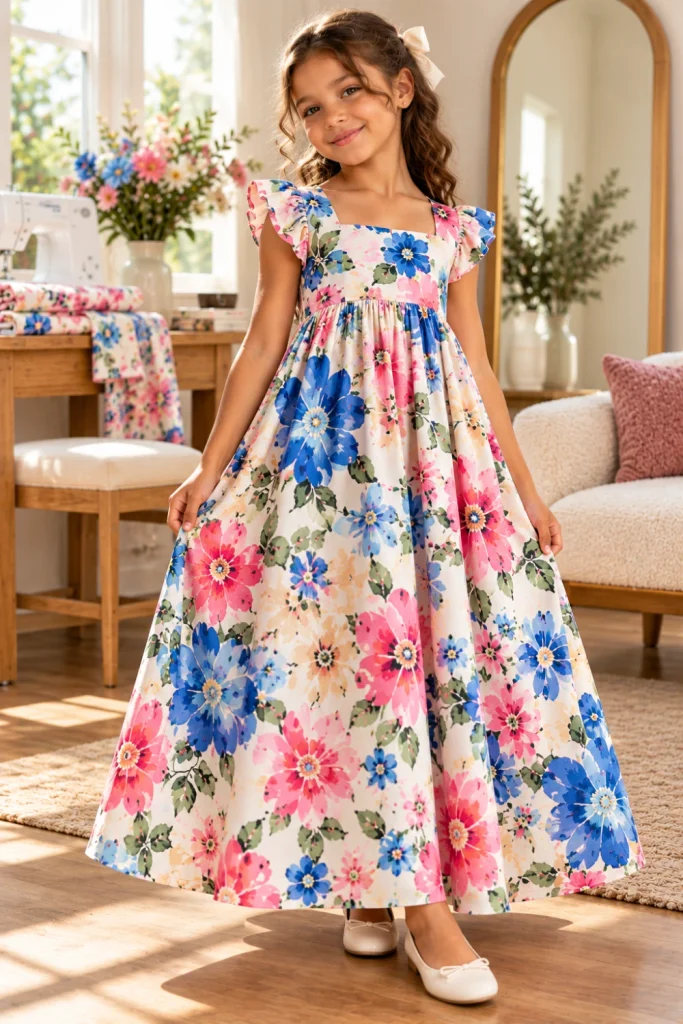
A flattering raised waistline paired with a long floral skirt for a comfortable handmade look.
An empire waist sits just below the bust, creating extra room through the middle.
It also gives the skirt a naturally flowing shape without complicated pattern drafting.
Simple Steps
- Measure the bodice from the shoulder to the raised waist position.
- Cut a fitted upper bodice.
- Cut the skirt longer and wider than the bodice waist.
- Gather the skirt slightly.
- Join the skirt to the empire waist seam.
- Add sleeves or simple straps depending on the design.
- Finish the neckline, seams, and hem neatly.
One Tip: Choose a floral print with a defined border or larger motif if you want the raised waistline to stand out.
5. Square Neck Floral Maxi Dress
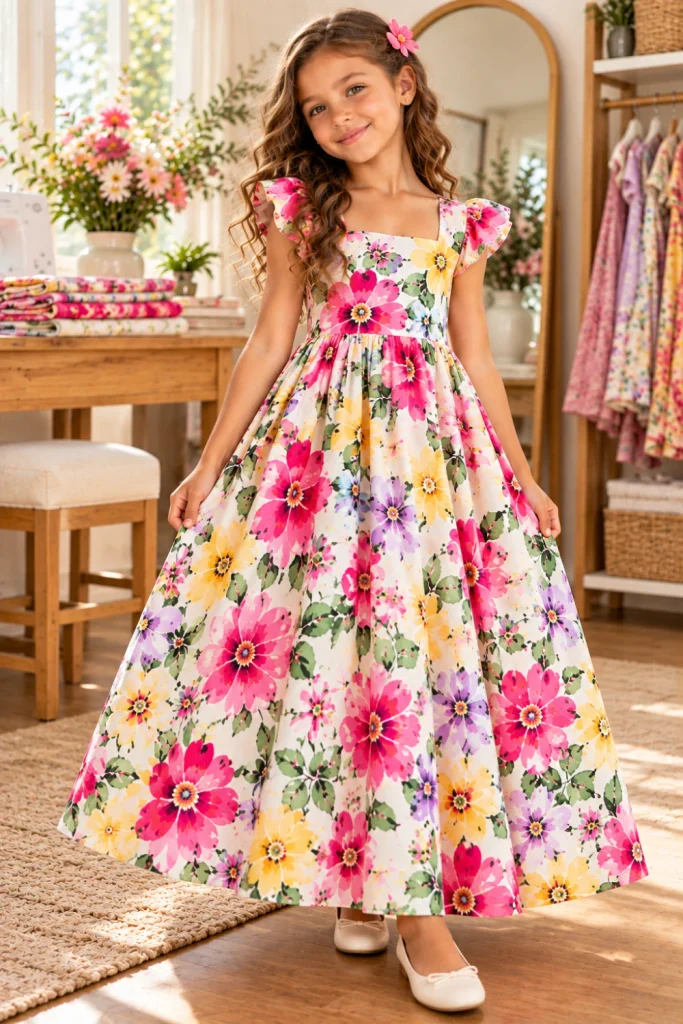
A polished square neckline with a simple bodice and full-length gathered skirt.
The square neckline instantly makes a homemade dress look a little more refined.
Best of all, the rest of the design can stay wonderfully simple.
Simple Steps
- Cut the front and back bodice pieces with a square neckline.
- Stabilize the neckline if the fabric is very lightweight.
- Sew the shoulder and side seams.
- Finish the neckline with facing or bias binding.
- Gather the full-length skirt evenly.
- Attach the skirt to the bodice.
- Finish the hem and press the entire dress.
One Tip: Press each seam as you sew; it is a tiny step that makes a huge difference in the final appearance.
6. Puff Sleeve Floral Maxi Dress
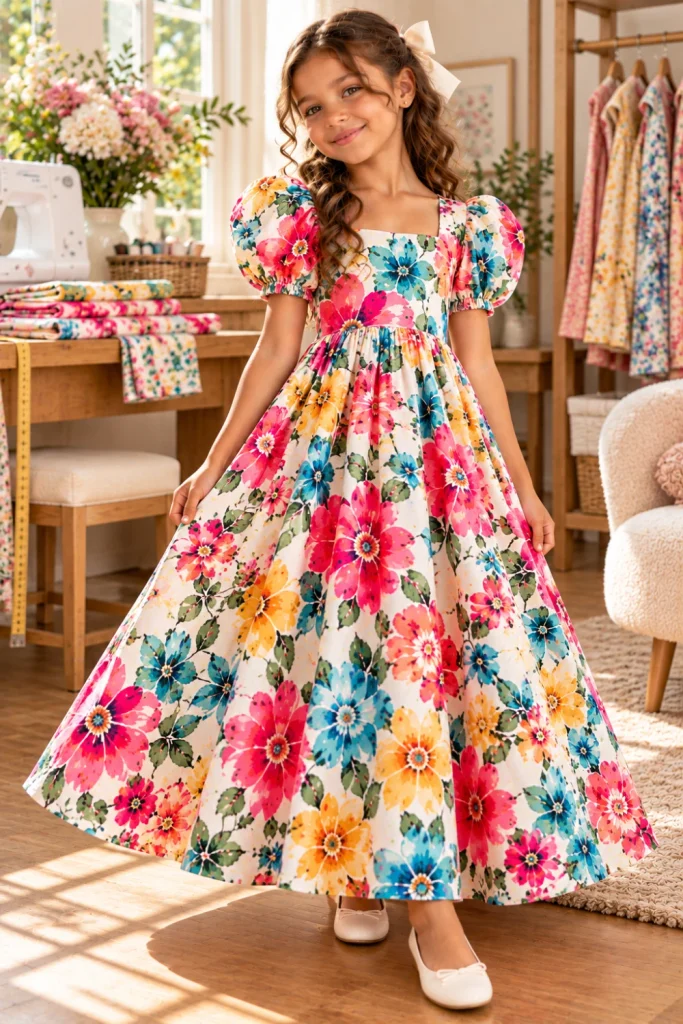
Trendy puff sleeves combined with a feminine maxi silhouette for a statement handmade outfit.
Puff sleeves add volume and personality without requiring an elaborate dress pattern.
Pair them with a cleaner skirt shape so the overall design stays balanced.
Simple Steps
- Start with a fitted bodice pattern.
- Cut puff sleeve pieces wider than a standard sleeve.
- Gather the sleeve cap and lower edge as needed.
- Attach the sleeves carefully at the armholes.
- Construct a softly gathered maxi skirt.
- Join the skirt and bodice at the waist.
- Finish with a clean hem and neckline.
One Tip: If the sleeves are dramatic, use a smaller floral print to keep the entire look visually balanced.
7. Wrap-Style Floral Maxi Dress
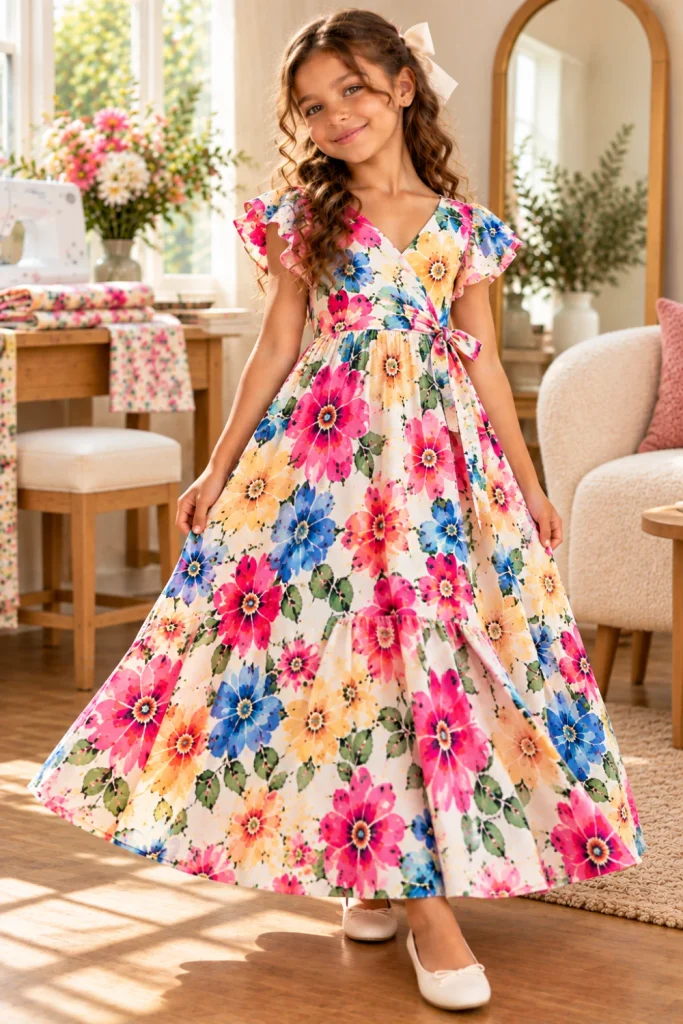
A faux-wrap bodice and flowing skirt create a charming design with plenty of visual interest.
A faux-wrap style gives the appearance of a more advanced dress while allowing the construction to remain manageable.
It is a smart option for adding detail without adding too much sewing frustration.
Simple Steps
- Cut a basic bodice with overlapping front sections.
- Shape the neckline into a gentle V.
- Add ties or secure the overlapping pieces with a hidden seam.
- Cut a flowing skirt with enough ease for movement.
- Gather the skirt to match the bodice waist.
- Sew the two sections together.
- Finish the edges and hem.
One Tip: Make sure the faux-wrap overlap is securely stitched so it stays comfortable and neat during movement.
8. Elastic Waist Floral Maxi Dress
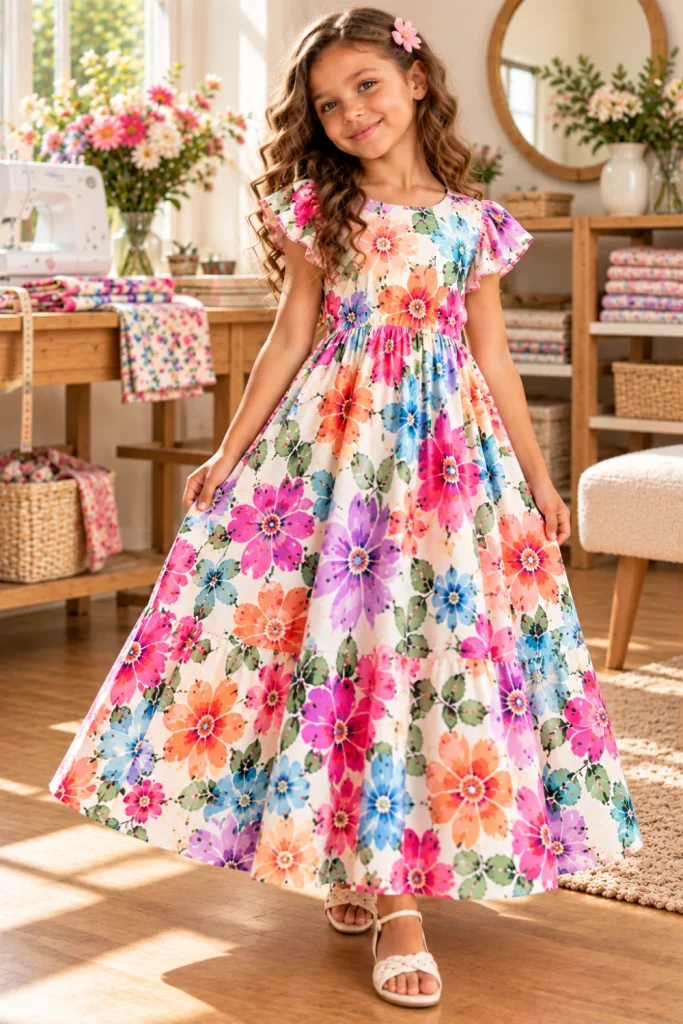
A beginner-friendly construction using a comfortable elastic waist and simple gathered skirt.
This design skips some of the trickier fitting work.
The elastic waist provides flexibility, making it especially useful for a comfortable everyday handmade dress.
Simple Steps
- Cut a simple bodice or upper dress section.
- Create a casing at the waist.
- Measure elastic comfortably around the child’s waist.
- Insert the elastic through the casing.
- Cut a wide floral skirt panel.
- Gather the skirt and attach it to the elasticized waist.
- Hem the bottom edge.
One Tip: Choose soft, wide elastic that sits comfortably instead of stiff elastic that can feel restrictive.
9. Ruffle Hem Floral Maxi Dress
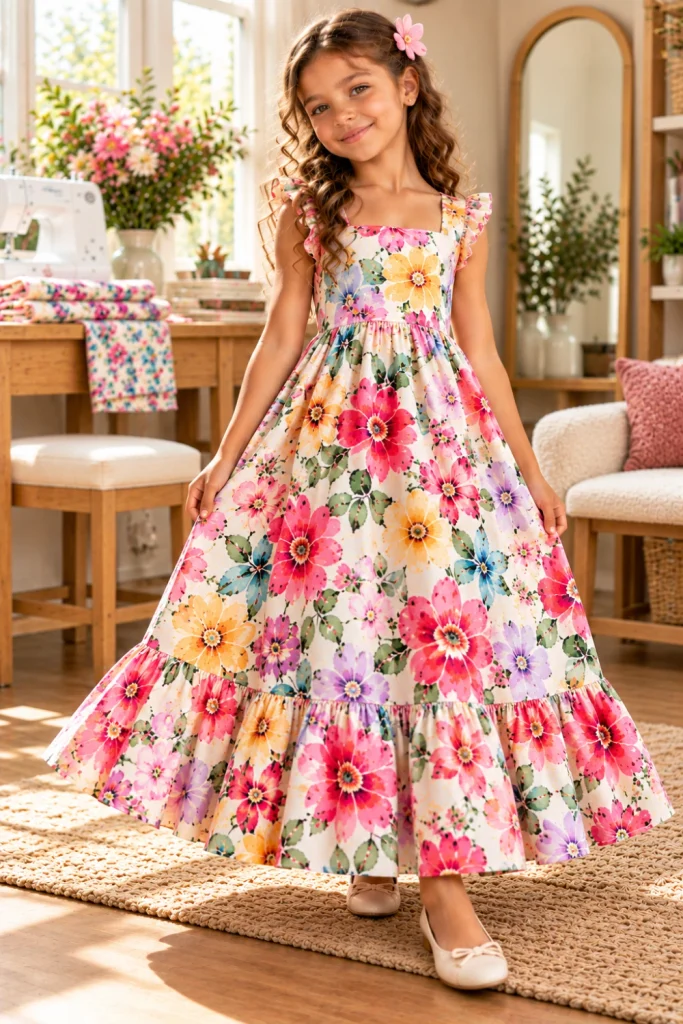
A classic floral maxi finished with a playful ruffle at the hem for added movement.
A ruffle hem is an easy way to transform a basic maxi dress into something more eye-catching.
It works beautifully with floral prints and gives the bottom edge a playful finish.
Simple Steps
- Sew a simple fitted or relaxed bodice.
- Cut a straight or gathered maxi skirt.
- Join the skirt to the bodice.
- Cut a long ruffle strip wider than the finished hem.
- Gather the ruffle evenly.
- Attach it around the bottom edge.
- Finish the raw seam with a zigzag or serged edge.
One Tip: Keep the ruffle lightweight so it adds movement rather than unnecessary weight.
10. Button-Front Floral Maxi Dress
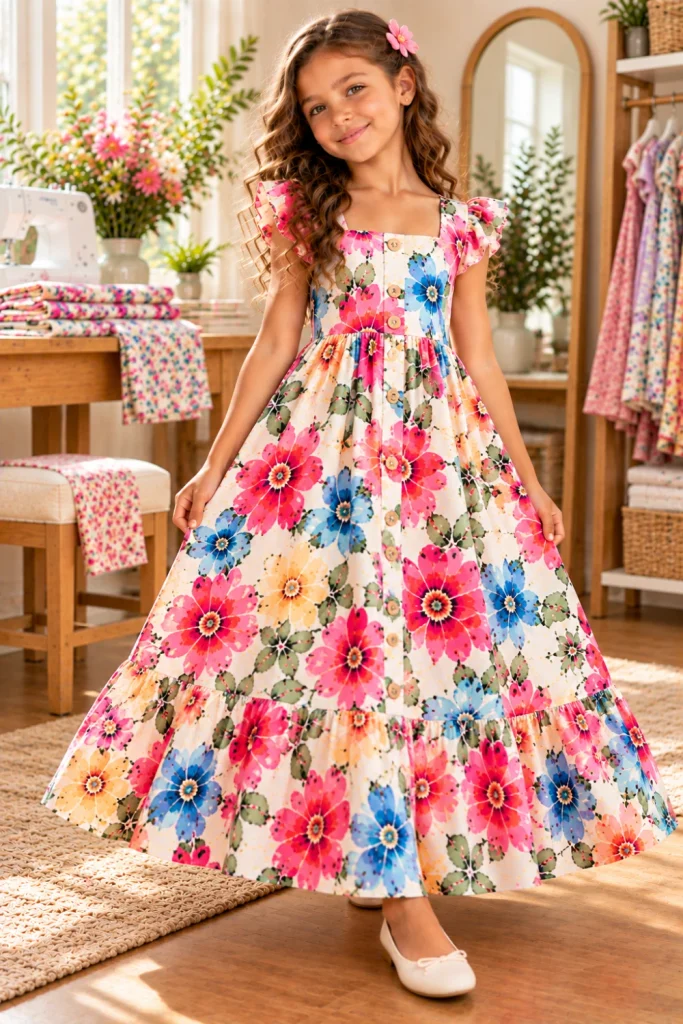
A timeless button-front bodice with a flowing maxi skirt and customizable floral fabric.
Buttons add charm and make a simple homemade dress feel thoughtfully designed.
This style also leaves plenty of room for personalization with different fabrics, collars, sleeves, or trims.
Simple Steps
- Cut a bodice with a center-front opening.
- Interface the front placket for extra stability.
- Sew the shoulder and side seams.
- Prepare and attach the buttons and buttonholes.
- Cut a flowing maxi skirt.
- Gather the skirt and sew it to the bodice.
- Add a neat hem and press all finished seams.
One Tip: Mark button placement carefully before sewing so every button sits evenly and the front opening looks professional.
Final Thoughts
Sewing a floral maxi dress can be much easier when the pattern is broken into manageable sections.
Start with simple silhouettes such as the Simple Gathered Waist Floral Maxi Dress or Elastic Waist Floral Maxi Dress before moving toward puff sleeves, wrap details, and button-front construction.
For the prettiest results, pay attention to three things: fabric weight, accurate measurements, and pressing.
Floral cottons are excellent for structured beginner projects, while lightweight fabrics create softer movement in gathered and tiered skirts.
Before cutting your favorite fabric, make a quick test version using inexpensive material.
This helps check the neckline, waist position, skirt length, and overall fit.
It may feel like an extra step, but it can save fabric and frustration later.
For more customization, consider adding small details such as contrast binding, decorative buttons, waist ties, lace trim, pockets, or a slightly longer ruffle.
Even one simple change can make the same basic sewing pattern look completely different.
Most importantly, let the floral fabric do some of the visual work.
A beautiful print paired with a clean silhouette often looks more polished than a dress overloaded with details.
Save the designs that catch your eye, compare their construction, and use those ideas to create a handmade maxi dress that feels both practical and special.