A beautiful coffee table can completely change the mood of a living room, and Live-Edge Coffee Table Ideas for Organic Modern Rooms make that transformation feel especially natural.
From sculptural walnut to compact designs for smaller spaces, these ideas blend warmth, texture, and contemporary styling.
You’ll discover practical ways to choose the right shape, base, size, and accessories while creating a room that feels polished without becoming overly staged.
1. Sculptural Walnut Live-Edge Slab
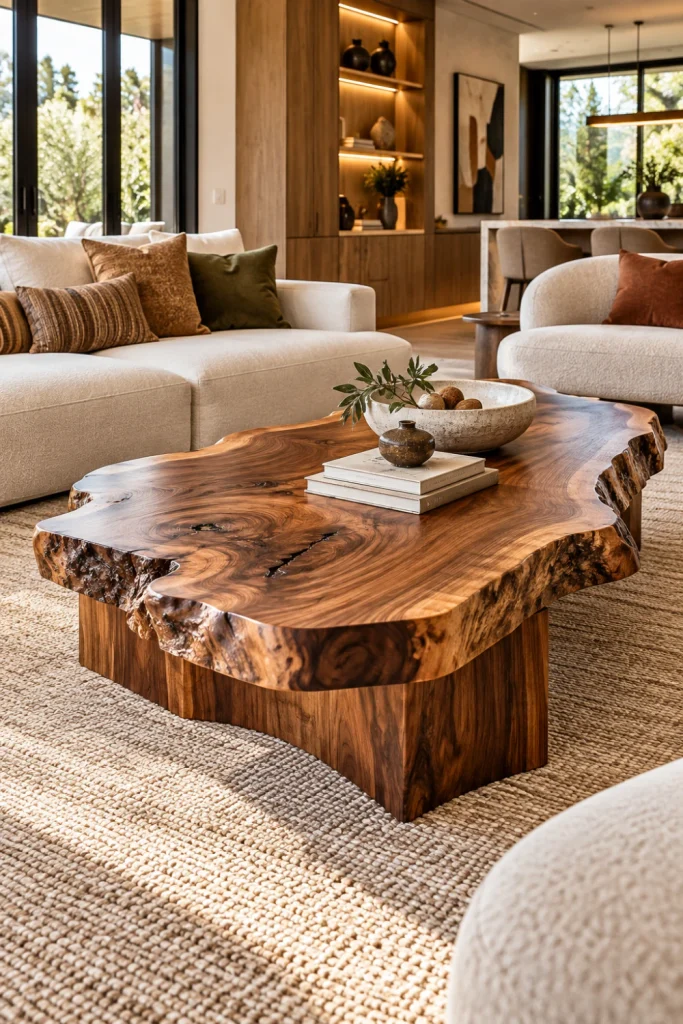
A substantial walnut slab instantly becomes a visual anchor.
Its expressive edge and rich grain add warmth to streamlined modern furniture, while the natural imperfections prevent the room from feeling too perfect.
Simple steps:
- Choose a thick walnut slab with a clearly defined natural edge.
- Position it over a soft, neutral textured rug.
- Pair it with a low-profile cream or beige sofa.
- Add linen cushions and a few handmade-looking ceramics.
- Leave plenty of tabletop space around the grain.
One tip:
• Let the walnut remain the star by avoiding too many decorative objects.
Extra value:
• Choose a finish that protects the wood while preserving visible grain variation.
• Repeat walnut or warm wood elsewhere in the room for visual continuity.
2. Light Oak Live-Edge Table With a Slim Base
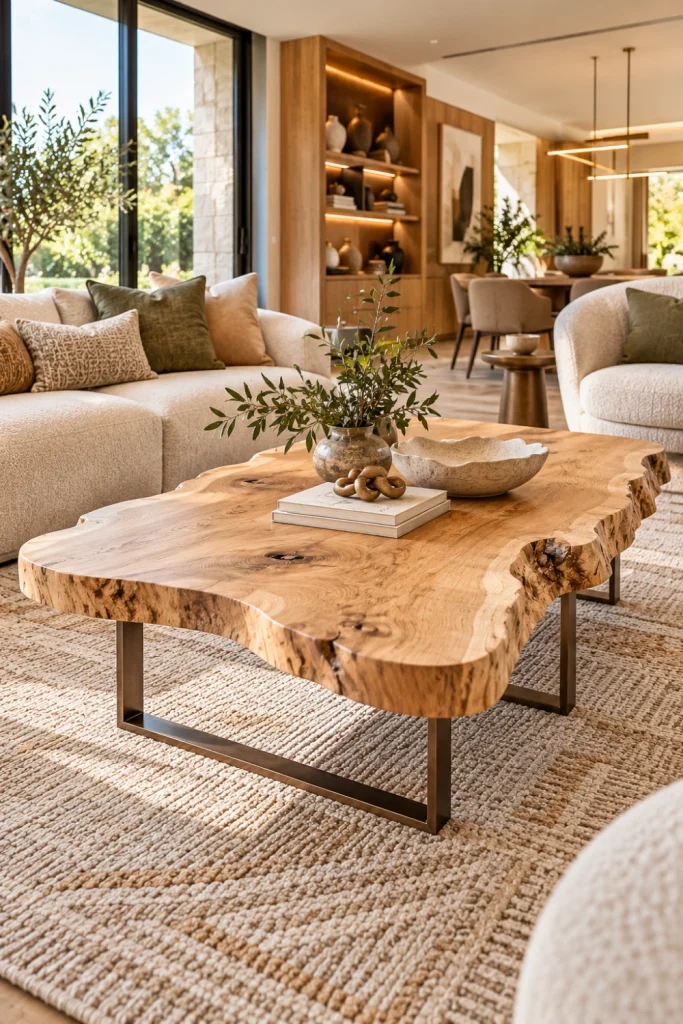
Light oak creates a brighter, more relaxed interpretation of the organic modern look.
A slim metal base introduces just enough definition to make the natural tabletop feel tailored rather than rustic.
Simple steps:
- Start with a pale oak slab and a gently irregular edge.
- Select a narrow black or bronze metal base.
- Place the table in front of a boucle or linen sofa.
- Add a woven rug underneath for softness.
- Finish with one sculptural object and a small tray.
One tip:
• Keep nearby furniture visually light so the room maintains an open feeling.
Extra value:
• Use warm white walls to highlight the oak.
• Mix pale timber with natural fibers for a layered remodeling-friendly palette.
3. Rounded Live-Edge Table for Soft Modern Rooms
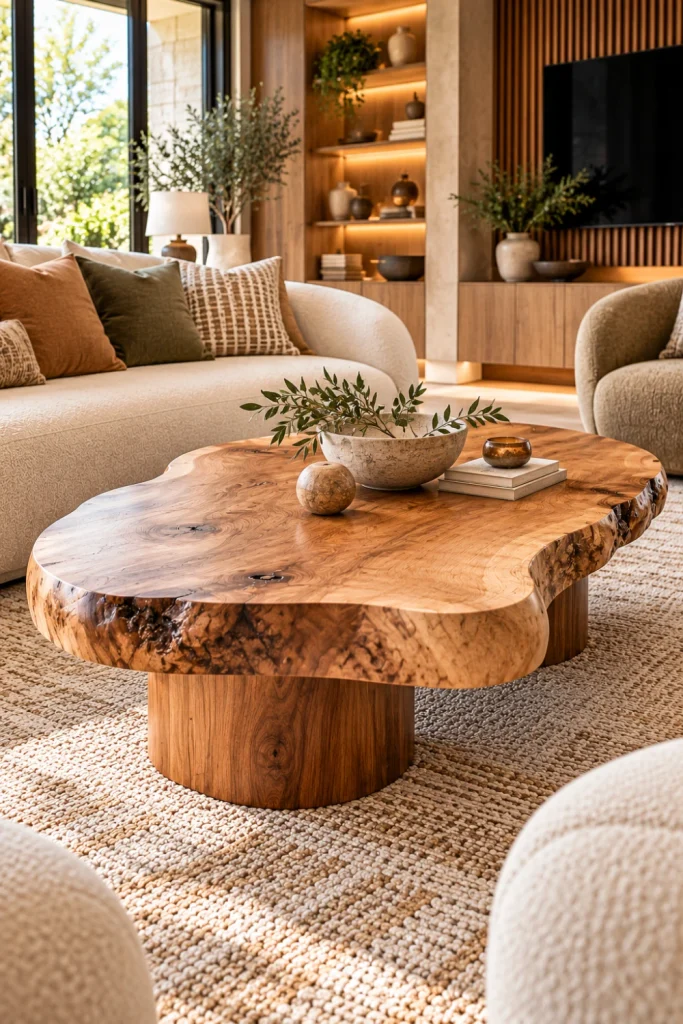
Rounded forms soften rooms filled with straight lines.
A naturally irregular tabletop with softened corners creates movement while working beautifully with curved seating and contemporary silhouettes.
Simple steps:
- Look for a slab with a naturally flowing edge.
- Avoid overly sharp corners in busy circulation areas.
- Position it near a curved sofa or rounded accent chairs.
- Add a neutral rug with subtle texture.
- Style the center with a tray, bowl, and books.
One tip:
• Keep the tabletop styling low and simple so the wood shape stays visible.
Extra value:
• Echo curved forms in lighting, mirrors, or occasional furniture.
• Use earthy beige, sand, taupe, or muted brown accents to reinforce the natural palette.
4. Live-Edge Waterfall Coffee Table
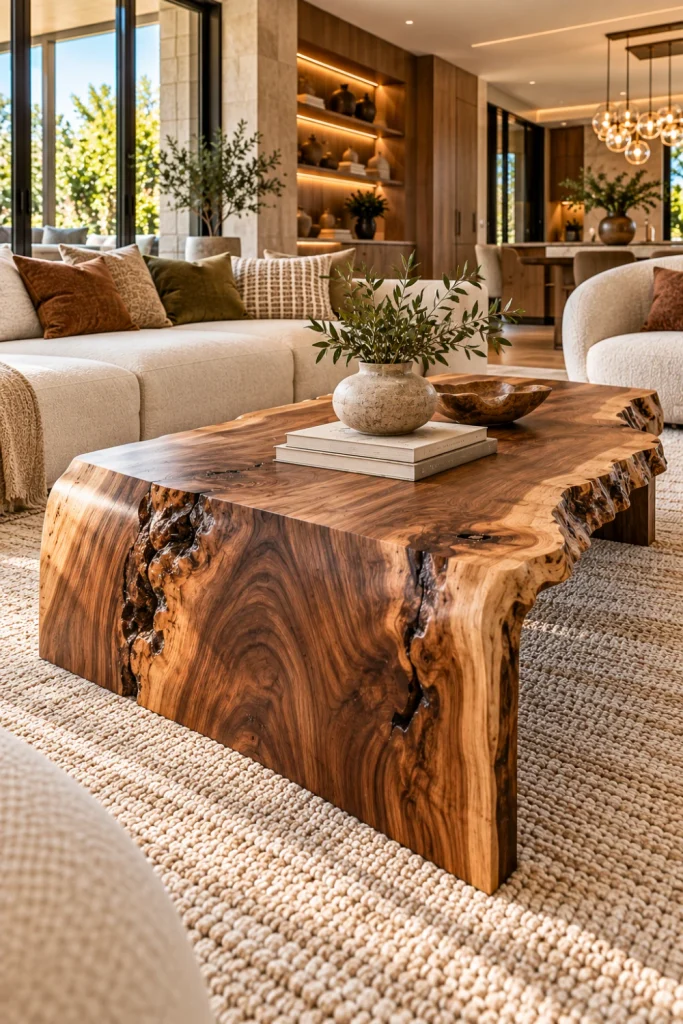
A waterfall base gives live-edge wood a sleek architectural character.
It bridges the gap between raw natural material and contemporary furniture, making it particularly effective in upscale modern living rooms.
Simple steps:
- Choose a slab with attractive grain on both the top and visible base.
- Select a waterfall design with clean construction.
- Place it on a large textured rug.
- Add a streamlined sectional in a neutral shade.
- Use minimal decor to emphasize the table’s structure.
One tip:
• Check the table’s height against the sofa before committing to the design.
Extra value:
• Keep surrounding silhouettes simple and architectural.
• Introduce softness through wool, boucle, linen, or woven textiles.
5. Live-Edge Wood and Stone Combination
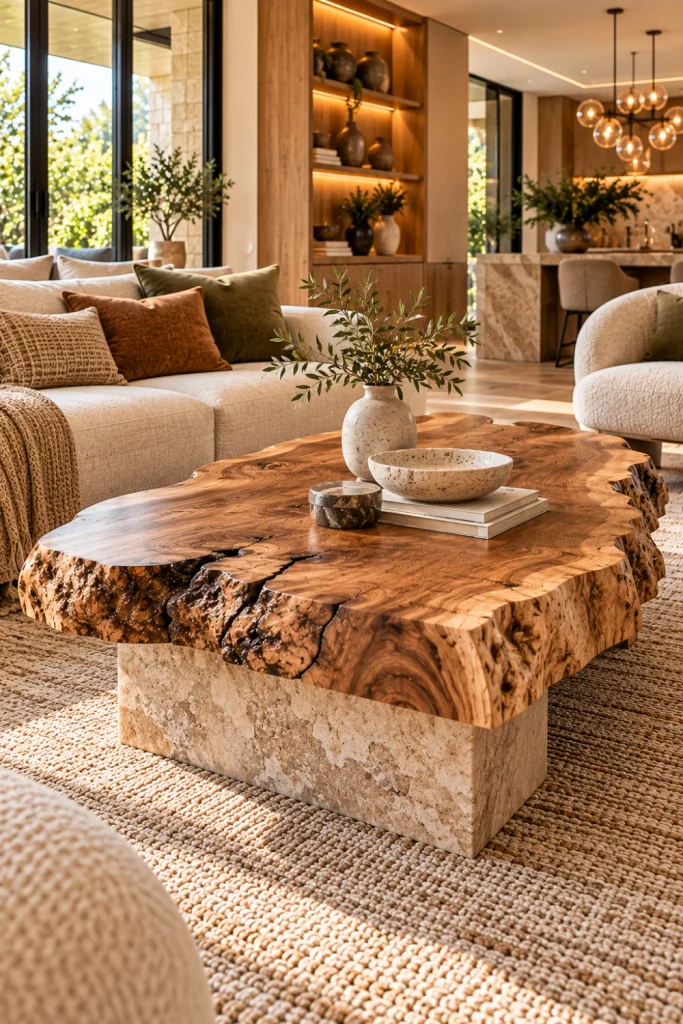
Wood and stone create a naturally sophisticated partnership.
The roughness of timber contrasts with the grounded appearance of a stone plinth or foundation, adding texture without relying on loud patterns.
Simple steps:
- Select a character-rich wood top.
- Pair it with stone, concrete-looking, or solid plinth detailing.
- Keep upholstery in soft neutral shades.
- Add handmade ceramics and earthy accessories.
- Layer warm lighting around the seating area.
One tip:
• Use two or three dominant natural materials rather than filling the room with competing textures.
Extra value:
• Repeat the stone finish in a side table, fireplace, or nearby surface.
• Add plants sparingly to bring another organic layer into the composition.
6. Extra-Thick Statement Slab
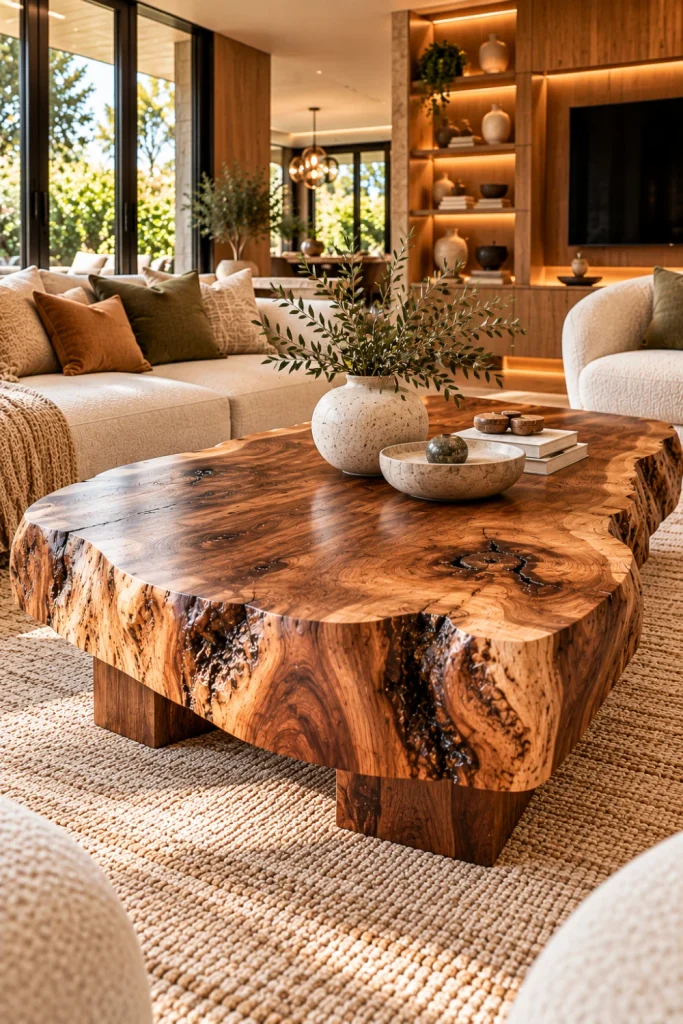
When the coffee table is meant to make a statement, thickness matters.
A substantial slab with knots, cracks, and dramatic grain can provide the character that a minimalist room sometimes lacks.
Simple steps:
- Choose a generously proportioned slab.
- Look for authentic grain variation and natural imperfections.
- Surround it with simple, low-profile furniture.
- Use a large rug to visually frame the arrangement.
- Keep accessories intentionally sparse.
One tip:
• Measure carefully so the oversized table does not restrict movement around the seating.
Extra value:
• Contrast the heavy timber with soft cream upholstery.
• Use simple modern lighting to make the natural material feel more contemporary.
7. Live-Edge Table With a Sculptural Pedestal
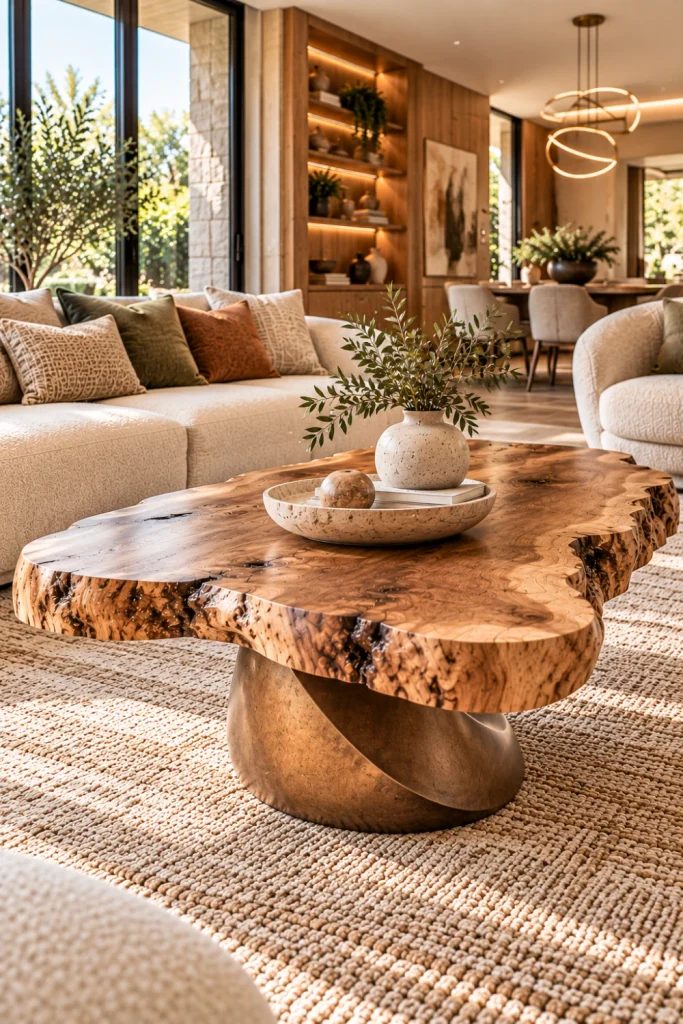
A sculptural pedestal changes the personality of a live-edge tabletop.
Instead of looking traditionally rustic, the table becomes a decorative architectural element that fits beautifully into modern interiors.
Simple steps:
- Select a naturally irregular wood top.
- Pair it with a rounded or geometric pedestal.
- Center the table carefully within the seating layout.
- Repeat the pedestal’s form through lighting or occasional furniture.
- Finish with warm neutral accessories.
One tip:
• Choose a pedestal that provides visual contrast without competing with the wood grain.
Extra value:
• A pedestal can improve visual flow around seating because there are fewer protruding legs.
• Use warm wall colors to make the timber feel richer.
8. Compact Live-Edge Table for Small Living Rooms
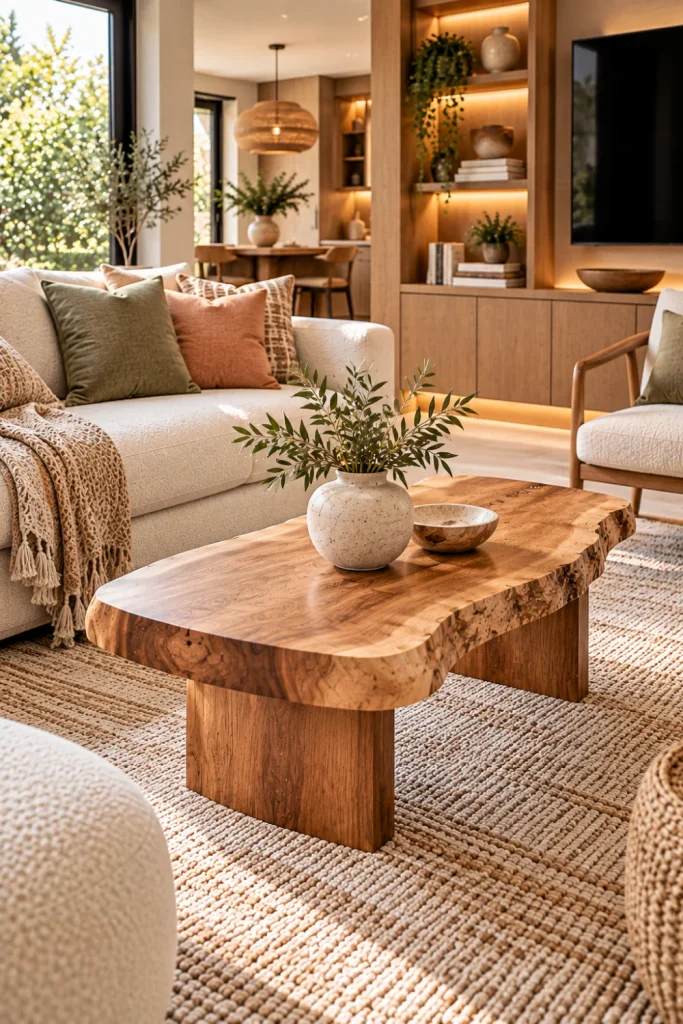
Small spaces can still benefit from distinctive natural furniture.
A slimmer live-edge table introduces personality without overwhelming the room, especially when paired with open leg space and streamlined seating.
Simple steps:
- Measure the available floor area first.
- Choose a compact slab with an airy base.
- Maintain comfortable walking clearance around the table.
- Use a small-scale textured rug.
- Add one standout ceramic or organic accessory.
One tip:
• Avoid oversized decor because visual clutter makes a compact room feel smaller.
Extra value:
• Consider nesting tables when flexibility is useful.
• Choose lighter wood tones to visually open up the seating zone.
9. Live-Edge Coffee Table With Dark Metal Accents
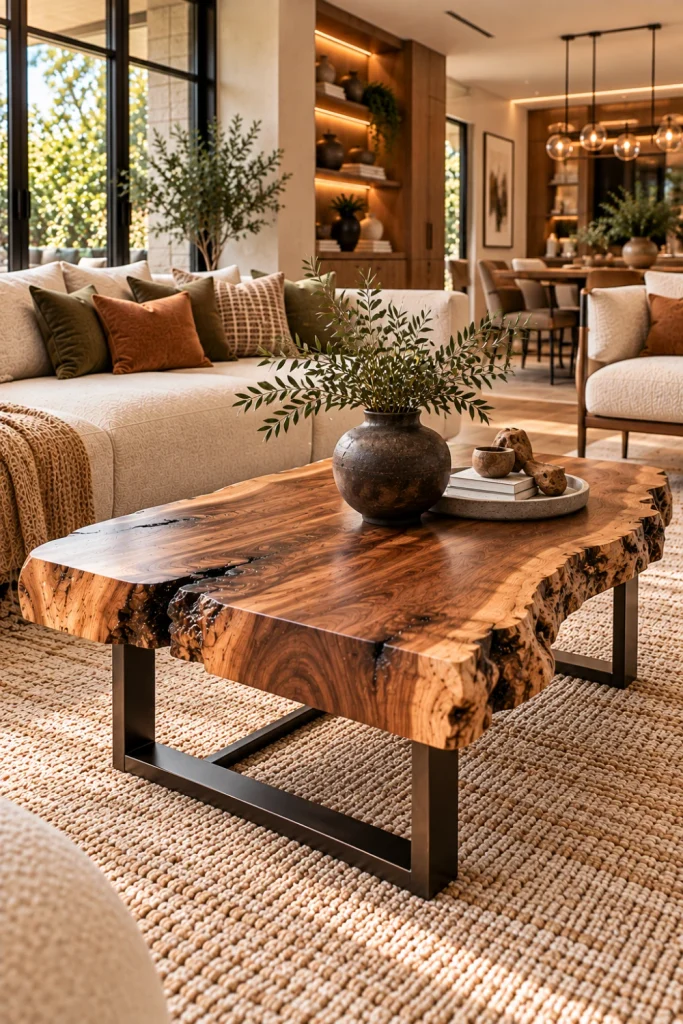
Dark metal and natural timber create a crisp modern-organic contrast.
The combination feels especially cohesive when black or dark bronze details already appear throughout the room.
Simple steps:
- Choose a timber top with visible natural character.
- Add dark metal legs or a slim frame.
- Repeat the darker finish in lighting or window details.
- Balance it with cream upholstery and natural fibers.
- Add muted earthy accessories.
One tip:
• Keep the metal framework visually restrained so the room stays warm rather than industrial.
Extra value:
• Pair black accents with warm timber instead of cool gray wood.
• Use textured curtains and rugs to soften the stronger contrast.
10. Rustic-Modern Live-Edge Focal Point
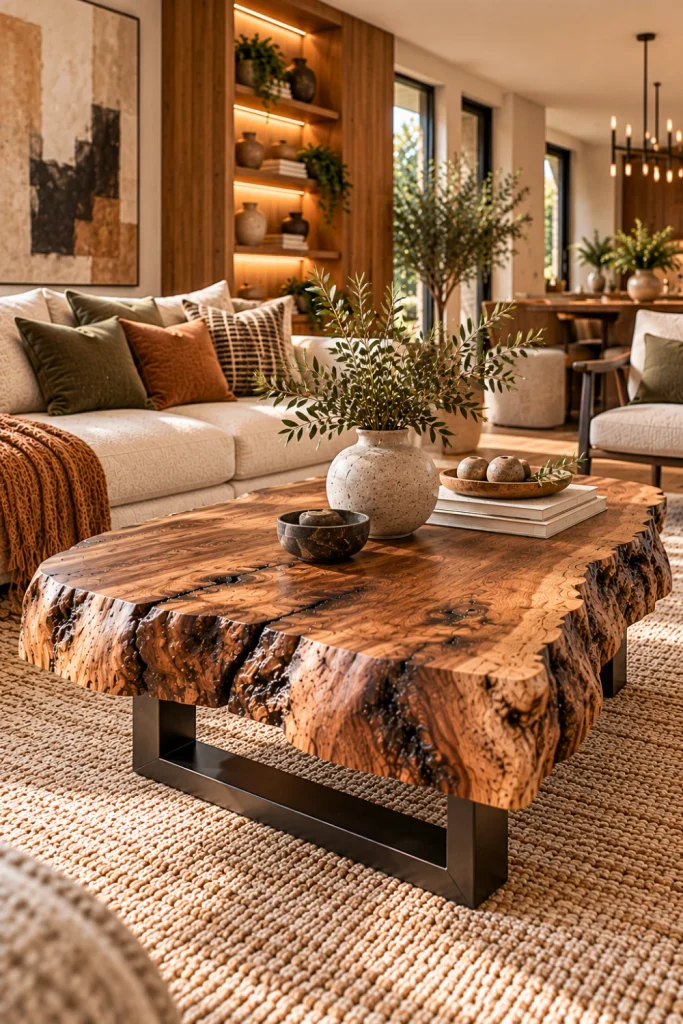
A weathered live-edge table can make a contemporary room feel collected rather than manufactured.
The secret is balancing rustic character with polished furniture, restrained artwork, and modern lighting.
Simple steps:
- Select naturally weathered timber with distinctive grain.
- Pair it with clean-lined contemporary upholstery.
- Add modern lighting with a simple silhouette.
- Keep wall art limited and intentional.
- Finish with subtle earthy accessories.
One tip:
• Repeat one natural finish elsewhere in the room so the rustic table feels connected to the overall design.
Extra value:
• Mix old-looking texture with new-looking silhouettes for depth.
• Avoid matching every wood tone; controlled variation often feels more natural.
Final Thoughts
The most successful live-edge coffee table ideas for organic modern rooms balance contrast, comfort, and natural character.
The table should work with the room rather than simply occupy the center of it.
Before purchasing, consider the slab’s dimensions, wood species, edge profile, base style, maintenance needs, and circulation space.
Use this final styling checklist:
- Measure the seating area and available clearance.
- Choose a tabletop proportionate to the sofa.
- Decide whether you want the wood, base, or overall silhouette to dominate.
- Balance hard materials with soft textiles.
- Limit accessories so natural grain remains visible.
- Repeat selected finishes elsewhere for a cohesive remodeling scheme.
For a particularly polished result, think beyond the table itself.
Coordinate the rug, sofa, lighting, wall finish, accent chairs, and accessories so every element contributes to the same warm modern story.
Small choices—such as a softly textured rug or a sculptural ceramic bowl—can make the entire setup feel intentional, inviting, and ready to inspire your next living-room makeover.